
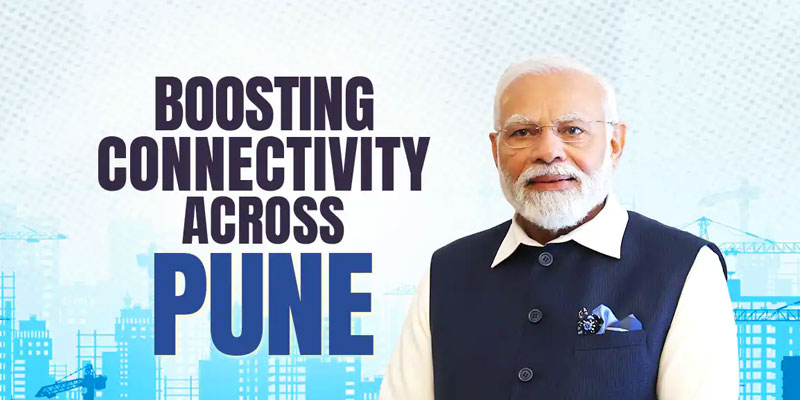
Prime Minister Narendra Modi on November 3 inaugurated Pune Metro's 23-km Pink Line and laid the foundation stone for four additional corridors under Phase-II, taking the combined project investment to approximately ₹21,800 crore. Calling for Indian cities to emerge as major growth hubs, the Prime Minister emphasised that modern urban infrastructure is essential for economic competitiveness, employment generation and improved quality of life. The biggest highlight is the new connectivity between Hinjawadi's IT hub and Shivajinagar, which promises to transform daily commuting for thousands of professionals.
What Has Been Launched?
The centrepiece of the announcement is Pune Metro's Line 3, popularly known as the Pink Line, connecting Maan to District Court through the Hinjawadi–Shivajinagar corridor.
Additionally, Modi laid the foundation stone for four new corridors under Pune Metro Phase-II, involving an estimated investment of ₹13,500 crore. Together, the inaugurated and proposed infrastructure represents approximately ₹21,800 crore in urban mobility investment.
Why Pune Needs This Infrastructure Push
Pune has developed into a major centre for information technology, automobiles, pharmaceuticals, manufacturing, education and startups. However, rapid urbanisation and increasing vehicle ownership have placed enormous pressure on its road infrastructure.
The Prime Minister said cities must become growth hubs, arguing that modern transport systems improve productivity, save commuting time and make urban living more convenient.
The Metro expansion is expected to:
· Reduce dependence on private vehicles and ease road congestion.
· Improve connectivity between residential neighbourhoods and employment centres.
· Strengthen access to Hinjawadi's IT and startup ecosystem.
· Support commercial activity and improve urban productivity.
· Enhance Pune's attractiveness for businesses and skilled professionals.
Who Stands to Gain?
IT professionals and companies operating in Hinjawadi are among the biggest beneficiaries, as predictable commuting could improve workforce mobility and productivity.
In the longer term, Phase-II is expected to extend connectivity across additional residential, commercial and industrial areas, reducing dependence on road expansion alone.
Who Could Face Challenges?
Private bus operators, app-based cab services, auto-rickshaws and informal transport providers operating along the corridor could face passenger diversion as Metro ridership increases.
However, the larger challenge concerns project execution. Land acquisition, construction-related traffic disruption, funding, feeder services and station integration could affect implementation timelines. Local businesses and commuters may experience temporary inconvenience before infrastructure benefits materialise.
The Real Test: Transforming Connectivity into Growth
The success of Pune Metro will depend on more than construction and inauguration. Reliable feeder buses, integrated ticketing, parking facilities, pedestrian access and affordable fares will determine actual ridership. The ₹21,800-crore investment represents a significant step towards building a more connected Pune. Ultimately, its achievement must be measured through reduced commuting times, improved productivity, greater public transport adoption and the city's ability to emerge as a sustainable economic growth hub.
(With agency inputs)