
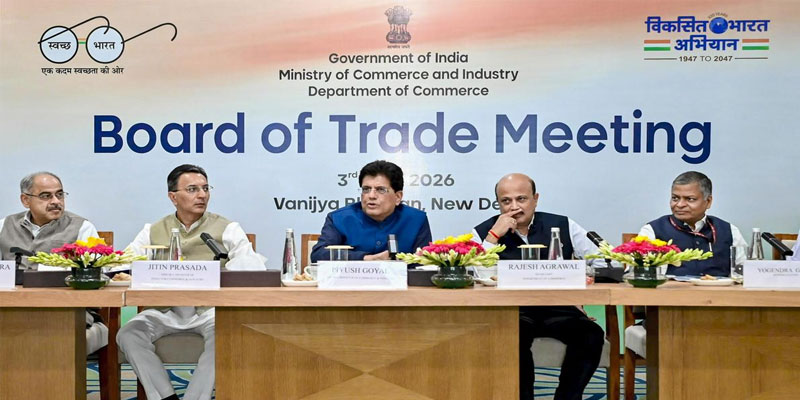
India is targeting $1 trillion in combined goods and services exports in the current financial year, with Commerce and Industry Minister Piyush Goyal reporting a 14% growth during the first half. Exports reached approximately $480 billion between April and September 2026, reflecting the country's growing integration into global trade despite geopolitical uncertainties and subdued international demand. The ambitious target represents a significant step towards strengthening India's manufacturing capabilities, expanding services exports and accelerating its journey towards becoming a developed economy by 2047.
Why the $1 Trillion Target Is Ambitious
The new target requires approximately 16% annual growth, considerably higher than the projected global trade expansion.
Goyal indicated that the cccould have adopted a more conservative target of $900 billion, representing around 5% growth. However, India has deliberately chosen a more ambitious trajectory to expand its global market share.
The diversified export basket is an advantage because services earnings can provide stability when merchandise trade faces international disruptions.
First-Half Performance Signals Strong Momentum
Addressing an event at Kirori Mal College on November 3, Goyal highlighted that exports had reached approximately $480 billion during April–September, representing 14% year-on-year growth. An earlier official estimate placed the figure at $476.2 billion.
Merchandise exports delivered particularly encouraging performance, increasing 18.5% during the first six months.
This indicates that India's export expansion is not dependent exclusively on its services industry. Manufacturing and physical goods are also contributing significantly to the momentum.
Who Stands to Gain from Export Growth?
The ambitious export programme could generate substantial opportunities across several sectors.
· Manufacturing industries: Greater international demand could improve factory utilisation, production and employment.
· IT and services companies: Software, business-process management and professional services can strengthen foreign-exchange earnings.
· MSMEs: Small and medium enterprises integrated into global supply chains could access larger markets.
· Logistics and infrastructure: Ports, shipping, warehousing and digital trade services could benefit from increasing export volumes.
Export-oriented states, including Gujarat, Maharashtra, Tamil Nadu, Karnataka and Uttar Pradesh, could gain from stronger industrial activity and international business opportunities.
Global Headwinds and Potential Challenges
The target faces considerable external uncertainties. Global trade growth is expected to remain relatively modest, meaning India must capture additional market share rather than depend entirely on rising international demand.
Major challenges include:
· Geopolitical tensions and disruptions in international shipping.
· Tariff uncertainty and protectionist trade policies.
· Weakening demand in major developed economies.
· Financing, certification and logistics constraints affecting smaller exporters.
Smaller businesses could struggle to compete with larger exporters possessing stronger financial resources and established international networks.
What Must Happen to Achieve the Target?
India must generate another $520 billion in exports between October and March, averaging approximately $86.7 billion every month. Sustaining merchandise growth, strengthening services exports, simplifying trade procedures and accessing new international markets will be essential.
Turning Export Ambition into Global Economic Leadership
The $1 trillion export target is more than an ambitious trade milestone; it reflects India's determination to become a stronger participant in global value chains. Achieving it would strengthen manufacturing, generate employment, attract investment and support the country's developed-nation ambitions for 2047. However, the real measure of success will be whether export growth becomes sustainable, inclusive and increasingly driven by domestic manufacturing competitiveness rather than favourable external conditions alone.
(With agency inputs)