
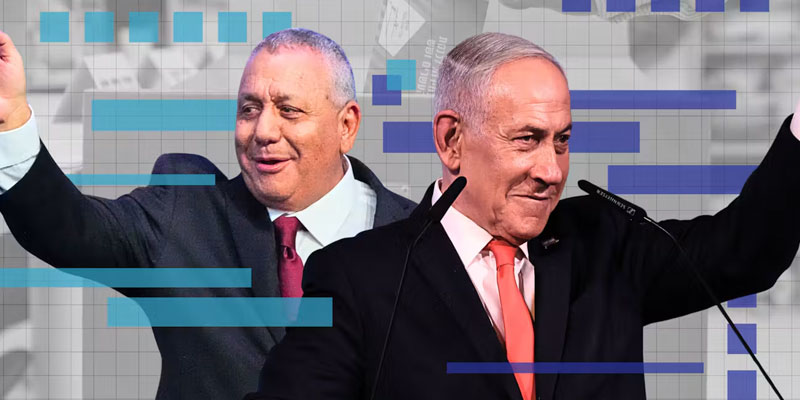
Israel is heading into weeks, possibly months, of political limbo. Neither main camp won the 61 seats needed to govern in the 120-seat Knesset in the 27 October election. Prime Minister Benjamin Netanyahu’s right-wing bloc won 53 seats. The bloc led by Gadi Eisenkot’s centrist Yashar party won 48, and Arab parties hold the other 19.
The vote was widely seen as a referendum on Netanyahu’s leadership after the October 7, 2023 Hamas attack and the wars that followed. Turnout of almost 78% was the highest in more than two decades. Likud is still the largest single party with 27 seats, but Eisenkot argues voters have rejected Netanyahu.
Eisenkot has no clear route to power either. His bloc can reach 61 only with support from Arab parties, an option he has largely ruled out. That gives the Arab parties real leverage but no obvious partner willing to deal openly with them.
- Eisenkot changes course and relies on backing from Arab parties.
- Netanyahu lures defectors from the opposition.
- Likud and Yashar form a national unity government, possibly with a rotating premiership.
- If everything else fails, Israel goes to yet another election.
Each option has a cost. A unity deal would require hard compromises on security, judicial reform and Netanyahu’s corruption trial. Defections are difficult when Netanyahu is eight seats short. A fresh election would keep Netanyahu in office as caretaker prime minister without a new mandate. Eisenkot has said another vote after such high turnout would be a mistake.
The next steps are already set. The new Knesset is sworn in on 10 November, and President Isaac Herzog will consult party leaders before choosing who gets the first chance to form a government. Until then, Israel’s future leadership remains uncertain.