
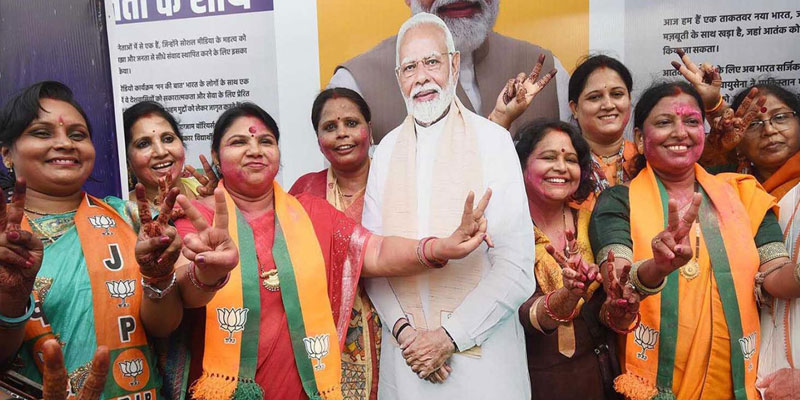
The Bharatiya Janata Party has launched a nationwide campaign to build momentum for the Women’s Reservation Bill, organizing press conferences across 100 major cities between April 11 and 13. The outreach effort signals a renewed political push to translate a landmark constitutional reform into reality.
The Bill at a Glance: A Landmark Reform
Formally known as the Nari Shakti Vandan Adhiniyam, the legislation—enacted as the Constitution (106th Amendment) Act, 2023—seeks to reserve 33% of seats for women in the Lok Sabha and state legislative assemblies. The quota also extends to seats reserved for Scheduled Castes and Scheduled Tribes, ensuring representation across social groups.
The provision is set for an initial 15-year period, with scope for extension. Despite its unanimous passage in Parliament in 2023, implementation has been tied to the completion of a fresh Census and subsequent delimitation exercise, delaying its rollout.
Campaign Strategy: Mobilising Political and Public Support
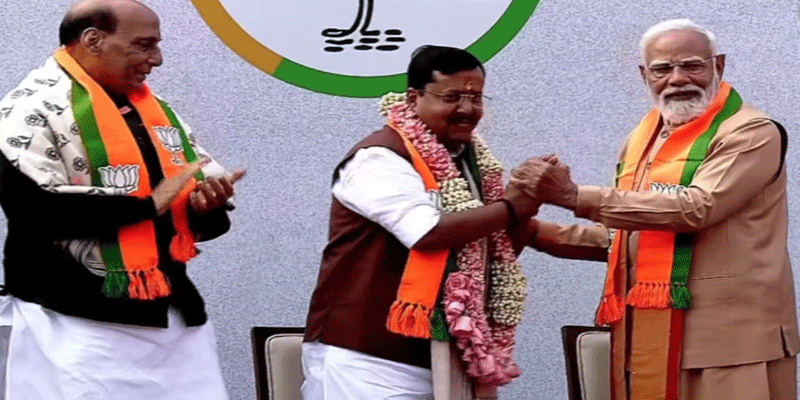
Under party leadership, including Nitin Nabin, the BJP’s campaign combines high-visibility events with grassroots engagement. Alongside press briefings, the party is hosting town halls in key cities and women-led mega conferences to amplify the message.
The Mahila Morcha, the party’s women’s wing, is spearheading street-level outreach, while a “Nari Shakti Padayatra” is planned to mobilize public support ahead of a special parliamentary session. Senior leaders, including chief ministers and Union ministers, have been tasked with leading the effort, particularly in opposition-ruled states.
Census, Delimitation, and the Road to Implementation
A central challenge lies in the bill’s linkage to delimitation—the redrawing of electoral constituencies based on population data. Since delimitation has been frozen until after 2026, implementation has effectively been postponed.
To address this, a proposal under discussion suggests using the 2011 Census data instead of waiting for a fresh enumeration. This could enable the reservation to be implemented in time for the 2029 general elections.
The potential expansion of Lok Sabha seats—from 543 to around 816—would accommodate the quota without significantly displacing existing constituencies. If executed, nearly 273 seats could be reserved for women, dramatically increasing their representation from the current level of around 15%.
Political Debate: Reform or Electoral Strategy?
Opposition parties have questioned the timing and intent of the campaign, describing it as a political strategy aimed at consolidating women voters ahead of future elections. Critics argue that linking the bill to delimitation delays meaningful change and safeguards existing power structures dominated by male legislators.
The BJP, however, maintains that the campaign reflects its commitment to women’s empowerment and fulfilling promises made by Narendra Modi. The party has framed the outreach as evidence of political will to operationalize a long-pending reform.
Broader Implications: Representation and Governance
If implemented effectively, the bill could transform India’s political landscape. Increased representation of women is expected to influence policymaking, particularly in areas such as education, healthcare, and safety.
However, challenges remain. Concerns include the possibility of proxy candidates, limited inclusion of Other Backward Classes (OBCs), and disparities between urban and rural representation. Addressing these issues will be critical to ensuring the reform achieves its intended impact.
A Turning Point Awaiting Action
The Women’s Reservation Bill stands as one of India’s most significant democratic reforms in decades. While the BJP’s nationwide campaign has reignited momentum, the true test lies in timely and effective implementation.
Balancing political intent with structural execution will determine whether this initiative becomes a transformative milestone or remains a deferred promise. If realized, it could mark a decisive step toward a more inclusive and representative political system.
(With agency inputs)