
A Sudden Silence in the Sky
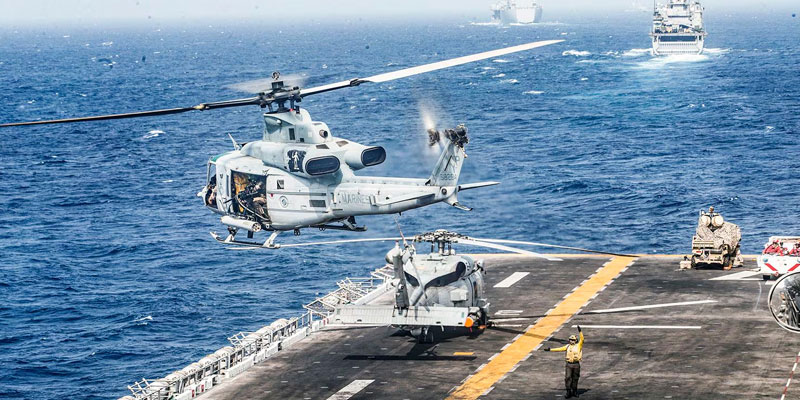
A US Navy MQ-4C Triton surveillance drone disappeared over the strategically critical Strait of Hormuz after broadcasting an emergency alert, triggering immediate concern across defense and diplomatic circles. The high-value unmanned aircraft, deployed for routine monitoring, vanished mid-flight under unclear circumstances—an incident that now threatens to complicate already delicate US-Iran ceasefire dynamics.
Mission Gone Wrong: What Happened Mid-Air
On April 9, 2026, the MQ-4C Triton—derived from the RQ-4 Global Hawk—was conducting a standard surveillance sortie over the Persian Gulf. After approximately three hours in the air, the drone transmitted squawk code 7700, the universal distress signal, while flying at high altitude.
Flight data indicates a rapid and unusual descent—from over 50,000 feet to nearly 12,750 feet—before it disappeared from radar north of Bahrain. Its trajectory suggested a possible drift toward Iranian airspace, though no confirmed wreckage or recovery has been reported.
Drone Capabilities: A Critical Eye in the Sky
The MQ-4C Triton is among the most advanced intelligence, surveillance, and reconnaissance (ISR) platforms in the US arsenal. Designed for long-endurance missions exceeding 30 hours and operating at altitudes up to 60,000 feet, it plays a crucial role in monitoring maritime activity.
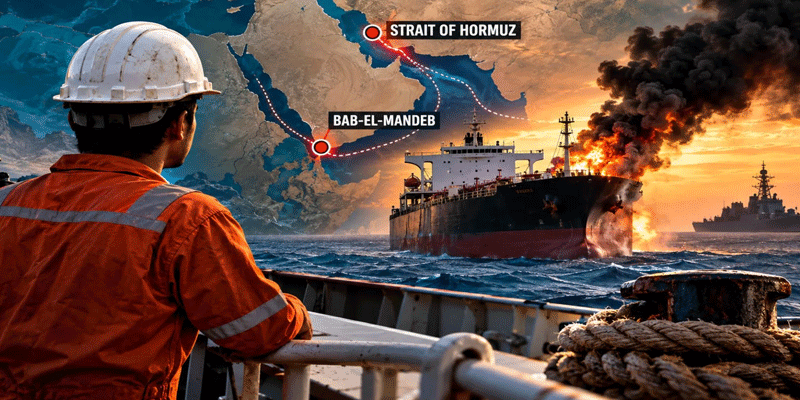
Equipped with sophisticated sensors, the drone can track ship movements, detect submarines, and monitor missile launches across vast oceanic regions. Operating from bases such as the UAE and Italy, it works in tandem with aircraft like the P-8 Poseidon to provide real-time situational awareness in high-risk zones like the Strait of Hormuz—a corridor responsible for roughly 20% of global oil transit.
Possible Causes: Accident, Attack, or Interference?
The sudden disappearance has sparked intense speculation. One leading theory points toward Iranian involvement, drawing parallels with the 2019 Iran US drone shootdown, when Tehran shot down a similar drone using its surface-to-air missile systems.
Analysts suggest several possible scenarios:
· Missile Strike: The drone may have been targeted due to its proximity to sensitive Iranian airspace.
· Electronic Warfare: Iran could have employed jamming or spoofing technologies to disrupt navigation and communications.
· Cyber Intrusion: Advanced cyber capabilities might have compromised the drone’s control systems.
However, alternative explanations remain plausible. Mechanical failure, though rare for such a sophisticated platform, cannot be ruled out. A structural malfunction or onboard system error may have triggered the emergency descent.
The absence of an official statement from the Pentagon has only deepened uncertainty, allowing multiple narratives to gain traction.
A Fragile Balance at Risk
The disappearance of a drone valued between $180 million and $220 million is not just a technical loss—it carries significant geopolitical weight. Occurring amid a tenuous US-Iran ceasefire, the incident risks undermining trust and escalating tensions in an already volatile region.
The Strait of Hormuz remains a critical global chokepoint. Any disruption—whether perceived or real—can trigger oil price volatility and broader economic consequences. A surveillance gap caused by the drone’s loss could also limit US visibility over Iranian naval activity, weakening deterrence capabilities.
Iran has denied involvement, but its history of intercepting or capturing US drones adds to suspicions. Meanwhile, rivals such as Russia and China may view the incident as evidence of vulnerabilities in US surveillance dominance.
Mystery with Global Consequences
The disappearance of the MQ-4C Triton underscores the inherent risks of operating in contested airspace where technology, geopolitics, and military strategy intersect. Whether caused by hostile action or technical failure, the incident highlights the fragility of surveillance systems in high-stakes environments.
As investigations unfold, the priority for Washington will be to determine the cause without triggering unintended escalation. In a region where a single incidence can ripple across global markets and alliances, maintaining restraint while reinforcing security will be key.
(With agency inputs)