
A Sudden Exit at the Highest Level
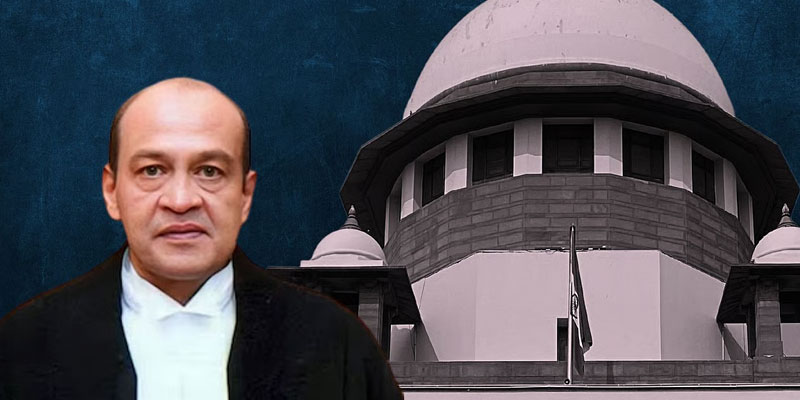
Allahabad High Court Judge Yashwant Varma tendered his resignation to President Droupadi Murmu on April 9, 2026, bringing an abrupt end to looming impeachment proceedings. In a brief and restrained letter expressing “deep anguish,” Justice Varma stepped down just as a formal inquiry panel was set to begin hearings, effectively halting the constitutional process under the Judges (Inquiry) Act, 1968.
The Cash Discovery That Sparked the Crisis
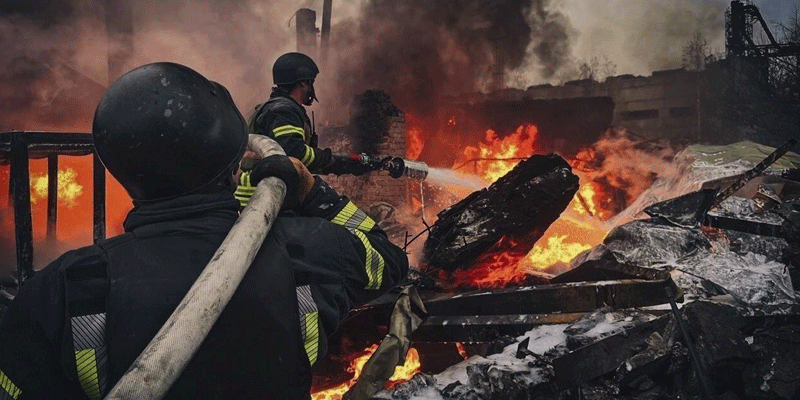
The controversy dates back to March 14, 2025, when a fire broke out at Justice Varma’s official residence in Delhi. Firefighters responding to the incident reportedly discovered sacks containing partially burnt ₹500 currency notes—estimated at around ₹15 crore—stored in a room on the premises.
Eyewitness accounts, CCTV footage, and preliminary investigations suggested that staff members were involved in removing cash from the site shortly after the fire. The presence of such a large sum of unaccounted money raised immediate concerns about judicial propriety and integrity.
Justice Varma denied any knowledge of the cash, stating he was not in Delhi at the time and attributing the incident to security lapses. However, the scale and circumstances of the discovery triggered a deeper institutional response.
Inquiry and Escalation: From Internal Probe to Impeachment
Chief Justice of India Sanjiv Khanna initiated an in-house inquiry soon after the incident. A three-member committee reportedly found “strong evidence” suggesting Justice Varma had either tacit or direct control over the area where the cash was discovered, and flagged his conduct after the fire as “unnatural.”
Despite being advised to resign, Justice Varma initially refused. He was subsequently transferred to the Allahabad High Court, where judicial work was withdrawn from him. The matter escalated further when Lok Sabha Speaker Om Birla admitted a motion for impeachment in August 2025.
In January 2026, the Supreme Court upheld the validity of the proceedings, clearing the way for a formal investigation—until the resignation rendered the process infructuous.
Legal Implications: Resignation vs Impeachment
Under Article 217 of the Constitution, a judge’s resignation effectively terminates impeachment proceedings, which require a two-thirds majority in Parliament. By stepping down, Justice Varma has avoided a rare and high-stakes constitutional trial.
Historically, such cases are extremely uncommon. Only a handful of judges have faced impeachment motions, and even fewer have seen them through. With resignation, Justice Varma retains post-retirement benefits such as pension, unless future legal findings establish misconduct through other means.
Broader Implications: Trust, Transparency and Reform
The episode raises critical questions about judicial accountability and transparency. The discovery of large sums of unexplained cash within a judge’s residence has inevitably dented public trust in the judiciary—an institution that relies heavily on moral authority.
At the same time, the reliance on in-house mechanisms and the eventual resignation reflects the system’s preference for resolving such matters without prolonged public confrontation. Critics, however, argue that this approach limits transparency and accountability.
The case also reignites debate over judicial appointments, transfers, and the need for independent oversight mechanisms to address allegations of misconduct more effectively.
A Case That Leaves Lasting Questions
Justice Yashwant Varma’s resignation closes a contentious chapter but leaves behind unresolved concerns about institutional integrity. While the move avoids a prolonged constitutional battle, it also prevents a definitive public reckoning.
As India’s judiciary continues to navigate the balance between independence and accountability, this episode serves as a reminder that credibility must be constantly reinforced through transparency, ethical conduct, and robust oversight.
(With agency inputs)