The proposed 0.4 per cent fee on certain Unified Payments Interface (UPI) merchant transactions exceeding ₹2,000 has been deferred until after Diwali, offering temporary relief to businesses during the festive shopping season. The National Payments Corporation of India (NPCI) will announce the revised implementation date separately. The decision has renewed debate over balancing the affordability of digital payments with the long-term financial sustainability of India’s rapidly expanding payment ecosystem.
What the Proposed Fee Means
Under the framework announced in September, a Merchant Discount Rate (MDR) of 0.4 per cent was scheduled to take effect on October 15 for eligible person-to-merchant (P2M) UPI transactions above ₹2,000.
The proposed charges include:
· A ₹40 fee on a ₹10,000 transaction.
· A maximum charge of ₹300 for transactions of ₹75,000 or more.
· Continued exemption for person-to-person transfers, transactions up to ₹2,000 and eligible small merchants covered by the zero-MDR framework.
The government has clarified that consumers will not be charged directly. However, businesses could potentially factor additional payment-processing costs into their prices.
Why Implementation Has Been Postponed
The festive season typically brings a surge in retail spending and digital transactions. NPCI’s decision to defer the levy is intended to avoid disruption while merchants, fintech companies and payment service providers prepare for the proposed changes.
The additional time could help clarify eligible merchant categories, technical requirements and implementation procedures. A concessional flat fee of ₹5 has also been proposed for certain sectors, including railways, telecommunications, insurance and fuel, on qualifying transactions above ₹2,000.
The revised notification will determine the final scope and timing of the changes.
GTRI Calls for Complete Withdrawal
The Global Trade Research Initiative (GTRI) has opposed the proposed fee, urging the government to preserve free UPI payments for merchants and consumers.
It warns that businesses may pass on additional costs through higher prices, potentially affecting smaller enterprises and encouraging price-sensitive customers to return to cash. GTRI has also called for an independent audit of UPI operating costs and a shared funding model involving banks, payment apps, NPCI and the government.
RBI Defends the Sustainability Argument
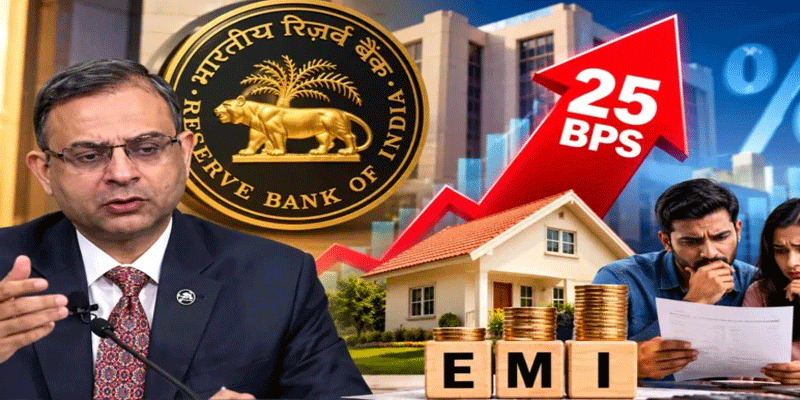
Reserve Bank Governor Sanjay Malhotra has defended the levy as a small charge intended to support the long-term sustainability of digital payments. The argument is that banks and payment infrastructure providers need a viable funding mechanism to maintain and expand services.
Critics, however, believe that introducing merchant charges could undermine UPI’s near-zero-cost advantage and affect its appeal relative to card-based payment networks.
The Bigger Test: Protecting UPI’s Success
The post-Diwali rollout will test whether India can finance its digital payments infrastructure without discouraging adoption. A narrowly targeted, capped merchant fee may help address operational costs, but unclear rules or wider charges could weaken business confidence.
The government’s next notification will be crucial. Preserving UPI’s accessibility, affordability and trust must remain central to any funding model designed to sustain its growth.
(With agency inputs)