
India Raises Trade, Supply Chain Concerns with China
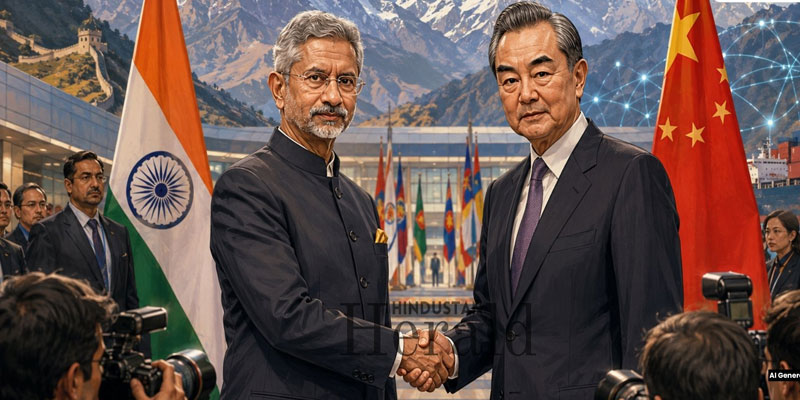
External Affairs Minister S. Jaishankar met Chinese Foreign Minister Wang Yi on the sidelines of a regional meeting in Manila, using the opportunity to push for a more balanced and predictable India-China economic relationship. While acknowledging gradual improvements in bilateral ties, Jaishankar stressed that trade imbalances, fair market access and supply-chain reliability remain key challenges that must be addressed before relations can fully normalise.
The meeting reflects New Delhi's broader approach of cautiously rebuilding engagement with Beijing while ensuring that economic cooperation does not deepen strategic vulnerabilities.
Slow Thaw After the Ladakh Standoff
India-China relations have remained strained since the 2020 eastern Ladakh border clash, which fundamentally altered bilateral ties. Although both countries have taken steps to ease tensions—including progress on border disengagement, the resumption of the Kailash Mansarovar Yatra, discussions on restoring direct flights, updated visa arrangements and border trade—New Delhi maintains that normalisation cannot be limited to diplomatic gestures alone.
The Manila meeting therefore represents another step in a calibrated process rather than a complete reset of relations.
Trade Imbalance Tops India's Agenda
Jaishankar underlined the need for fair market access and a more balanced trade relationship, highlighting India's long-standing concerns over its widening trade deficit with China.
India continues to import large volumes of:
· Machinery and industrial equipment
· Electronics and electronic components
· Chemicals and pharmaceutical ingredients
· Intermediate manufacturing goods
Meanwhile, Indian exports continue to face structural barriers in the Chinese market, including:
· Limited access to Chinese distribution networks
· Non-tariff restrictions
· Competitive disadvantages in high-technology sectors
India's message is that sustainable economic engagement requires greater reciprocity and easier access for Indian businesses.
Supply Chains Under Strategic Spotlight
Another major issue raised by Jaishankar was the predictability of supply chains, a growing concern after China's export controls on rare earth materials affected global manufacturing.
India's dependence on Chinese imports remains significant:
· China has been India's largest source of imports for at least five years.
· Machinery imports reached nearly $29.45 billion in 2025-26.
· During the first quarter of the current financial year, machinery imports rose to $16.68 billion, up from $14.09 billion a year earlier.
· Around 70% of India's active pharmaceutical ingredients (APIs), over 40% of electronics components, and more than half of solar module components are sourced from China.
These figures underline why disruptions in Chinese exports directly affect India's manufacturing and industrial sectors.
Strategic Engagement with Economic Caution
By linking trade, supply chains and border issues, India has signalled that economic cooperation cannot be separated from national security considerations.
For India, the priorities are:
· Diversifying critical supply chains.
· Expanding domestic manufacturing capacity.
· Reducing dependence on strategic imports.
· Ensuring stable access to essential industrial inputs.
For China, addressing India's concerns through greater market access and more predictable export policies could help stabilise relations without requiring major changes to its economic model.
Building Stability Through Balanced Cooperation
The Manila meeting highlights the evolving nature of India-China engagement. While both sides appear committed to restoring dialogue after years of tension, New Delhi has made it clear that economic normalisation must be accompanied by greater fairness, reciprocity and supply-chain resilience. As the two Asian powers cautiously rebuild ties, the success of future engagement will depend not only on managing border differences but also on creating a more balanced economic partnership that reduces vulnerabilities while preserving strategic stability.
(With agency inputs)