

Karnataka appears headed toward a major political transition amid reports that Chief Minister Siddaramaiah is preparing to step down, with senior Congress leaders reportedly backing Deputy Chief Minister D. K. Shivakumar as his successor. The developments follow weeks of intense speculation over a possible leadership change and renewed discussions within the Indian National Congress about balancing competing power centers in the state. While the party has yet to make a formal announcement, political circles are closely watching what could become one of the most significant leadership shifts in Karnataka in recent years.
A Leadership Question That Refused to Fade
The possibility of a change in Karnataka’s leadership has been a recurring subject since the Congress returned to power in the state. Siddaramaiah and Shivakumar have long been regarded as the party’s two most influential leaders in Karnataka, each commanding substantial political support and organizational strength.
Over the past several months, speculation intensified over whether the Congress high command would eventually implement a leadership transition formula to accommodate both leaders. Reports suggesting Siddaramaiah’s resignation have therefore been viewed not as an isolated event but as part of a broader effort to manage internal party dynamics while preserving unity ahead of important political contests.
The reported transition also reflects the Congress leadership’s attempt to ensure stability in one of its most important state governments.
The Role of the Party High Command
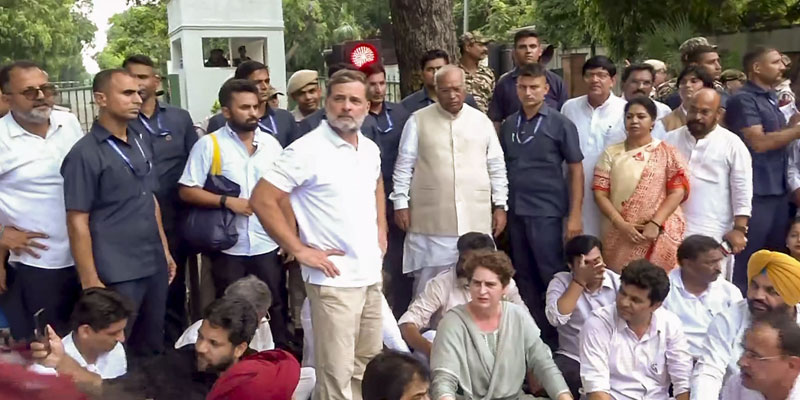
According to reports, the issue was discussed extensively in meetings involving senior Congress leaders, including Rahul Gandhi and Mallikarjun Kharge.
The discussions reportedly focused on finding a formula that would accommodate both Siddaramaiah and Shivakumar while minimizing internal friction. Sources suggest that Siddaramaiah was offered a larger national role, potentially accompanied by a Rajya Sabha opportunity, as part of a transition plan.
From the party’s perspective, such an arrangement would allow it to recognize Siddaramaiah’s contribution to Karnataka politics while creating space for a new leadership phase under Shivakumar.
Why DK Shivakumar Is the Leading Contender
Among potential successors, Shivakumar has emerged as the most likely candidate to assume the chief ministerial position. As Deputy Chief Minister and one of the Congress’s most influential organizational leaders, he has played a central role in strengthening the party’s electoral machinery in Karnataka.
Supporters argue that his elevation would provide continuity while also energizing the party ahead of future electoral challenges. His administrative experience, organizational network, and political reach make him a natural choice if the Congress decides to proceed with a leadership change.
At the same time, the transition would mark a generational and strategic shift in how the party positions itself in the state.
Timing, Strategy and Political Calculations
The reported move comes at a politically sensitive moment, with key parliamentary and organizational decisions approaching. A smooth transition now could help the Congress avoid prolonged uncertainty and maintain focus on governance and electoral preparations.
Analysts see the development as an exercise in political balancing—honoring a veteran leader’s legacy while empowering another senior figure to lead the party into its next phase.
A Test of Congress’s Internal Management
If the transition unfolds as expected, it will represent more than a change of chief ministers. It will be a test of the Congress’s ability to manage competing ambitions without triggering instability. By reportedly crafting a formula that accommodates both Siddaramaiah and Shivakumar, the party is seeking to demonstrate that leadership changes can be handled through consensus rather than confrontation. Whether that strategy succeeds will shape not only Karnataka’s political future but also perceptions of the Congress’s ability to govern its internal affairs effectively.
(With agency inputs)