

Bengal Rout Forces Mamata’s INDIA Alliance Reset
The 2026 West Bengal Assembly election has dramatically altered the state’s political landscape. After ruling Bengal for 15 years, the Trinamool Congress (TMC) suffered a resounding defeat at the hands of the Bharatiya Janata Party (BJP), which secured a commanding majority with more than 200 seats. The setback was made even more significant by the defeat of Chief Minister and TMC supremo Mamata Banerjee in her traditional Bhabanipur constituency. In the aftermath of this political upheaval, Banerjee has sought to revive and recalibrate the opposition INDIA alliance, arguing that the coalition must emerge stronger despite the electoral setback.
A Defining Political Setback for the TMC
The Bengal verdict represents one of the most significant reversals in Mamata Banerjee’s political career. Having dominated the state's politics since 2011, the TMC was reduced to roughly 80–90 seats, a sharp decline from its earlier electoral dominance.
The BJP’s victory has not only changed the balance of power in Bengal but has also strengthened the party’s narrative of expanding its footprint in regions once considered difficult political terrain. For the TMC, the defeat has prompted introspection about governance, voter sentiment, organizational strength, and the effectiveness of its electoral strategy.
Against this backdrop, Banerjee has attempted to shift the focus from regional defeat to national opposition unity.
Mamata Banerjee’s Call for a Reset
Soon after the election results, Banerjee called for renewed coordination among members of the INDIA alliance. Her message was clear: the opposition coalition should treat the Bengal outcome as an opportunity for reassessment rather than fragmentation.
According to her, a stronger and more coordinated opposition remains essential to challenge the BJP nationally. The proposed “reset” is intended to revive dialogue among alliance partners, improve strategic coordination, and create a more cohesive opposition platform ahead of future political contests.
However, the response from alliance members has been far from enthusiastic.
Coordination Challenges Within INDIA
One of the immediate issues exposed by Banerjee’s initiative is the apparent lack of communication within the alliance.
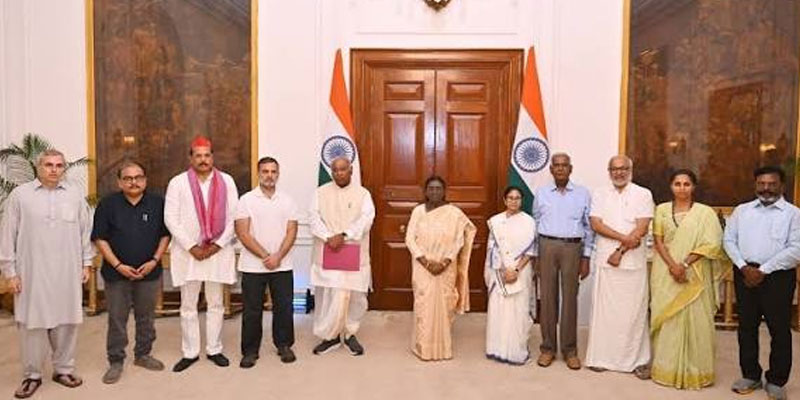
Reports suggest that senior figures in both the Congress and the Samajwadi Party expressed uncertainty about any proposed alliance-wide meeting. The absence of a clearly defined roadmap has highlighted the coalition’s dependence on informal interactions and individual leaders rather than institutional mechanisms.
This has reinforced concerns that the INDIA alliance remains more of an electoral arrangement than a fully integrated political coalition capable of sustained coordination between election cycles.
Congress-TMC Frictions Remain Unresolved
The most sensitive challenge for Banerjee’s reset effort lies in repairing relations with the Congress.
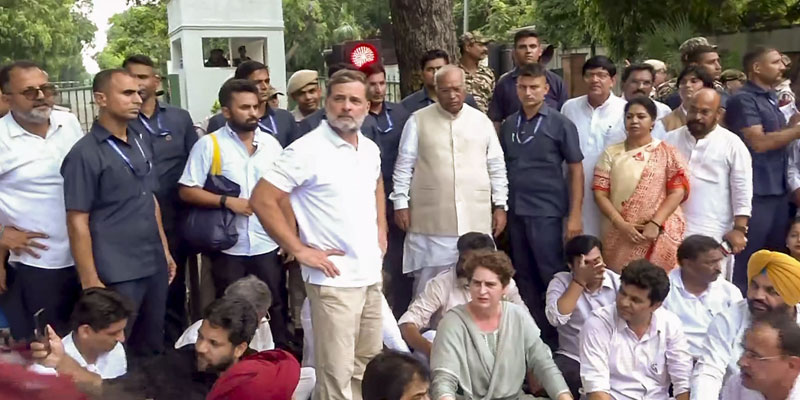
During the Bengal election campaign, Congress leaders, including Rahul Gandhi, sharply criticized the TMC on issues of governance and political conduct. Those exchanges created visible strains between two parties that simultaneously seek cooperation at the national level.
For any meaningful revival of the alliance, both sides will need to overcome recent political hostilities and establish a more pragmatic working relationship.
Wider Opposition Dynamics
Complicating matters further is the cautious approach of other key opposition players, including the DMK and the Samajwadi Party. While these parties continue to remain formally associated with the INDIA bloc, there is little indication of unanimous support for a TMC-led revival initiative. Their response will play a critical role in determining whether the alliance can evolve into a durable political platform or remain an arrangement driven primarily by electoral necessity.
The Road Ahead for the INDIA Bloc
The Bengal election has become more than a state-level political event; it has emerged as a test of the opposition’s ability to regroup after a major setback. Mamata Banerjee’s call to reset the INDIA alliance reflects an acknowledgment that opposition unity cannot be sustained through rhetoric alone. Whether the coalition can overcome internal rivalries, rebuild trust, and create a coherent national strategy will determine not only its future relevance but also the shape of India’s opposition politics in the years ahead.
(With agency inputs)