
Inside Jamia Protest: A Fight for Representation
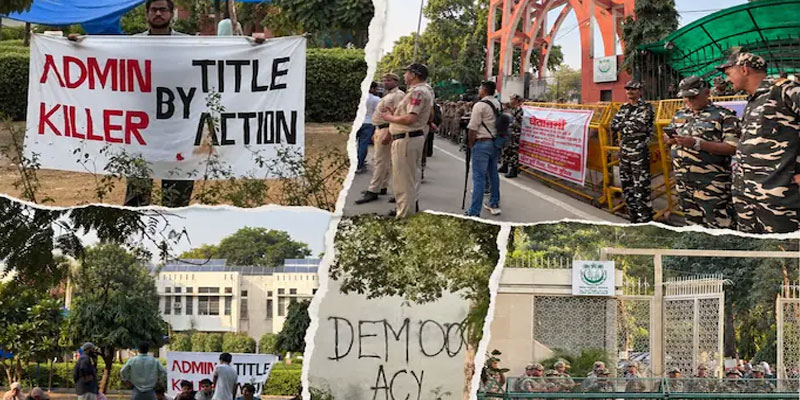
Inside Jamia protest, a long-standing demand for democratic student representation has developed into a wider confrontation over campus governance, academic disruption and the administration’s accountability. The agitation at Jamia Millia Islamia began on October 11, 2026, with hunger strikes demanding student union elections and the release of detained protesters. It has since intensified, raising questions about students’ participation in university decisions and the balance between peaceful protest and maintaining campus order.
Why Students Are Demanding Union Elections
Jamia has not held students’ union elections since 2006, leaving nearly two decades without an elected union to represent students’ collective concerns. Protesters argue that an elected body would provide a recognised platform to raise academic grievances, discuss welfare issues and engage the administration on campus policies.
Students have also pointed to Jawaharlal Nehru University (JNU) and Aligarh Muslim University (AMU), where student unions operate, questioning why Jamia has remained an exception. Some have extended their demand to other institutions, including IITs and private universities.
The central argument is that student representation should be institutionalised rather than depend on occasional consultations or informal negotiations.
The Immediate Demands and Failed Negotiations
The protesters want a written, time-bound election schedule. Their proposed roadmap includes:
· Drafting and approving the Students’ Union Constitution by December 20.
· Announcing the election date within 15 days of the constitution’s approval.
· Completing the electoral process by February 5.
The administration reportedly offered to hold elections within 15 days of approving the constitution. However, students rejected the assurance because it did not establish a sufficiently definite timetable.
On October 26, talks with Vice-Chancellor Professor Mazhar Asif’s administration failed to resolve the impasse. Although a committee to draft the constitution was formed and December 20 was discussed as a deadline, protesters maintained that their principal concerns remained unresolved.
Police Action, Security Concerns and Academic Disruption
The standoff intensified as police briefly detained more than 40 students amid clashes with security personnel. The university issued notices ordering protesters to vacate the protest site and warning of disciplinary or legal consequences. The administration has also alleged vandalism and damage to security infrastructure, while students have questioned restrictions on campus access.
On October 28, Jamia extended online teaching until November 24 and shifted end-semester examinations online. Theory examinations are scheduled from December 1 to 24, while practicals and project assessments are also to be conducted virtually. Physical classes are not expected to resume before January 13, 2027, subject to the situation.
What Could Happen Next?
The consequences extend beyond the immediate confrontation:
· Academic impact: Students with limited internet access and those requiring laboratories or practical training could face difficulties.
· Institutional trust: Further delays may deepen distrust, while a credible election schedule could reopen dialogue.
· Legal scrutiny: Continued hunger strikes, detentions and restrictions could intensify debate over peaceful assembly and proportionate security measures.
· Campus politics: A restored union could create a formal platform for student grievances and influence discussions about representation at other institutions.
A Democratic Resolution Must Restore Trust
Jamia’s challenge is to reconcile student representation, campus safety and uninterrupted education. A transparent constitution-drafting process, a binding election timetable, impartial inquiries into alleged misconduct and protection for peaceful protest could help break the deadlock.
Ultimately, the dispute is about more than an election date. A university’s democratic credibility depends on whether students have a meaningful voice in decisions affecting their lives. Resolving the Jamia standoff through dialogue and verifiable commitments would protect academic continuity while establishing a clearer path towards representative campus governance.
(With agency inputs)