
A Major Enforcement Action in Uttar Pradesh
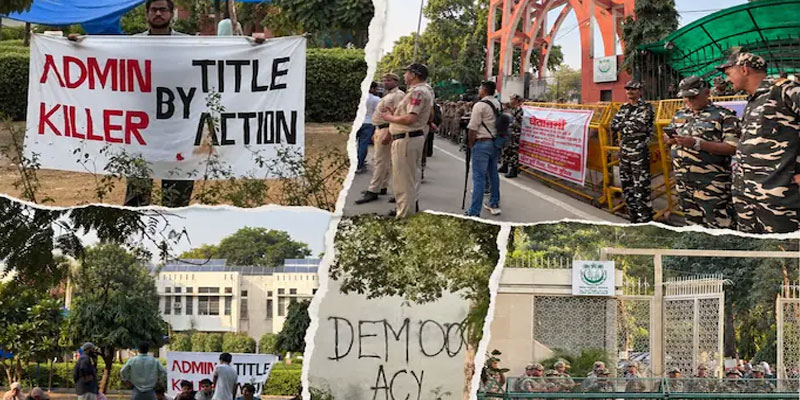
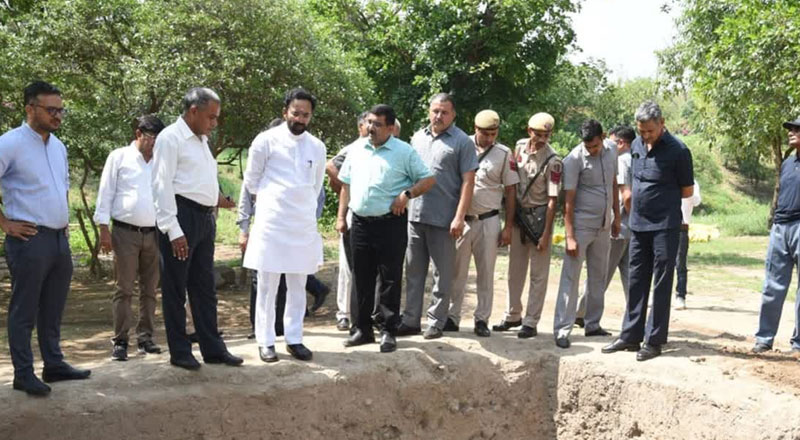
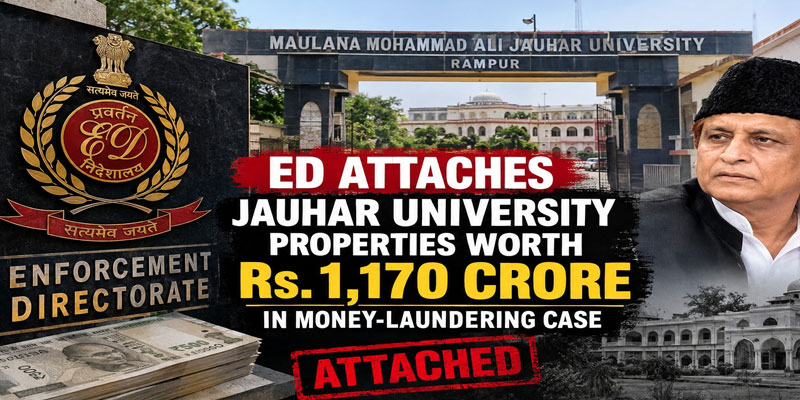
ED attaches SP leader Azam Khan's Rs 1,170-crore Jauhar University in UP. The Enforcement Directorate’s action against Mohammad Ali Jauhar University in Rampur marks a significant development in its money-laundering investigation involving Samajwadi Party leader Azam Khan. The agency has provisionally attached the university’s land and 59 campus buildings, valued at approximately ₹1,170 crore, alleging that ₹426.46 crore represents proceeds of crime.
The action raises questions about the alleged misuse of public funds, the university’s financial origins and the legal consequences for its management, students and employees.
What the Enforcement Directorate Alleges
The ED’s investigation centres on the Maulana Mohammad Ali Jauhar Trust, which controls the university. The agency alleges that public money, construction materials and government machinery were diverted towards developing the private educational institution.
According to the ED, a government valuer assessed the campus’s land and construction costs at ₹499.09 crore. However, the agency says only ₹72.63 crore could be explained through legitimate sources, leaving ₹426.46 crore classified as alleged proceeds of crime.
This calculation forms a central part of the agency’s justification for attaching the property. However, the allegations must be established through the legal process and should not be treated as proof of guilt.
Alleged Diversion of Government Funds
The ED has identified several transactions and projects that it believes warrant scrutiny:
· Government-sanctioned funds: The agency alleges that ₹23.41 crore sanctioned for a pandal, an OBC boys’ hostel and a hospital block was used for construction on the university campus.
· Transfer of ownership: An order issued in 2016, when Azam Khan was a cabinet minister, allegedly amended an earlier government order to transfer ownership of the pandal to the university.
· Road construction contracts: The ED alleges that a contractor’s managing director told investigators that 30–40% of the value of road-building contracts worth approximately ₹186 crore was used to purchase construction materials for the university.
· Land acquisition allegations: The investigation originated from 26 FIRs registered at Ajeem Nagar police station in Rampur, including allegations that farmers’ agricultural land was forcibly acquired for the institution.
What Does Provisional Attachment Mean?
The action has been taken under the Prevention of Money Laundering Act (PMLA), 2002. Provisional attachment is intended to prevent property suspected of representing proceeds of crime from being transferred or otherwise dealt with while proceedings continue.
It is important to distinguish attachment from final confiscation. The Trust and other affected parties can challenge the order before the PMLA adjudicating authority and the courts. Any ultimate confiscation would depend on the legal proceedings and applicable findings.
Possible Consequences for the University
The attachment could have several implications:
· For Azam Khan and the Trust: Increased legal and financial pressure, alongside restrictions on dealing with the attached property.
· For students and staff: Potential indirect disruption if litigation or financial constraints affect maintenance, administration, admissions or expansion.
· For Uttar Pradesh politics: Renewed scrutiny of Azam Khan and further political debate over alleged corruption and the use of public resources.
The university’s educational role does not settle the legality of its financing. Nevertheless, protecting students’ academic interests and employees’ livelihoods will be important while the case proceeds.
The Final Test: Evidence, Not Allegations
The ED’s action places a major educational institution at the centre of a high-stakes legal dispute. Its valuation, the alleged financial irregularities and the scale of the attached property make the case significant beyond the individuals involved.
However, the decisive question is whether investigators can substantiate their allegations with admissible evidence and establish the alleged money trail through the legal process.
The attachment marks a significant investigative step, not the final verdict. Accountability must follow the evidence, while due process and the interests of innocent students and employees must remain protected.
(With agency inputs)