
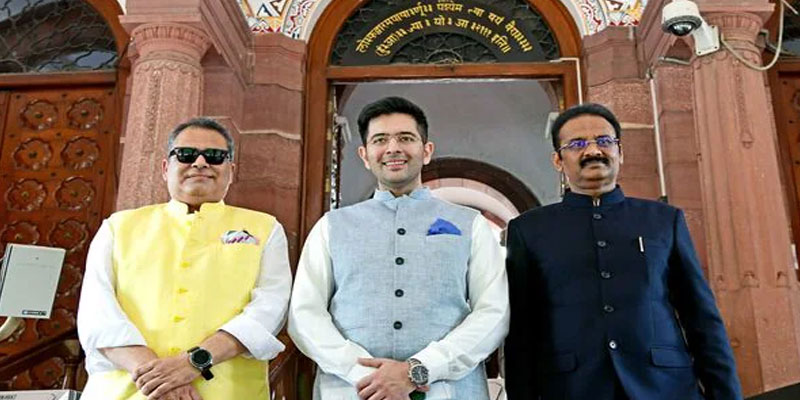
In a significant internal shift, the Aam Aadmi Party has removed Raghav Chadha as its Rajya Sabha deputy leader, appointing Ashok Mittal as his replacement. The move, conveyed formally to the Rajya Sabha, comes without an official explanation but carries deeper political implications for both Chadha’s trajectory and the party’s internal dynamics.
Why the Change Happened
While no single trigger has been cited, the decision appears to stem from a gradual erosion of Chadha’s role within the party. Once among AAP’s most visible faces, he has reportedly seen reduced participation in parliamentary debates and strategic communication. His earlier exclusion from key organisational responsibilities, including the party’s star campaigners list, hinted at a growing disconnect with the leadership.
The latest move goes further—reports suggest that Chadha may also be restricted from regular speaking slots in Parliament. This indicates a deliberate recalibration by the leadership, which likely seeks a more consistent and controlled presence in the Upper House. By elevating Mittal, a relatively low-profile but institutionally steady figure, the party seems to prioritise discipline and predictability over visibility.
Impact on Raghav Chadha’s Political Career
For Chadha, this is a clear setback. The deputy leader position in the Rajya Sabha is not merely symbolic; it provides visibility, influence, and a platform to shape national discourse. Losing this role—and potentially reduced speaking opportunities—limits his ability to project himself as a national-level leader.
However, this does not mark the end of his political relevance. Chadha still retains his position as a Member of Parliament and remains a recognisable face, particularly among urban and youth voters. His next steps will be crucial—whether he rebuilds influence within the party, pivots to state-level politics, or redefines his public engagement strategy. His political future now hinges on adaptability and the ability to regain the leadership’s confidence.
What It Means for AAP
For AAP, the reshuffle reflects a broader centralisation of authority under Arvind Kejriwal. By replacing a high-profile communicator with a more understated figure, the party appears to be tightening control over its parliamentary messaging. This could enhance discipline and reduce internal inconsistencies in the Rajya Sabha.
At the same time, the move carries risks. Chadha has been a key youth-oriented and media-savvy face of the party. Side-lining him without a clear public rationale may create perceptions of opaque decision-making and top-down control. For a party that has positioned itself as an alternative to traditional political structures, such perceptions could impact its image among supporters.
A Strategic Reset or Internal Strain?
The decision to replace Raghav Chadha with Ashok Mittal is more than a routine reshuffle—it signals a strategic recalibration within AAP. While it may strengthen internal discipline and parliamentary coherence, it also raises questions about leadership style and internal democracy. For Chadha, it is a moment of challenge and potential reinvention; for AAP, it is a test of balancing control with inclusivity.
(With agency inputs)