
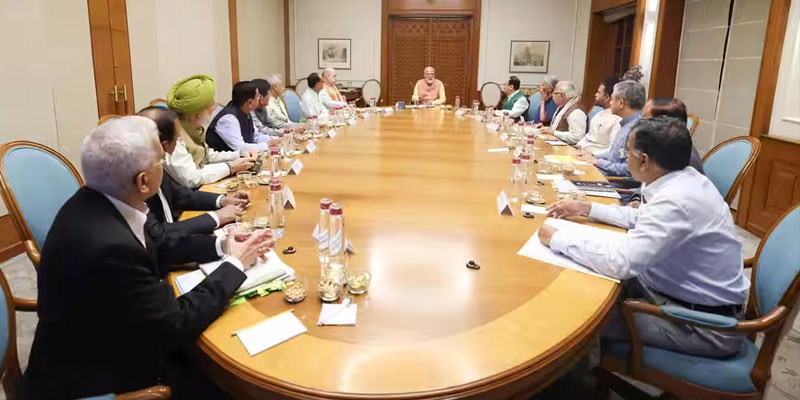
Prime Minister Narendra Modi recently chaired a high-level meeting of the Cabinet Committee on Security (CCS) to review the availability of fuel, fertilisers, and essential commodities in the wake of escalating tensions in West Asia. The meeting signals a proactive and coordinated response as the government prepares to shield the domestic economy from potential global disruptions triggered by geopolitical instability.
Energy Security and Fuel Stability
A key priority for the CCS was ensuring uninterrupted energy supplies. India, heavily reliant on crude imports, faces vulnerability to price spikes and supply bottlenecks during geopolitical crises. The government reviewed petroleum stock levels, refinery operations, and diversification strategies for LPG and LNG imports. Contingency measures such as adjusting fuel duties and leveraging strategic petroleum reserves are being considered to cushion consumers and industries. Importantly, the focus is not only on supply adequacy but also on managing public perception—preventing panic buying while reinforcing confidence that reserves are sufficient in the short term.
Fertilisers and Agricultural Continuity
Fertiliser availability emerged as another critical concern, especially with the Kharif and Rabi seasons approaching. India’s dependence on imported fertilisers like DAP and NPK makes it susceptible to disruptions in global supply chains. The government has intensified engagement with international suppliers while ensuring optimal output from domestic urea plants. States have been directed to monitor distribution networks closely and act decisively against hoarding or diversion. These measures aim to stabilise input costs for farmers, safeguard crop cycles, and prevent a ripple effect on food inflation and rural incomes.
Essential Supplies and Price Control
Beyond fuel and fertilisers, the CCS assessed broader supply chain resilience. Ministries reported coordinated efforts across logistics, shipping, and aviation to minimise disruptions and contain freight costs. Maintaining steady flows of essential goods is vital to avoid inflationary pressures and market distortions. Authorities have also emphasised strict enforcement against black-marketing and hoarding, learning from past crises where misinformation and speculative behaviour exacerbated shortages.
Communication and Market Confidence
A notable aspect of the government’s strategy is its emphasis on information management. Accurate and timely communication through official channels is being prioritised to counter rumours and prevent unnecessary panic in local markets. This reflects an understanding that economic stability during crises depends as much on public confidence as on policy measures.
Preparedness Over Reaction
The CCS meeting underscores a broader strategic shift—from reactive crisis management to anticipatory governance. By treating the West Asia conflict as a prolonged, multi-sectoral risk, India is aligning policy tools across energy, agriculture, logistics, and communication. This whole-of-government approach not only mitigates immediate disruptions but also strengthens long-term resilience. As global uncertainties persist, India’s calibrated response positions it to navigate volatility while protecting both economic stability and public confidence.
(With agency inputs)