
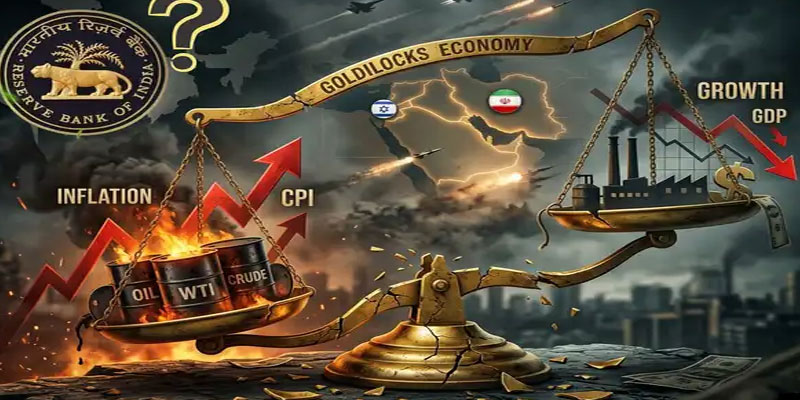
A New Global Economic Jolt
From rising inflation to slowing growth, the ongoing West Asia conflict is set to reshape the global economy in multiple ways, according to the International Monetary Fund. The war involving the United States, Israel, and Iran has triggered a multi-layered shock, hitting energy supplies, trade routes, and financial markets simultaneously—just as the world economy was beginning to stabilize after years of disruption.
Energy Shock and Its Ripple Effects
At the center of this crisis lies energy. The Strait of Hormuz, through which a significant share of the world’s oil and liquefied natural gas passes, has become a critical chokepoint. Any disruption here sends immediate shockwaves across global markets. Import-dependent economies, particularly in Asia and Africa, are already struggling to secure energy supplies at manageable costs.
Rising oil prices are not just an energy issue—they quickly translate into broader inflation. Higher fuel costs increase transportation and production expenses, pushing up prices across sectors. For countries that had only recently begun to tame inflation, this reversal is particularly damaging. If sustained, such price pressures risk becoming embedded in economic behavior, with businesses and households adjusting expectations upward.
Trade Disruptions and Supply Chain Strain
Beyond energy, the conflict is also disrupting global supply chains. Shipping routes are being rerouted to avoid conflict zones, increasing freight costs and delivery times. Air traffic disruptions around key Gulf hubs are further affecting logistics and tourism.
Critical resources are also at risk. The Gulf region is a major supplier of helium, essential for industries like semiconductors and healthcare. Any disruption could lead to shortages and price spikes in these sectors. Similarly, fertilizer trade routes are under pressure, raising concerns about agricultural output and food prices, especially as key planting seasons approach.
The impact is uneven but widespread. Economies in Eastern Africa, for example, face reduced remittances and weaker demand for exports as Gulf economies slow. The IMF underscores that poorer and import-dependent nations are disproportionately affected, widening global inequality.
Financial Markets Under Pressure
Financial markets have responded with caution. Stock indices have dipped, bond yields have risen, and overall volatility has increased. While the reaction has not yet reached crisis levels, the tightening of financial conditions is evident. Borrowing is becoming more expensive, particularly for emerging markets already burdened with high debt.
This combination—higher import costs, weaker currencies, and rising interest rates—puts significant strain on government finances. Countries may find it increasingly difficult to balance spending needs with fiscal discipline, especially as economic growth slows.
A Delicate Global Balancing Act
The IMF’s assessment points to a clear and concerning trajectory: higher inflation, slower growth, and more complex policy challenges. The duration and intensity of the conflict will determine the scale of the impact, but the direction is already evident.
For policymakers, the challenge lies in navigating this fragile environment—supporting growth without fueling inflation, and maintaining stability amid uncertainty. For the global economy, the West Asia conflict is not just a regional crisis; it is a reminder of how quickly interconnected systems can transmit shocks.
In this uncertain landscape, resilience and coordination will be key, as nations grapple with the dual pressures of rising costs and weakening growth prospects.
(With agency inputs)