
The administration of Donald Trump is easing sanctions on certain Iranian oil stockpiles, signalling a pragmatic shift amid escalating tensions with Iran. Even as Washington continues its military and strategic pressure, this move reflects a growing recognition: the global energy crisis triggered by the conflict is becoming too severe to ignore.
A War Colliding with an Energy Shock
Three weeks into the conflict, disruptions in the Strait of Hormuz—a critical artery for global oil shipments—have significantly tightened supply. Iran’s actions, including tanker disruptions and partial closure of the strait, have pushed oil prices beyond $100 per barrel, with ripple effects across global markets.
In the United States, fuel prices have surged sharply, placing pressure on households and raising broader economic concerns such as inflation and slowing growth. Washington initially relied on conventional tools: releasing reserves, easing logistics rules, and urging key producers like Saudi Arabia and United Arab Emirates to increase output.
However, these measures have proven insufficient against what is now seen as a structural supply shock rather than a temporary disruption.
Why Allow Iranian Oil Back into the Market?
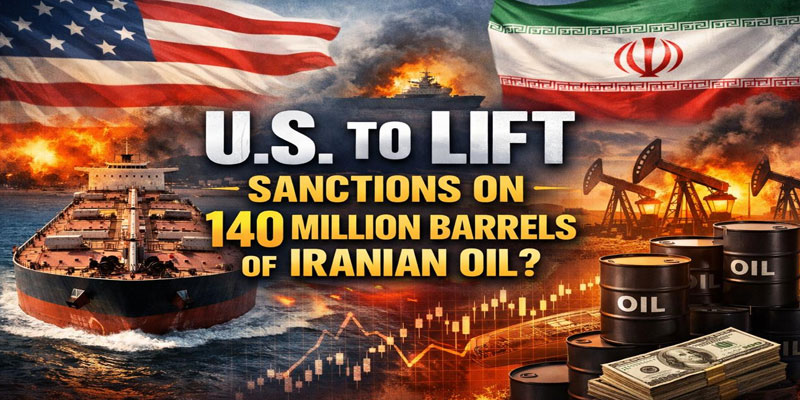
The decision to ease sanctions is narrowly targeted. The US is allowing approximately 140 million barrels of Iranian oil—already stored in tankers at sea—to re-enter the market legally. This limited release is designed to provide immediate relief without signalling a full policy reversal.
The logic is straightforward. A sudden increase in available supply could cool prices in the short term, stabilise markets, and discourage speculative spikes. It also demonstrates to traders that the US is willing to act decisively to prevent runaway energy costs.
Yet, the move is deeply transactional. While Washington seeks to weaken Iran’s strategic position, it is simultaneously enabling limited oil revenue flows to stabilise its own economy. This paradox highlights the constraints of confronting a major energy producer in an interconnected global market.
Limited Options and Strategic Trade-offs
The administration’s options have narrowed considerably. Further releases from strategic reserves risk depleting emergency buffers. Tax cuts on fuel offer only marginal relief while increasing fiscal strain. Pressuring global producers has yielded limited results due to constrained spare capacity.
Against this backdrop, easing sanctions on oil already in circulation emerges as the least disruptive option. It injects real supply quickly without requiring new production or long-term commitments.
However, this is a temporary fix. Once these reserves are absorbed, the US may face a more difficult choice: expand sanctions relief further or accept prolonged high prices with domestic political consequences.
Contradictions in Strategy and Politics
This policy shift exposes a fundamental contradiction. The broader US objective has been to restrict Iran’s economic capacity, particularly its energy revenues. Allowing even limited oil sales undermines that goal, offering Tehran short-term financial breathing space.
Politically, it also contrasts with Trump’s earlier rhetoric that framed rising energy costs as acceptable “short-term pain.” The current approach suggests a recalibration driven by economic realities, including inflation risks and electoral pressures.
A Tactical Pause, not a Policy Shift
Easing sanctions on Iranian oil stockpiles is less a strategic pivot and more an emergency response to an intensifying energy crisis. It underscores the limits of using economic pressure against a country that holds significant leverage over global supply routes.
Ultimately, the move reflects a delicate balancing act—between sustaining pressure on Iran and protecting domestic economic stability. Whether this temporary measure evolves into a broader policy shift will depend on how long the crisis persists and how much strain global markets—and political systems—can endure.
(With agency inputs)