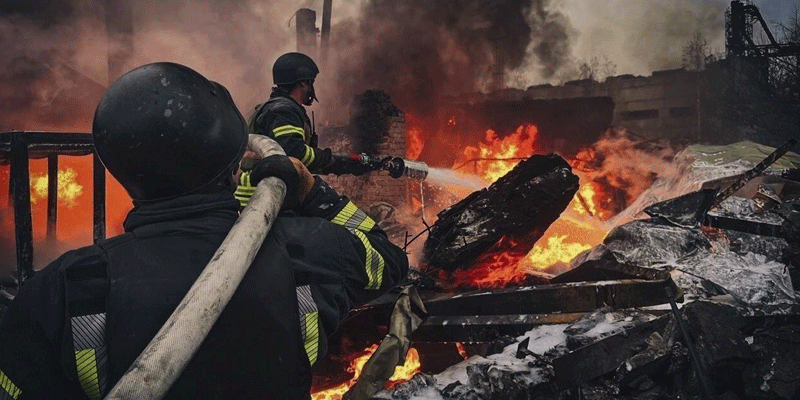

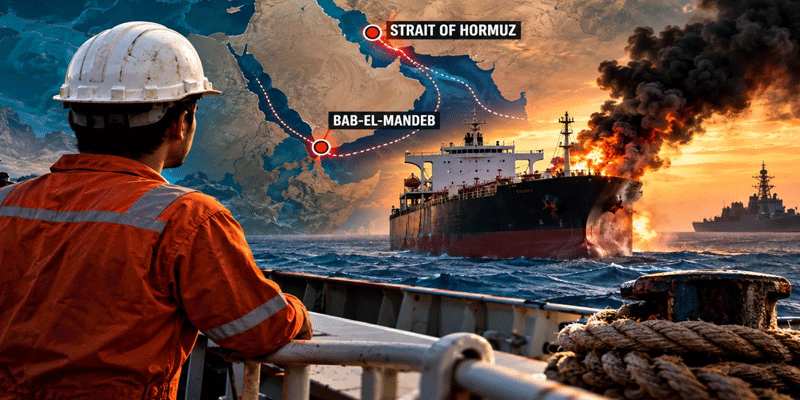
A Liberian-flagged oil tanker carrying 23 Indian sailors caught fire off Russia’s Black Sea coast near Sochi after what Russian authorities described as an attack involving naval drones. The vessel, Aframax Rio, was struck on October 6, sending flames and a huge column of black smoke into the sky. All 23 Indian crew members were rescued safely, with no injuries reported. The incident has nevertheless highlighted the growing risks facing commercial shipping amid the continuing Russia-Ukraine war.
A War That Has Reached Commercial Sea Routes
Commercial vessels can be exposed because of their cargo, flag, destination or proximity to military activity, even when they have no connection with either side of the conflict.
Tanker Fire Exposes Growing Maritime Risk
The Aframax Rio attack occurred amid a wider cluster of incidents involving commercial vessels. India’s Ministry of External Affairs said the Togo-flagged Alfa Watan, Palau-flagged Able and Aframax Rio had come under attack.
The Able was carrying 18 crew members, including seven Indians. One Indian sailor was injured, while the crew was evacuated to Varna, Bulgaria. The status of the Alfa Watan crew remained under assessment when India issued its statement.
The tanker fire itself created additional concerns. Russian authorities said crude oil was burning on the water and initially prevented emergency teams from approaching because of the intensity of the blaze. Nearby beaches and coastal areas were restricted as a precaution.
Although initial monitoring reportedly found pollutant levels below permitted limits, the environmental impact can only be properly assessed after the vessel and any possible oil leakage are examined.
Who Carried Out the Attack?
Russia described the incident as a naval-drone attack, while several reports attributed responsibility to Ukraine. However, there was no immediate independent confirmation establishing that Ukrainian forces carried out the strike.
That distinction is important because both Russia and Ukraine have accused each other of attacks affecting civilian maritime activity in the Black Sea.
India Condemns Attacks on Commercial Shipping
For New Delhi, the incident has a direct human and diplomatic dimension. India strongly condemned attacks on commercial vessels, seafarers and civilian infrastructure and called for an immediate cessation of such strikes.
India has also co-launched the UN Group of Friends on Safety and Security of Shipping and Seafarers, reflecting its growing interest in protecting maritime workers and international commercial routes.
The incidents could also have wider economic consequences:
· Higher insurance premiums for ships operating in the region.
· Longer and more expensive shipping routes.
· Increased freight and energy costs.
· Potential disruption of Black Sea commodity supplies.
· Environmental risks from damaged oil tankers.
Protecting Merchant Ships Must Become a War Priority
The successful rescue of all 23 Indian sailors aboard the Aframax Rio prevented a potential tragedy. But their ordeal demonstrates how commercial crews can become exposed to military risks in waters increasingly shaped by the Russia-Ukraine conflict.
The immediate priorities are establishing responsibility, containing the fire and assessing environmental damage. The larger challenge is ensuring credible maritime deconfliction and protection for merchant vessels. Without stronger safeguards, the Black Sea’s commercial routes will remain vulnerable—and Indian and other international seafarers will continue to face dangers from a war they did not choose.
(With agency inputs)