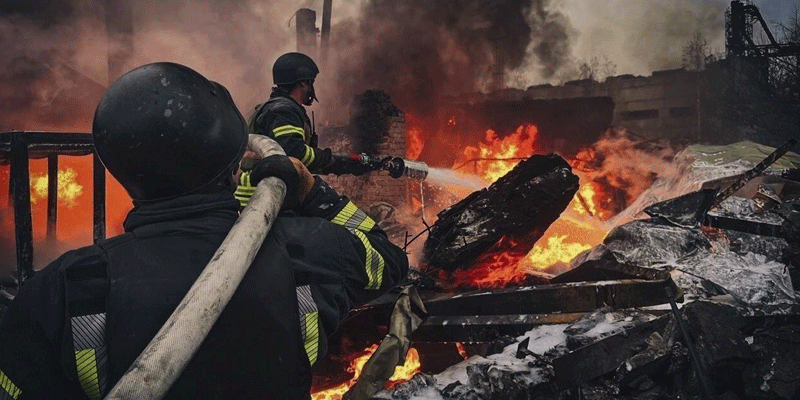

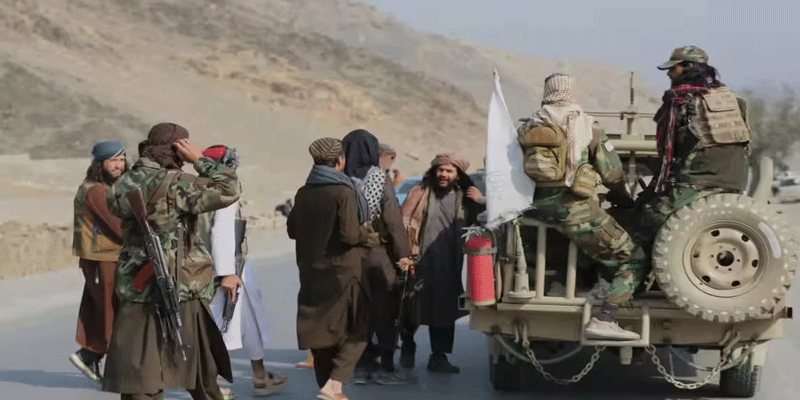
Fresh Pakistani airstrikes inside Afghanistan have reignited tensions between the two neighbouring countries, with the Afghan Taliban government reporting civilian casualties, including women and children. The October 1, 2026 attacks, which allegedly killed at least nine people and injured 11 others, have raised concerns about a renewed cycle of cross-border violence after nearly three months of relative calm.
A Troubled Relationship Marked by Cross-Border Militancy
Relations between Pakistan and Afghanistan have remained strained over border security, militant activity and competing allegations of providing safe havens to armed groups. The dispute has intensified since the Taliban returned to power in Kabul in August 2021.
Islamabad has repeatedly accused Afghanistan of allowing the Tehreek-e-Taliban Pakistan (TTP) and other militant organisations to operate from its territory and launch attacks inside Pakistan. Kabul has rejected these allegations, maintaining that Pakistan's security challenges are an internal matter.
Pakistan has periodically conducted airstrikes and artillery operations inside Afghanistan, describing them as necessary measures against militant infrastructure. The Afghan Taliban administration has condemned such operations as violations of Afghan sovereignty. Previous diplomatic interventions and ceasefire understandings have failed to establish lasting stability along the border.
Overnight Strikes Hit Kunar and Helmand
According to Taliban government spokesperson Zabihullah Mujahid, Pakistani aircraft struck residential locations late Wednesday night in two Afghan provinces.
The reported targets included the Chugam area of Shultan district in Kunar province and the Safar area of Garmser district in Helmand province. Mujahid claimed that three houses were destroyed, killing at least nine civilians and injuring another 11, including women and children.
Condemning the attacks through a statement on X, he described the strikes as an act of aggression and accused Pakistan of violating accepted international principles by targeting civilian areas. Local officials in Helmand also confirmed that the province had been affected.
However, Islamabad presented a sharply different account of the military operation.
Pakistan Claims Precision Strikes Against Militants
Pakistan's Ministry of Information and Broadcasting described the operation as a series of precision airstrikes against militant hideouts inside Afghanistan. According to its initial assessment, approximately 22 militants were killed and weapons caches were destroyed.
Although Islamabad did not provide detailed information about the organisations targeted, previous Pakistani operations have focused on groups associated with the TTP and Hafiz Gul Bahadur's Ittehad ul Mujahideen Pakistan, which have been linked to attacks against Pakistani security personnel.
The conflicting casualty claims underline the difficulty of independently verifying events in remote border regions. While Kabul maintains that civilians were killed, Pakistan insists that its operation targeted militant infrastructure.
A Fragile Border Faces Another Dangerous Test
The latest strikes threaten to undermine the relative calm achieved through diplomatic engagement and regional mediation. Any retaliatory action by Afghanistan could further intensify an already volatile security situation.
Beyond the immediate casualties, the confrontation highlights the absence of a sustainable mechanism to address cross-border militancy and security concerns. Both countries face the challenge of preventing armed groups from exploiting their shared frontier.
Ultimately, lasting stability will depend on verifiable security commitments, diplomatic engagement and respect for civilian lives. Without sustained dialogue and cooperation, repeated military confrontations risk turning an unresolved security dispute into a wider regional crisis.
(With agency inputs)