A 19-year-old Illinois man who allegedly identified himself as a “sociopathic white supremacist neo-Nazi” has been arrested in the United States over an alleged plan to carry out a mass shooting at a Hindu temple in the Aurora area. The case has prompted India to urge Washington to conduct a thorough investigation and strengthen protection for Indian-origin communities, amid renewed concerns about extremist violence targeting religious minorities.
How Police Uncovered the Alleged Plot
The suspect, Alexandros Paporakis of Palatine, Illinois, was arrested on October 11 after a co-worker reportedly alerted authorities to his alleged plans. According to investigators, Paporakis, who worked as a Taco Bell cashier, had spoken about attacking what he described as the largest Hindu temple in Aurora and referred to October 11 as a “special day.”
Police allege that he travelled towards the temple area carrying a modified AR-style rifle, approximately 300 rounds of ammunition, body armour, tactical equipment and gasoline cans. The alleged plan was disrupted after the firearm reportedly malfunctioned and a co-worker reported the threat to law enforcement.
Officers arrested him near his Palatine apartment at approximately 3:42 pm. A subsequent search allegedly recovered an untraceable AR-style rifle, loaded magazines, hundreds of rounds of ammunition, a tactical vest, a gasoline container marked with an anti-South Asian slur and items bearing Nazi symbols.
Extremist Manifesto Raises Serious Concerns
Prosecutors have cited a document titled Why I fought: A.K.A.: (Aurora Shooter’s Manifesto), which investigators say contains white-supremacist and neo-Nazi ideology and references violence against South Asians, particularly Indians.
Authorities believe the alleged plan may have targeted a Hindu place of worship in Aurora, approximately 65 kilometres southwest of Palatine. However, investigators have not publicly confirmed the precise intended target. The FBI is assisting with the continuing investigation.
The recovered material is expected to help investigators establish the suspect’s intentions, assess the extent of the alleged preparations and determine whether anyone else was involved.
Criminal Charges and Court Proceedings
Paporakis faces two felony charges, according to the information provided by authorities:
· Making a terrorist threat: A Class X felony under Illinois law.
· Unlawful possession of a short-barrelled rifle: A Class 3 felony.
Following a hearing on October 14, a Cook County judge ordered him to remain in custody pending trial. He is scheduled to appear in court again on October 30. The charges represent allegations, and the prosecution must establish the case through the judicial process.
India Seeks Stronger Protection for Its Community
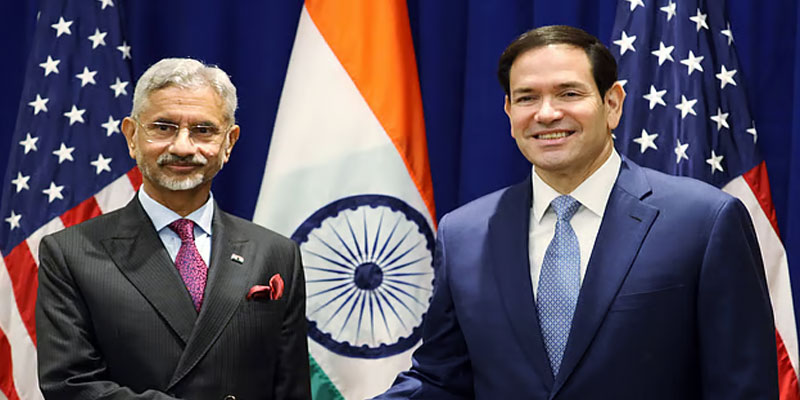
India’s Ministry of External Affairs spokesperson Randhir Jaiswal described the alleged anti-Hindu and racist nature of the plot as “particularly disturbing.” New Delhi welcomed the action taken by American law enforcement and called for a comprehensive investigation and stronger safeguards for Indian-origin and Hindu communities.
The Indian Consulate in Chicago also condemned the alleged plot, describing it as an expression of anti-India hatred and racist hostility.
The case has raised concerns among Hindu community organisations and advocacy groups about threats against religious institutions. The Hindu Mandir Empowerment Council urged temples and devotees across the United States to remain vigilant and report suspicious activity promptly.
Vigilance and Accountability Must Prevail
The alleged plot highlights the importance of early threat reporting, effective cooperation between local police and federal agencies, and robust protection for vulnerable religious communities. The co-worker’s reported intervention appears to have played a crucial role in bringing the alleged threat to authorities’ attention.
As investigators examine the evidence, the priority must be to establish the facts, ensure due process and address any credible threat to public safety. Protecting places of worship requires both decisive law enforcement and a firm commitment to religious freedom, equal protection and accountability. The case also reinforces the need for communities to report threats without delay, helping authorities intervene before extremist intentions translate into violence.
(With agency inputs)