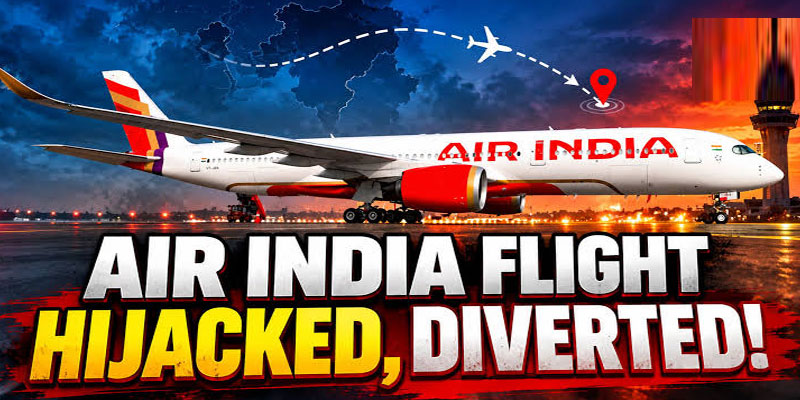
Air India flight AI2030, travelling from Frankfurt to Delhi, was diverted to Jaipur on Wednesday after a brief transponder signal associated with a possible hijacking or unlawful interference triggered an aviation security response. The Boeing 787-9 landed safely at Jaipur International Airport and was moved to an isolation bay for precautionary checks. However, authorities had not officially confirmed an actual hijacking, and the precise reason for the alert remained unclear.
What Triggered the Emergency Diversion?
According to initial reports, Ahmedabad Air Traffic Control received a Squawk 7500 signal at around 9 am while the aircraft was flying through the Mumbai Flight Information Region.
Squawk 7500 is an internationally recognised transponder code used to indicate unlawful interference with an aircraft, including a possible hijacking. Even a brief transmission of this code warrants immediate attention because aviation authorities must treat potential security threats seriously until they are assessed.
The aircraft was diverted at approximately 9:10 am and landed in Jaipur around 9:35–9:45 am. The diversion enabled authorities to conduct security procedures on the ground rather than allow the aircraft to continue to its original destination while the alert remained unresolved.
Conflicting Reports Complicate the Picture
Initial accounts described the incident as a bomb threat, with Jaipur police reportedly receiving information about an emergency landing following such a warning. Subsequent reports suggested that the episode may instead have involved a hijack-related alert or rumour.
Some accounts raised the possibility that the transponder code had been transmitted accidentally. However, neither an accidental transmission nor a genuine security threat had been conclusively established in the information available at the time.
The distinction is important: a hijack alert is not, by itself, proof that an aircraft has been hijacked. Investigators must establish the circumstances surrounding the signal before drawing conclusions.
Security Agencies Begin Precautionary Checks
Following the landing, the aircraft was moved to an isolation bay, where passengers and crew were deboarded and taken to a designated holding area. Security personnel-initiated checks as part of the standard response to a potential aviation threat.
The reported measures included:
· Screening passengers and baggage for potential security concerns.
· Inspecting the aircraft before any decision on further operations.
· Investigating the origin and circumstances of the transponder signal.
· Coordinating with aviation authorities, with the Directorate General of Civil Aviation reportedly monitoring the situation.
The safe landing and immediate security response helped authorities assess the situation without exposing the aircraft to further uncertainty.
Aviation Security Depends on Swift Verification
The incident highlights the sensitivity of international aviation systems, where even a brief emergency signal can trigger significant operational consequences. Diversions disrupt passenger schedules, require additional airport resources and demand coordination among airlines, air traffic controllers and security agencies.
It also demonstrates the importance of timely, consistent public communication. Conflicting early reports about a bomb threat and a hijack alert can create unnecessary anxiety when the facts are still being established.
Safety First, Facts Before Conclusions
The immediate priority was to ensure the safety of everyone aboard and establish whether the alert represented a genuine threat, an accidental transmission or another technical or operational issue. The investigation's findings will be essential to determining the appropriate next steps.
Ultimately, the diversion demonstrates why aviation authorities must treat unusual security signals seriously, even when their cause is uncertain. A safe landing is the first success; establishing the facts transparently is the next essential step.
(With agency inputs)