Mumbai’s immigration authorities have reportedly directed actor Imran Khan, a United States citizen holding an Overseas Citizen of India (OCI) card, to leave India by October 28, 2026, following his participation in a protest against Chief Election Commissioner Gyanesh Kumar. The action has brought immigration law, political demonstrations and the scope of OCI privileges into focus, raising questions about the legal grounds for restricting a foreign national’s continued stay in India.
What Triggered the Immigration Action?
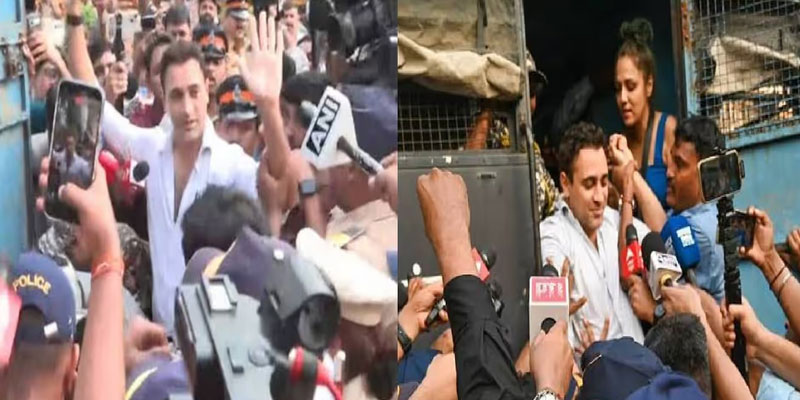
Khan, known for his role in Delhi Belly and as the nephew of actor Aamir Khan, was detained on October 10 during a demonstration at or near August Kranti Maidan in south Mumbai. The protest supported a wider campaign demanding the resignation of Chief Election Commissioner Gyanesh Kumar over alleged irregularities in the Special Intensive Revision (SIR) of electoral rolls.
Police detained Khan along with other demonstrators. Subsequently, BJP leader Kirit Somaiya reportedly complained about the participation of a US citizen holding OCI status in the political demonstration. The complaint brought Khan’s immigration status under scrutiny and was followed by action from the Foreigners Regional Registration Office (FRRO).
What the Notice and Law Provide
According to reports, the FRRO has issued a formal notice directing Khan to depart India by October 28. The action reportedly invokes Sections 7 and 29 of the Immigration and Foreigners Act, 2025. Section 7 provides powers to regulate or restrict foreigners’ entry, presence, movement and departure in India.
An FIR has also reportedly been registered at Mumbai’s Gamdevi police station against Khan and other demonstrators under provisions of the Bharatiya Nyaya Sanhita concerning disobedience of orders, wrongful restraint and unlawful assembly. The allegations in the FIR remain distinct from the immigration proceedings, and their merits must be assessed through the applicable legal process.
OCI Status: Rights and Restrictions
An OCI card provides eligible foreign nationals of Indian origin with long-term visa privileges and certain residency and economic benefits. However, it does not confer Indian citizenship. OCI cardholders cannot vote or contest elections and remain foreign nationals for immigration purposes.
The central legal question is whether participation in a political protest, by itself, violates the conditions governing an OCI holder’s stay. While foreign nationals do not possess the full political rights of Indian citizens, the specific restrictions applicable to public demonstrations and the grounds cited in an individual notice require careful examination. Participation in a protest does not, on its own, establish that a statutory violation has occurred.
Legal Powers, Political Expression and Proportionality
The authorities’ powers under immigration law must be considered alongside the precise grounds for their exercise. The notice’s reasoning, the applicable statutory provisions and the circumstances of the demonstration will be important in determining whether the action is legally sustainable.
The case also raises a wider question about proportionality: how should the state balance immigration enforcement with the ability of non-citizens to participate in peaceful civic activities? OCI registration may also be cancelled under Section 7D of the Citizenship Act on specified grounds, making compliance with applicable conditions particularly significant.
October 28 Deadline: A Test of Legal Boundaries
The immediate focus is whether Khan complies with the departure notice, seeks clarification or challenges the action through the available legal channels. Any such proceedings could help establish how India’s immigration framework applies to OCI cardholders involved in political demonstrations.
Ultimately, the distinction between possessing citizenship rights and exercising civic expression as a foreign national is central to this controversy. The authorities have the responsibility to enforce immigration law, but the legal basis for doing so must remain clear and defensible. The outcome will matter beyond one actor: it could shape expectations for OCI cardholders and clarify the boundaries between immigration control, public participation and lawful political expression in India.
(With agency inputs)