

The Middle East has entered another volatile phase after the United States reimposed a maritime blockade on Iranian ports, citing renewed Iranian attacks on commercial shipping in and around the Strait of Hormuz. The move marks the collapse of a fragile interim arrangement that had briefly eased tensions and underscores the growing risk of a prolonged confrontation. With both sides hardening their positions, the latest developments have raised concerns over maritime security, regional stability and the uninterrupted flow of global energy supplies.
Why the Strait of Hormuz Matters
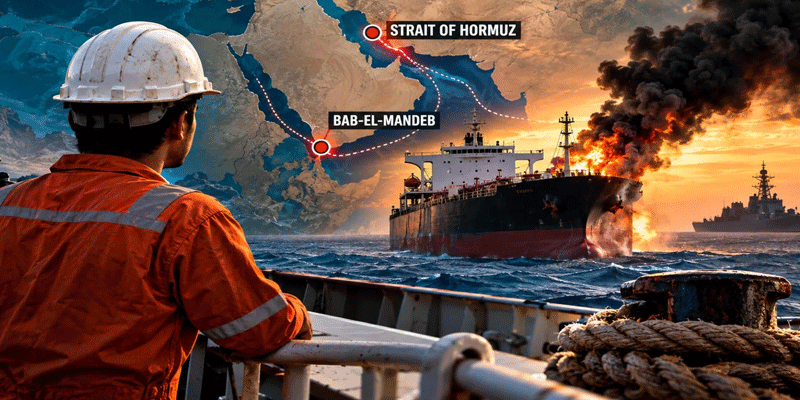
The Strait of Hormuz remains one of the world's most strategically important maritime chokepoints, connecting the Persian Gulf with the Gulf of Oman and the Arabian Sea. According to the U.S. Energy Information Administration, more than a quarter of global seaborne oil trade and roughly one-fifth of global liquefied natural gas (LNG) trade passed through the strait during 2024 and early 2025. Any disruption along this narrow passage has immediate implications for global energy markets, shipping costs and inflation worldwide.
The latest crisis intensified after Iran targeted commercial vessels attempting to transit the waterway, prompting Washington to restore maritime restrictions on ships entering or leaving Iranian ports. U.S. Central Command (CENTCOM) said the renewed blockade became effective on July 14, reviving measures that had previously been enforced between April and June.
Iran-US War Update: Escalation Replaces Diplomacy
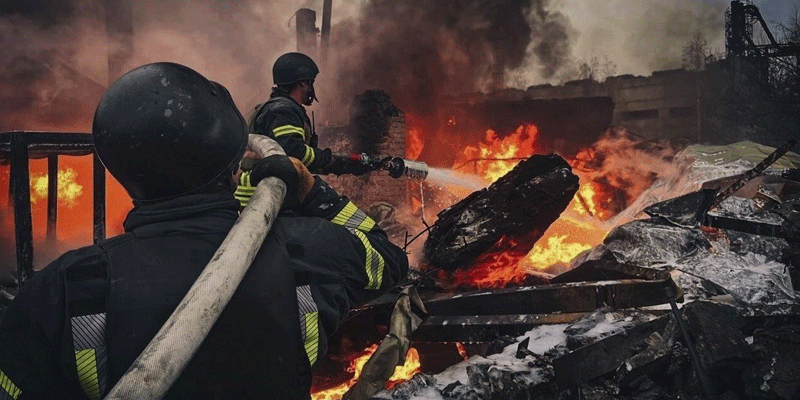
Military tensions between Tehran and Washington have deepened significantly over recent days. Alongside the blockade, U.S. forces have launched additional strikes targeting Iranian military infrastructure linked to attacks on commercial shipping. In response, Iran has reportedly expanded retaliatory operations against U.S. military installations and allied assets across the Middle East while continuing to threaten maritime traffic near the Strait of Hormuz.
Meanwhile, President Donald Trump abandoned a proposed 20% transit fee for vessels using the Strait of Hormuz after objections from Gulf allies. Instead, Washington opted to pursue broader trade and investment arrangements while retaining the blockade on Iranian-linked shipping, signalling that economic and strategic pressure—not revenue collection—has become the primary objective.
Strait of Hormuz: The New Strategic Flashpoint
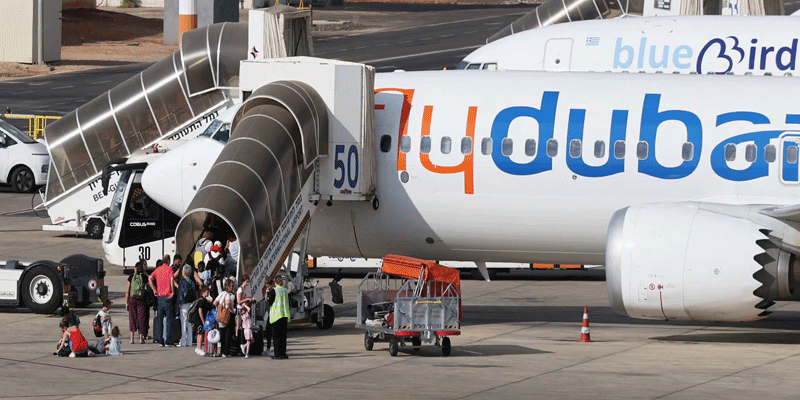
The renewed blockade does not prohibit neutral vessels from transiting the Strait of Hormuz, but it authorises U.S. forces to intercept ships entering or leaving Iranian ports. CENTCOM has said compliant commercial traffic and humanitarian shipments will continue to receive support, while vessels violating the restrictions risk interception or diversion. Earlier enforcement reportedly redirected more than 140 vessels, disabled nine non-compliant ships and facilitated the passage of humanitarian cargo.
The broader concern extends beyond naval operations. Rising insurance premiums, higher freight charges and uncertainty over future energy exports have already unsettled global markets. Oil prices have climbed as investors weigh the possibility of prolonged disruption in one of the world's most vital energy corridors. Even without a complete closure of the strait, sustained military activity is enough to disrupt supply chains and increase volatility across international commodity markets.
A Crisis Demanding Urgent De-escalation
The unfolding confrontation reflects a classic cycle of coercive escalation, with both Iran and the United States attempting to strengthen their bargaining positions while avoiding an outright regional war. However, as military operations increasingly overlap with commercial shipping routes, the likelihood of miscalculation continues to grow. Unless diplomatic engagement resumes quickly, the Strait of Hormuz risks becoming the centrepiece of a prolonged geopolitical contest whose consequences would extend far beyond the Gulf, affecting global trade, energy security and international economic stability.
(With agency inputs)