
US Imposes 10–12.5% Tariffs on Over 60 Countries
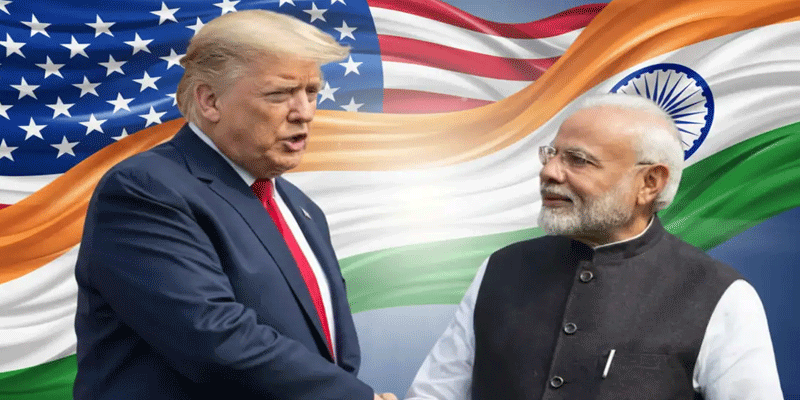
The United States has imposed fresh tariffs ranging from 10% to 12.5% on imports from more than 60 countries, citing inadequate enforcement against forced labour in global supply chains. While the Trump administration has presented the move as a human rights-driven trade measure, analysts view it as a broader restructuring of America's tariff policy that selectively penalises trading partners. India, notably, has avoided the steeper 12.5% duty and has instead been placed in the relatively favourable 10% category, reflecting recent improvements in labour compliance and ongoing trade negotiations with Washington.
Trade Policy Meets Human Rights
The new tariff regime comes just before the expiry of the temporary 10% universal tariffs introduced earlier by the Trump administration. Invoking Section 301 of US trade law, Washington argues that many countries have failed to adequately curb the import of goods produced through forced labour.
The initiative builds upon bipartisan concerns in the US over supply-chain ethics while simultaneously reviving President Donald Trump's long-standing strategy of using tariffs to promote domestic manufacturing and reshape global trade relationships.
A Tiered Tariff Structure with Strategic Intent
According to the Office of the US Trade Representative (USTR), the revised tariff system follows a graded approach. Countries that have enacted and effectively enforce restrictions on forced-labour imports face a 10% tariff. Those lacking such legal frameworks or effective enforcement are subjected to a higher 12.5% levy.
Certain economies, including the European Union, face sector-specific adjustments to align their effective tariff rates with the new policy. Meanwhile, strategic commodities such as oil, natural gas, selected non-US-produced goods and products already covered under separate tariffs, including steel, have been exempted to minimise domestic inflationary pressures and avoid overlapping duties.
India Secures a Lower Tariff Bracket
India has emerged relatively better positioned under the revised framework. Although initially expected to face a 12.5% tariff, New Delhi successfully argued that the proposal lacked country-specific evidence and highlighted recent policy measures to prohibit imports made using forced labour.
US officials also acknowledged constructive bilateral engagement on labour standards and progress towards an interim trade agreement. As a result, India joins countries such as the UK, Canada, Mexico, Indonesia and Bangladesh in the lower 10% category, avoiding the economic and reputational impact associated with weaker enforcement.
China Among Countries Facing Tougher Duties
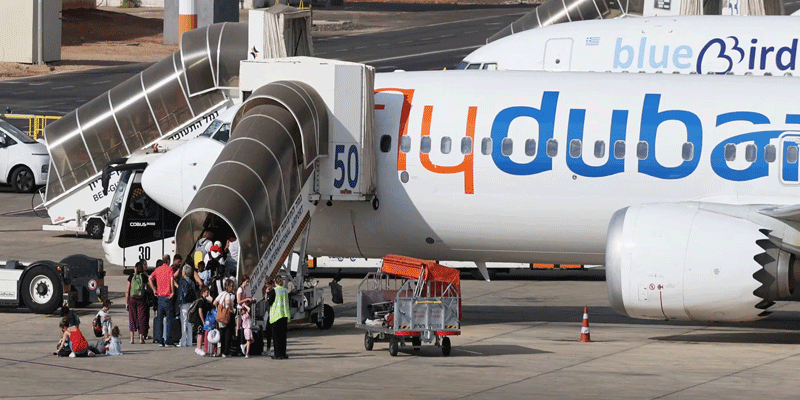
Major economies including China, along with several others, have been placed in the 12.5% bracket. The US maintains that these countries either lack robust legal safeguards or have failed to effectively prevent forced-labour-linked imports. Israel has also reportedly been included in the higher category, signalling that Washington's new framework extends beyond geopolitical rivalries to encompass broader compliance standards.
A New Era of Compliance-Driven Global Trade
The tariff announcement reflects more than a trade policy adjustment—it signals a fundamental shift in how the US intends to shape global commerce. By linking market access directly to labour rights enforcement, Washington has transformed regulatory compliance into a competitive economic advantage.
For India, the lower tariff rate offers short-term relief but also underscores the growing importance of strengthening labour standards and supply-chain transparency. As global trade increasingly becomes segmented by trust, compliance and strategic alignment, countries will need to balance economic competitiveness with stronger governance to secure preferential access to key international markets.
(With agency inputs)