

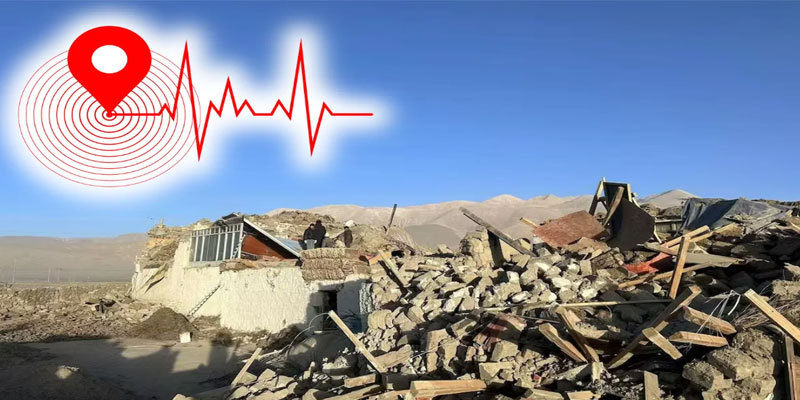
A powerful magnitude 7.0 earthquake struck Baqen County in Nagqu City, northern Tibet, on Thursday night, killing at least 16 people and injuring dozens. The tremor, which hit at 10:33 p.m. local time, damaged hundreds of homes and triggered extensive rescue operations in one of China’s most remote, high-altitude regions.
Casualties and Damage Mount
Authorities reported 16 deaths, while the injury count rose to 76 as assessments continued on Friday. At least 339 homes and 20 livestock sheds were reported damaged or collapsed, forcing more than 12,000 residents to relocate to safer areas.
According to the US Geological Survey, the epicentre was approximately 183–191 kilometres east-northeast of Nagqu city, at a depth of around 18 kilometres. Chinese authorities initially reported a depth of 10 kilometres. Relatively shallow earthquakes can produce intense surface shaking and cause substantial structural damage.
Rescue Teams Race Against Time
Chinese authorities mobilised more than 1,600 personnel from Baqen County, alongside over 300 police officers deployed for search, rescue and evacuation operations.
Emergency supplies included approximately 1,000 prefabricated housing units, 3,000 tents, folding beds, flashlights and winter clothing. President Xi Jinping called for comprehensive rescue and medical assistance, emphasising the need to protect affected communities.
Power and communication services were disrupted in parts of the region but were gradually being restored. Officials also warned residents to avoid buildings with cracked walls or tilted structures because aftershocks could trigger further collapses.
Transport Disruptions and Aftershock Risks
Rockfalls forced the closure of sections of National Highway 317, restricting access to emergency and rescue vehicles while debris was cleared. Operations on parts of the Qinghai-Tibet Railway were also temporarily suspended.
By Friday morning, authorities had recorded 413 aftershocks, with the strongest measuring magnitude 4.3. Continued seismic activity threatens already weakened buildings and complicates rescue efforts across mountainous terrain.
Why Nagqu Faces Exceptional Challenges
Located at approximately 4,800 metres above sea level, Nagqu experiences harsh weather and difficult transport conditions. Although sparse settlement may limit exposure in some areas, isolated communities remain vulnerable when roads and communications are disrupted.
Tibet lies within a seismically active region shaped by the collision of the Indian and Eurasian tectonic plates, making earthquake preparedness and resilient construction essential.
Saving Lives Now, Building Resilience for Tomorrow
The immediate priorities are locating survivors, treating the injured and providing safe shelter before worsening winter conditions complicate relief operations. Snowfall and freezing temperatures could increase the risks faced by displaced families.
As rescue teams reach isolated settlements, casualty figures and damage assessments may change. Beyond emergency assistance, rebuilding homes, restoring transport links and strengthening earthquake-resistant infrastructure will be crucial. The lasting measure of the response will be its ability to protect vulnerable communities today while reducing the devastation of future disasters.
(With agency inputs)