
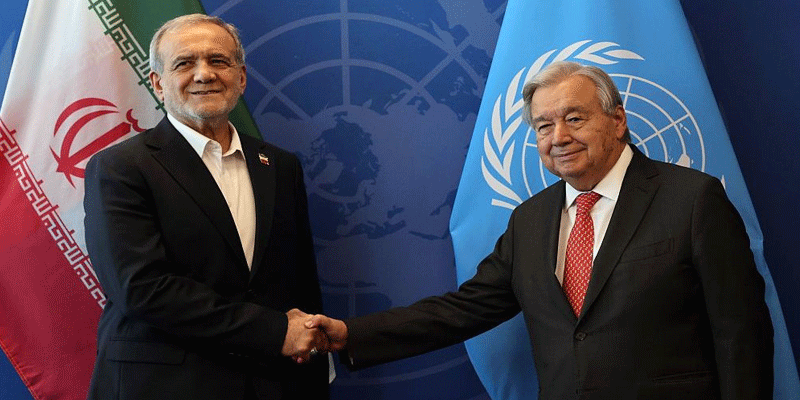
The United States has approved visas for Iranian President Masoud Pezeshkian, Foreign Minister Abbas Araghchi and other members of Tehran’s core delegation to attend next week’s UN General Assembly in New York, despite the continuing US-Iran conflict. Washington says the decision reflects its obligations as host of the United Nations, while imposing tighter restrictions on the Iranian delegation.
A Diplomatic Opening Amid a Prolonged Conflict
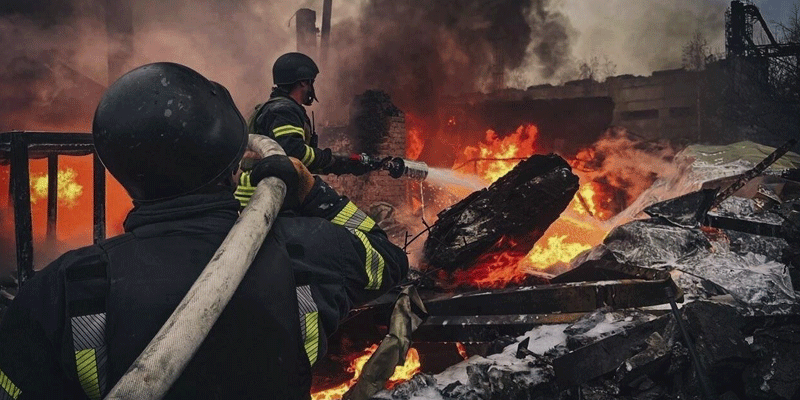
The US-Iran confrontation began on February 28, 2026, when Washington and Israel launched major strikes against Iranian nuclear, missile and military infrastructure. Tehran responded with attacks on Israel and Gulf states hosting US military facilities, turning the conflict into a wider regional crisis.
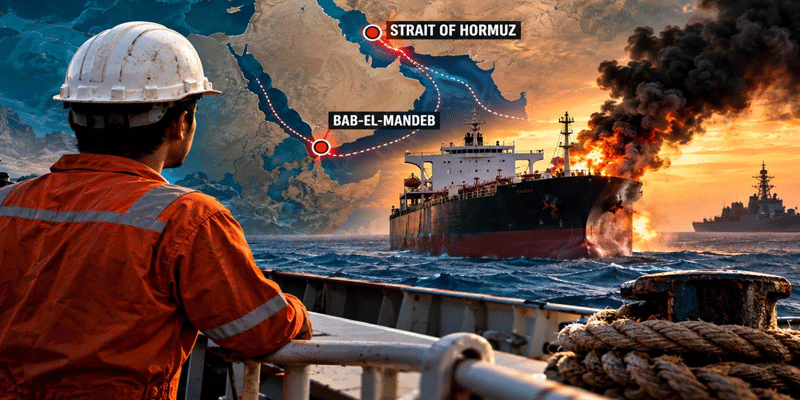
More than six months later, Washington and Tehran remain locked in a military and diplomatic stalemate. The conflict has disrupted energy markets and shipping routes, particularly around the Strait of Hormuz and the Red Sea, while intermittent diplomatic contacts have failed to produce a broader settlement.
Against this backdrop, allowing Iran’s leadership to enter the United States for the UNGA carries significance beyond a routine visa decision.
Washington Approves a Limited Iranian Delegation
The State Department said Iran’s “core delegation” and essential staff would be permitted to attend the UN General Assembly High-Level Week.
The delegation is expected to include:
· President Masoud Pezeshkian
· Foreign Minister Abbas Araghchi
· Essential diplomatic and administrative personnel
However, Washington has made clear that the permission is accompanied by restrictions. The delegation will be smaller than in previous years, face limitations on movement and remain prohibited from purchasing luxury and certain other goods.
The United States has historically imposed tight geographic restrictions on Iranian diplomats in New York, generally limiting their movements to designated diplomatic locations and the UN complex.
The UN Headquarters Agreement Matters
The decision is rooted partly in the 1947 UN Headquarters Agreement, under which the United States, as host country, is generally required to facilitate access for foreign diplomatic representatives attending UN business.
Washington nevertheless maintains that visa restrictions can apply on grounds including security, terrorism and foreign-policy considerations. The Iranian decision therefore reflects a balance between those host-country obligations and broader US policy toward Tehran.
The contrast is particularly notable because Washington has simultaneously denied visas to Palestinian President Mahmoud Abbas and other Palestinian officials for the same UN gathering.
UNGA Becomes a Crucial Diplomatic Stage
The upcoming UNGA will take place amid several interconnected crises. Iran's war with the US, instability around Red Sea shipping routes and continuing disputes over its nuclear programme are likely to dominate diplomatic discussions.
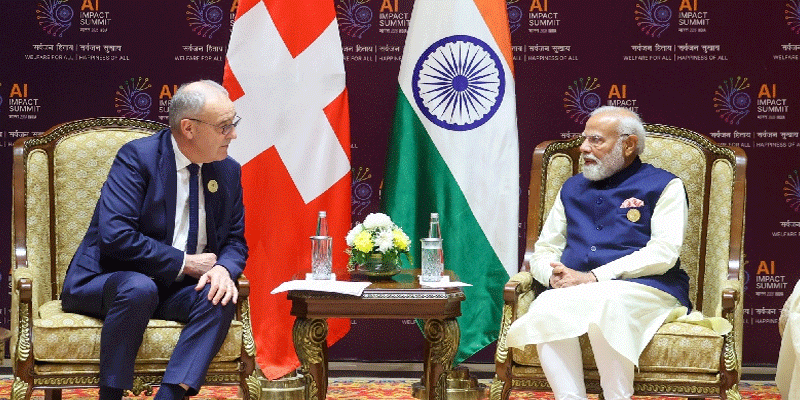
For India, the developments carry particular relevance. Prime Minister Narendra Modi recently discussed freedom of navigation, maritime commerce and the safety of seafarers with Pezeshkian, reflecting New Delhi’s concerns over regional instability and its economic consequences.
Diplomacy Gets a Narrow Window
The visa decision does not signal an end to the US-Iran confrontation. Instead, it preserves a channel through which the two sides can present their positions directly before the international community.
With both military pressure and diplomatic engagement continuing simultaneously, the UNGA may provide one of the few remaining venues where confrontation can temporarily give way to dialogue—and where the next phase of the Iran crisis could begin taking shape.
(With agency inputs)