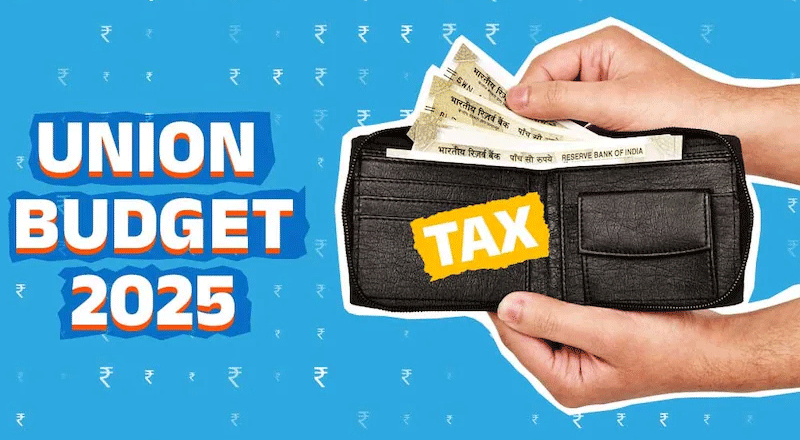
Finance Minister Nirmala Sitharaman unveiled the Modi 3.0 government's first full-year budget in Parliament, bringing a significant shift in India’s tax landscape. The highlight? No income tax for individuals earning up to Rs 12 lakh per annum. This landmark reform is expected to bolster disposable income, spur consumption, and enhance voluntary tax compliance. While hailed as a relief for the middle class, the budget also aims to push India’s self-reliance in agriculture, particularly in pulse production. However, the opposition remains critical, questioning the broader economic impact.
A Simpler and Fairer Tax System
The revised tax regime seeks to simplify tax compliance while ensuring fairness in the system. Vivek Agarwal, Global Policy Expert at the Tony Blair Institute for Global Change, emphasized that clarity in taxation boosts trust and voluntary compliance. The new tax slabs offer a progressive structure:
- 0-4 lakh rupees – Nil tax
- 4-8 lakh rupees – 5% tax
- 8-12 lakh rupees – 10% tax
- 12-16 lakh rupees – 15% tax
- 16-20 lakh rupees – 20% tax
- 20-24 lakh rupees – 25% tax
- Above 24 lakh rupees – 30% tax
- Reduce tax burdens and increase disposable income
- Boost household savings and investments
- Enhance domestic consumption, stimulating MSME growth and job creation
- Development of climate-resilient seeds
- Enhancing protein content in pulses
- Increasing overall productivity
- Improving post-harvest storage and management
- Ensuring remunerative prices for farmers