
India’s FY27 Growth Slowdown: El Nino, Fertiliser Shortages, and Global Food Risks
India’s economic growth is projected to slow to 6.8% in FY27, from 7.6% in FY26, as inflationary pressures, geopolitical uncertainty and climate risks increasingly weigh on the economy. India Ratings & Research (Ind-Ra) expects quarterly growth of 6.9% in April–June, 6.6% in July–September, 6.7% in October–December and 6.9% in January–March. Retail inflation could average 4.9%, peaking at 5.9% in the December quarter.
A Confluence of Domestic and Global Risks
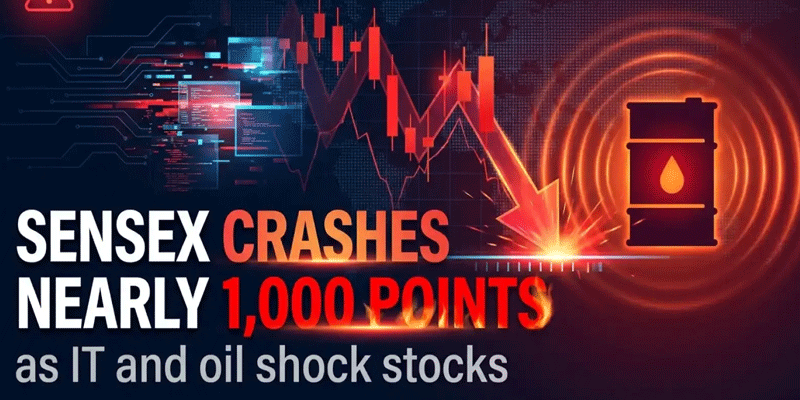
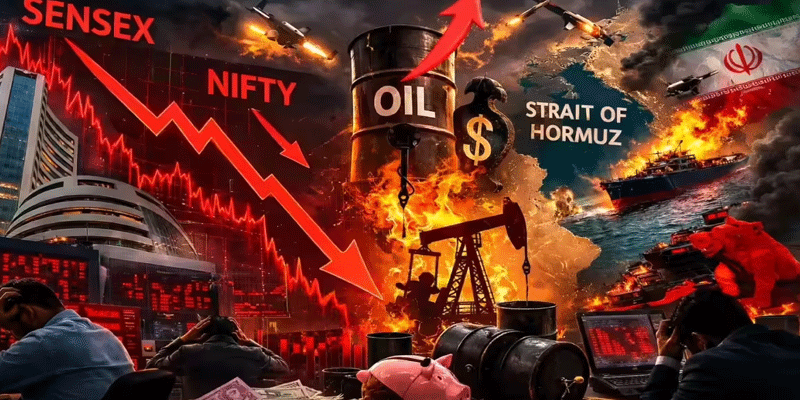
The slowdown reflects several interconnected pressures. The continuing West Asia conflict threatens crude oil supplies and could keep energy, transportation and production costs elevated. A weaker rupee, potentially reaching around ₹97 per dollar by FY27-end, would further increase import costs for fuel, fertilisers and edible oils.
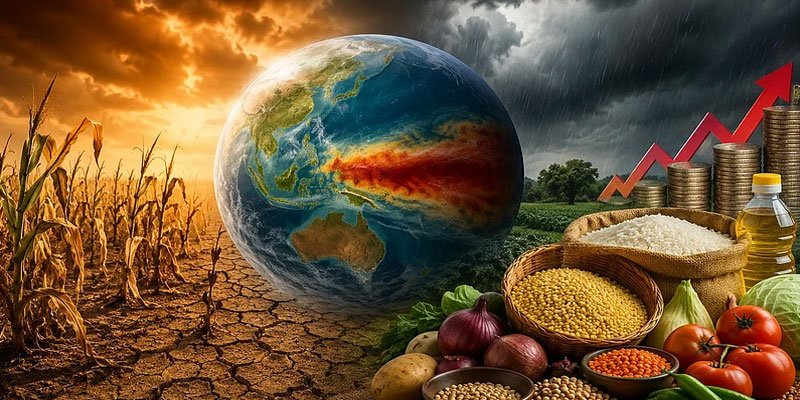
At the same time, the possible emergence of El Niño raises concerns over below-normal monsoon rainfall. Agriculture could be particularly vulnerable, with water-intensive crops such as rice, sugarcane and vegetables facing potential yield losses.
Fertiliser Shortages Add to Food Inflation
The climate threat is being compounded by global fertiliser disruptions. The West Asia conflict has affected supplies from Gulf-based production hubs, raising concerns over the availability and cost of urea and other agricultural inputs.
For India, this combination could create a difficult cycle: higher input costs, weaker crop production, rising food prices and pressure on rural incomes. Onion inflation, for instance, jumped to 22.54% in July from 4.73% in June, while garlic inflation accelerated to 35.36%. Sugarcane output could decline by as much as 6% in 2026/27, potentially tightening sugar supplies.
How WFP Tracks 49 million At-Risk People
The World Food Programme (WFP) estimates that a strong El Nino could push 49 million additional people into acute food insecurity by the end of 2027. This is not a headcount of identified individuals but a scenario-based projection across 45 vulnerable countries.
WFP combines climate forecasts, agricultural calendars, satellite observations, food prices, conflict alerts and household surveys through platforms such as HungerMap LIVE. Analysts then assess poverty, malnutrition, dependence on rain-fed farming and exposure to conflict or economic shocks to identify populations most likely to enter IPC Phase 3 or worse.
The baseline of roughly 225 million food-insecure people could rise to about 274 million under an El Niño-adjusted scenario. Central America, parts of Africa, Asia and the Pacific are expected to face particularly severe risks. WFP has also expanded anticipatory action, reaching more than 1.3 million people in 2026 through cash assistance, vouchers and pre-positioned supplies.
Policy Must Stay Ahead of the Shock
India's response will require coordinated monetary and fiscal action. Targeted fertiliser support, strategic food procurement, buffer-stock management and faster imports could contain supply pressures. Investment in irrigation, climate-resilient crops, storage and agri-technology can strengthen long-term resilience.
Growth Cannot Be Protected Without Food Security
FY27's challenge is larger than a temporary slowdown. Climate volatility, geopolitical disruptions and agricultural supply constraints are converging into a single economic risk. India's ability to sustain growth will depend on controlling inflation without choking demand—and, crucially, protecting farmers and vulnerable households before food insecurity becomes a crisis.
(With agency inputs)