
A Landmark Step Toward Equality
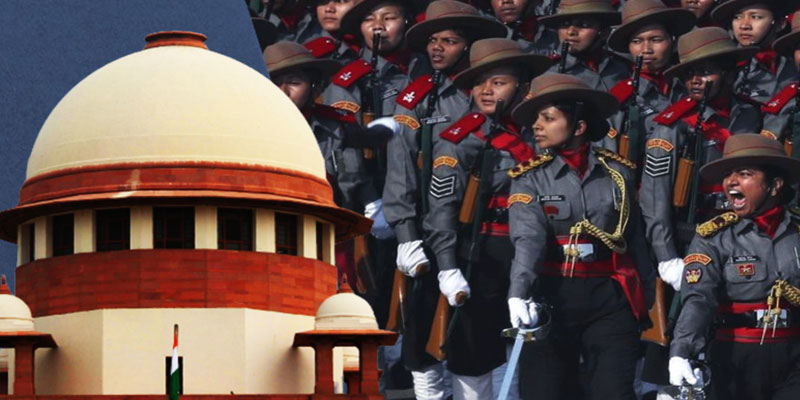
India’s top court has granted permanent commission (PC) rights to women Short Service Commission (SSC) officers across the Army, Navy and Air Force, marking a transformative moment for gender parity in the armed forces. The ruling, delivered by a bench led by Surya Kant, removes long-standing structural barriers that restricted women to short tenures and limited advancement. By striking down arbitrary caps—such as the 250-officer annual ceiling—and calling the evaluation system biased, the court has effectively opened pathways to long-term careers and leadership roles. At the same time, it avoided disruption by rejecting “notional promotions,” balancing institutional stability with constitutional equality.
Background: A Long Road to Reform
The judgment builds on years of legal and institutional evolution. Women were historically inducted into the armed forces through SSC routes, which limited service to 10–14 years without guaranteed progression to permanent roles. This created a structural ceiling, preventing women from accessing command positions, senior ranks, and pension benefits tied to longer service.
A significant turning point came in 2020, when the Supreme Court first recognised women officers’ right to permanent commission and command roles in non-combat streams. However, implementation remained uneven, with administrative caps and opaque evaluation processes continuing to restrict actual access. The latest ruling addresses these gaps directly, reinforcing that equality under Article 14 of the Constitution cannot be diluted by institutional inertia or entrenched bias.
Importantly, the court also extended relief to past officers. Women who had completed or nearly completed their service but were denied PC will now be treated as having served 20 years for pension purposes. This restores financial security and acknowledges their contributions, correcting a long-standing injustice.
Evaluation Challenges: Bias Beneath the Surface
At the heart of the ruling lies a critical examination of how women officers have been assessed. The court identified several systemic issues that skewed evaluation outcomes:
Pre-set assumptions in ACRs: Annual Confidential Reports (ACRs), the backbone of promotion decisions, were often written with the implicit belief that women would not be granted permanent commission. This led to diluted or less rigorous assessments, undermining their career prospects from the outset.
Gendered and subjective criteria: Despite formal guidelines, evaluation often relied on informal perceptions shaped by stereotypes—questioning women’s leadership style, resilience, or long-term commitment. Such subjective judgments introduced inconsistency and bias into what should have been merit-based processes.
Limited access to key roles: Women were historically excluded from combat and high-visibility operational postings, which are critical benchmarks for promotions. This structural exclusion meant fewer opportunities to build the profiles typically favoured by selection boards.
Inconsistent standards and shifting criteria: Reports of retrospective changes in physical tests and evaluation norms created a moving target for women officers, further complicating their path to permanent commission. These inconsistencies eroded fairness and transparency in the system.
By invoking its extraordinary powers, the court has mandated reforms to ensure that evaluation, promotion, and recruitment processes are free from such discriminatory practices.
Toward a Truly Inclusive Force
This ruling is more than a legal correction—it is a structural reset. By dismantling entrenched biases and opening permanent commission to women on equal terms, the court has signaled that the armed forces must evolve with constitutional values. Yet, the true test lies in implementation. Ensuring fair evaluations, equal opportunities, and cultural change within the ranks will determine whether this judgment translates into lasting transformation. In redefining the rules of service, India takes a decisive step toward building a military that reflects both operational excellence and inclusive strength.
(With agency inputs)