
Alliance Speculation Gains Momentum
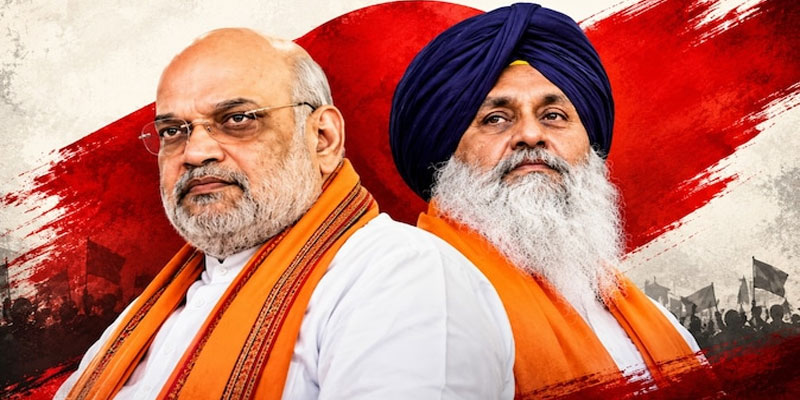
Punjab 2027: BJP-SAD reunion remains possible, but not yet probable. Speculation has intensified after Union Home Minister Amit Shah predicted an NDA government in Punjab following the 2027 Assembly elections, while Shiromani Akali Dal (SAD) president Sukhbir Singh Badal signalled openness to alliances with ideologically compatible parties. However, the BJP’s insistence on preparing to contest all 117 Assembly seats suggests that political negotiations remain far from a settled arrangement.
Political Signals Without Formal Commitment
Shah’s reference to an NDA government was interpreted as a possible invitation to former ally SAD, although he did not explicitly name the party. Punjab BJP chief Kewal Singh Dhillon has maintained that the BJP is preparing to contest every Assembly constituency.
Meanwhile, Sukhbir Badal has ruled out alliances with Congress and AAP, describing them as Punjab’s principal political adversaries. His favourable references to the previous SAD-BJP government have further fuelled speculation.
Neither party, however, has announced a formal agreement.
Why the Former Allies Parted Ways
The BJP and SAD shared a 24-year alliance before separating in September 2020 over the three contentious central farm laws. SAD withdrew from the National Democratic Alliance (NDA) amid widespread farmers’ protests. Although the laws were subsequently repealed, political trust between the former partners has not fully recovered.
A reunion would require reconciliation over agricultural interests, Punjab’s federal concerns and the SAD’s distinct Panthic political identity.
Seat-Sharing Remains the Biggest Obstacle
The BJP’s ambition to expand independently in Punjab presents a major challenge. In the 2017 Assembly elections, the BJP contested just 23 of the state’s 117 seats, leaving the larger share to SAD.
Today, the BJP wants greater organisational control and a stronger independent electoral base. SAD, meanwhile, would seek enough constituencies and political influence to justify returning to the alliance.
A pre-election understanding could consolidate sections of the anti-AAP vote, but disagreements over constituency allocation and leadership could undermine negotiations.
Drug Politics Complicates the Partnership
Shah has made the narcotics problem central to the BJP’s Punjab campaign, attacking AAP over governance and trafficking. However, AAP leader Arvind Kejriwal has questioned the prospect of cooperation with SAD by invoking senior Akali leader Bikram Singh Majithia, whose political position has been affected by drug-related allegations and legal proceedings.
This issue could complicate any alliance, particularly if the BJP makes anti-drug enforcement its defining campaign promise.
The Final Test: Strategy Over Sentiment
For now, BJP-SAD relations represent strategic proximity rather than a confirmed reunion. The coming months will reveal whether both parties can overcome seat-sharing disputes, rebuild trust and agree on a common programme. The decisive question is whether electoral arithmetic outweighs political differences before Punjab votes in 2027.
(With agency inputs)