
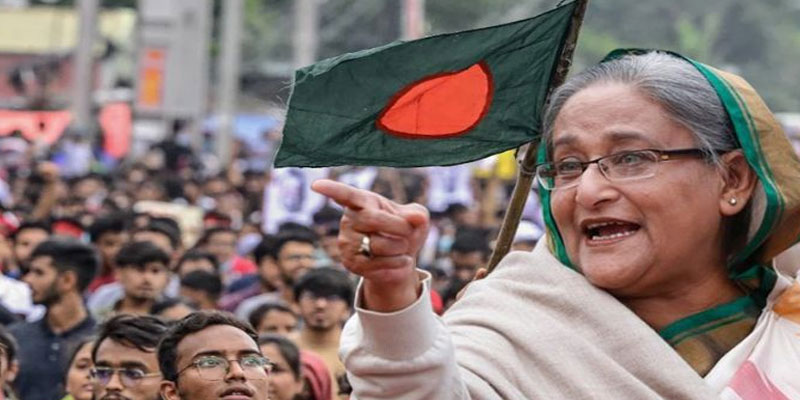
Resignation Speculation Deepens Bangladesh's Political Uncertainty
Speculation is widespread that Bangladesh President Mohammed Shahabuddin is going to step down, with reports suggesting that growing pressure from the Tarique Rahman-led government has brought his tenure to a critical juncture. Although no official announcement has been made, political observers believe the controversy surrounding an alleged phone conversation with former Prime Minister Sheikh Hasina has accelerated demands for his resignation. The episode reflects the continuing power struggle in Bangladesh as the new administration seeks to reshape the country's constitutional and political landscape following the dramatic change of government.
A President from the Previous Political Order
Mohammed Shahabuddin, a veteran Awami League leader and long-time associate of Sheikh Hasina, became Bangladesh's President in 2023 during Hasina's tenure. However, the political landscape changed dramatically after the 2024 student-led uprising that ended her government and brought the Bangladesh Nationalist Party (BNP), led by Tarique Rahman, to power.
Despite the transition, Shahabuddin remained one of the few senior constitutional figures associated with the pre-uprising political establishment, making his position increasingly sensitive in the new political environment.
Did the Phone Call with Sheikh Hasina Land Him in Trouble?
According to multiple Bangladeshi media reports, Shahabuddin allegedly spoke with Sheikh Hasina during a private medical visit to London in May 2026 while the former Prime Minister was living in exile in India. Reports suggest intelligence agencies later became aware of the conversation, following which the President was reportedly advised to consider stepping down.
Although the contents of the conversation remain undisclosed, the alleged contact quickly became politically controversial. Within the current administration, communication with Hasina was reportedly viewed not merely as a personal interaction but as a politically sensitive move capable of reviving networks linked to the previous regime. The leak of the phone-call story has therefore fuelled widespread speculation that it became the immediate trigger behind the pressure on Shahabuddin.
Beyond the Phone Call: A Larger Political Realignment
Senior BNP leaders have, however, indicated that the issue extends well beyond a single conversation. Government-linked sources have suggested that the administration had already grown uncomfortable with Shahabuddin's reported attempts to reconnect with figures from the previous political establishment.
From the government's perspective, retaining a Hasina-era ally in the country's highest constitutional office could undermine efforts to consolidate the post-uprising political order. The presidency, traditionally viewed as a neutral constitutional institution, is increasingly being seen through a political lens as Bangladesh's leadership seeks to distance itself from the previous administration.
Hasina's Return Adds to Political Calculations
The timing has further intensified speculation. Sheikh Hasina has publicly indicated her intention to return to Bangladesh, reportedly as early as December, despite facing a death sentence in cases linked to the 2024 student protest crackdown. Reports indicate that Shahabuddin has already informed senior officials at Bangabhaban to prepare for his departure, with his resignation expected around July 24, midway through his five-year term.
A Constitutional Transition with Long-Term Political Consequences
Whether or not the alleged phone call ultimately proves to be the decisive factor, it has become a powerful symbol of Bangladesh's ongoing political transformation. The controversy highlights the new government's determination to replace key constitutional figures associated with the previous regime and fully align state institutions with the post-2024 political order.
If Shahabuddin steps down, it will mark more than a change of occupant in the presidential office. It will underscore Bangladesh's continuing transition, where institutional restructuring, political legitimacy and the legacy of Sheikh Hasina remain deeply intertwined, shaping the country's democratic and constitutional future.
(With agency inputs)