
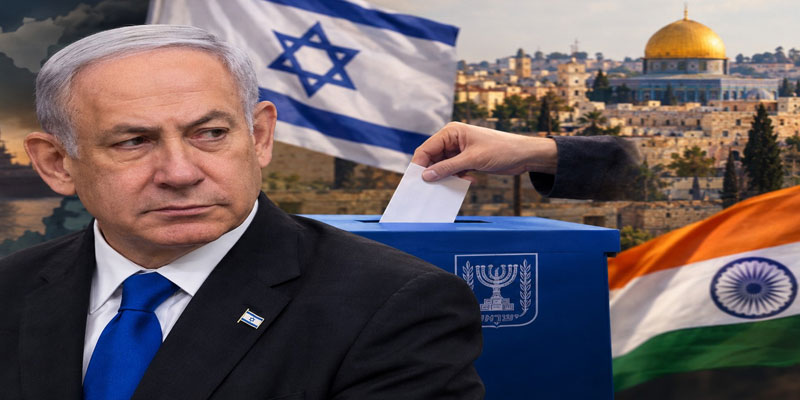
The possibility of Benjamin Netanyahu losing power has raised questions about the future of India-Israel relations, as the Israeli election draws international attention and highlights the wider geopolitical implications of a potential leadership change in Jerusalem. The election has also become a flashpoint in American politics ahead of the US midterm elections, exposing divisions among Democrats and within the MAGA movement over Netanyahu, the Gaza war and Israeli policies in the West Bank.
Can Netanyahu Secure a Seventh Term?
Netanyahu’s political survival depends on whether he can assemble a governing majority in Israel’s fragmented parliamentary system. A seventh term would extend his record as the country’s longest-serving prime minister, but electoral success is not guaranteed. Voters’ concerns include security, the consequences of the Gaza conflict, relations with Palestinians and the direction of Israel’s domestic politics.
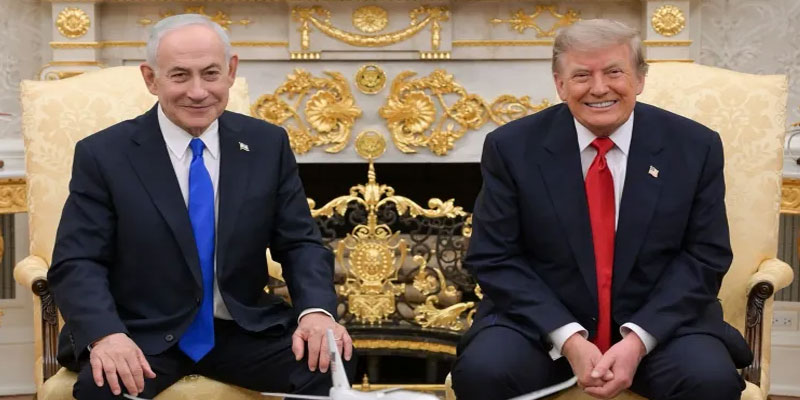
The American dimension adds another layer. Many Democrats have distanced themselves from Netanyahu over the war and West Bank policies, while divisions within the Republican-aligned MAGA movement reflect competing views on US support for Israel. The debate could influence campaign messaging and the broader political conversation surrounding Washington’s Middle East policy.
India-Israel Ties: Beyond Personal Chemistry
Prime Minister Narendra Modi’s relationship with Netanyahu has helped accelerate bilateral cooperation, but the partnership now extends well beyond their personal rapport. During Modi’s February 2026 state visit, both countries elevated their relationship to a Special Strategic Partnership for Peace, Innovation and Prosperity, reinforcing cooperation across defence, technology, trade and security.
A change of government could alter diplomatic priorities and the pace of negotiations, but it would not automatically reverse these institutional commitments.
Defence, AI and Investment at Stake
Defence remains a central pillar, with both countries interested in military technology, joint development, manufacturing and technology transfer. Cooperation in artificial intelligence, cybersecurity, agriculture, water management and scientific research also offers long-term opportunities.
Key areas to watch include:
· Defence: Joint production, advanced weapons systems and surveillance technology.
· Emerging technologies: AI, cybersecurity, research and innovation partnerships.
· Trade and investment: Progress towards a proposed free trade agreement and stronger business links.
· Digital connectivity: Cooperation on linking India’s UPI with Israel’s payment infrastructure.
These initiatives involve government agencies, businesses and research institutions, making the relationship more durable than a partnership dependent on two leaders alone.
Connectivity Faces Greater Geopolitical Uncertainty
Regional instability presents a more complicated challenge. The India-Middle East-Europe Economic Corridor (IMEC), which envisages connectivity through the Middle East and Israel, depends on regional security, financing and cooperation among several countries. Political changes in Israel could influence implementation, but cannot alone determine the corridor’s future.
Strategic Interests Will Outlast Political Personalities
Netanyahu’s electoral future matters to India, but the larger question is whether Israel’s next government maintains the same commitment to bilateral cooperation. India is likely to continue pursuing defence, technological and economic engagement while balancing its wider interests in West Asia.
The decisive factor will be the election’s outcome and the coalition negotiations that follow. Israel’s parliamentary system requires a governing majority, meaning even a clear electoral shift may not immediately produce a stable government. Ultimately, Netanyahu’s departure, if it occurs, would test the institutional strength of India-Israel ties rather than automatically dismantle them. The relationship’s future will depend on shared strategic interests, policy continuity and the ability of both governments to navigate regional tensions.
(With agency inputs)