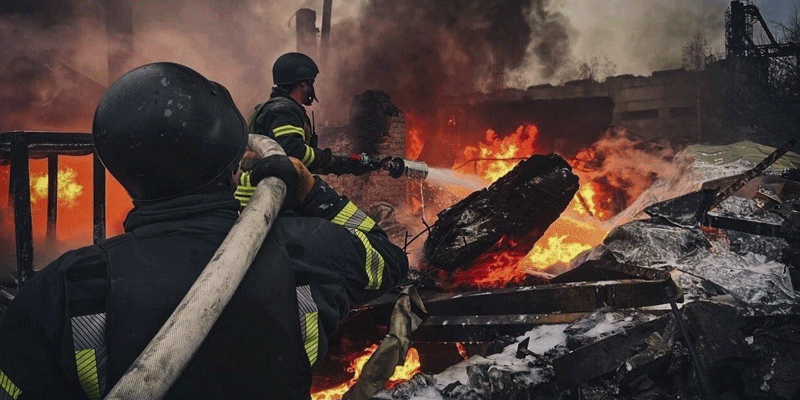


At least eight people, including two security personnel, were killed and 35 others injured after a suicide bomber rammed an explosives-laden vehicle into a crowded area in Pakistan’s Khyber Pakhtunkhwa province on Tuesday, May 12. The powerful explosion occurred in Tehsil Sarai Nawrang Bazaar in Lakki Marwat district, a sensitive region located near the Afghan border, and caused extensive destruction to nearby shops, vehicles, and public infrastructure.
The attack marks Pakistan’s second major suicide bombing within 48 hours, intensifying concerns over the resurgence of militant violence in the country’s north western regions. The incident has once again exposed the deteriorating security environment in border provinces and deepened tensions between Islamabad and the Taliban-led government in Afghanistan.
Massive Explosion Triggers Emergency Response
The blast created panic across Lakki Marwat as rescue workers rushed to the scene to evacuate the injured. Emergency teams from Rescue 1122, ambulances, and security personnel were immediately deployed while hospitals in nearby districts declared medical emergencies.
Several critically injured victims were shifted to hospitals in Bannu and Peshawar for advanced treatment. Shehbaz Sharif condemned the attack and directed authorities to ensure maximum medical assistance for victims and their families.
Khyber Pakhtunkhwa Chief Minister Muhammad Sohail Afridi sought an urgent report from police officials and promised full support to those affected.
Who Is Suspected Behind the Attack?
Although no group officially claimed responsibility for the Lakki Marwat bombing immediately after the attack, Pakistani authorities and security analysts strongly suspect the involvement of Tehrik-i-Taliban Pakistan (TTP) or allied militant networks operating near the Afghan border.
The attack closely resembles a recent coordinated suicide bombing and armed assault in Bannu district on May 9, which killed more than 15 police personnel. That attack was claimed by Ittehad-ul-Mujahideen Pakistan, a militant alliance linked to the TTP.
Security officials believe the growing frequency and sophistication of these attacks indicate an increasingly organized militant resurgence in Pakistan’s tribal and border regions.
Pakistan Blames Afghanistan-Based Militants
Pakistan’s government has openly accused militants operating from Afghan territory of orchestrating the latest violence. Islamabad claims it possesses “technical intelligence and evidence” linking the attackers to networks based inside Afghanistan.
The Pakistani Foreign Office recently summoned representatives of the Taliban-led Afghan administration and warned Kabul against allowing militant groups to use Afghan soil for cross-border attacks.
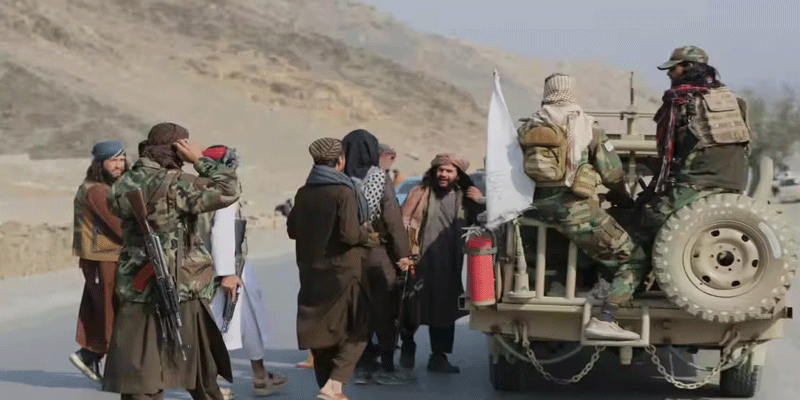
Relations between Pakistan and Afghanistan have sharply deteriorated over the past two years due to repeated allegations regarding TTP sanctuaries in Afghanistan. Pakistan argues that despite assurances from the Taliban government, militant organizations continue to operate freely near the border.
Afghanistan’s Taliban authorities, however, have repeatedly denied these accusations and insist that Pakistan’s internal security failures should not be blamed on Kabul.
Rising Wave of Violence in Khyber Pakhtunkhwa
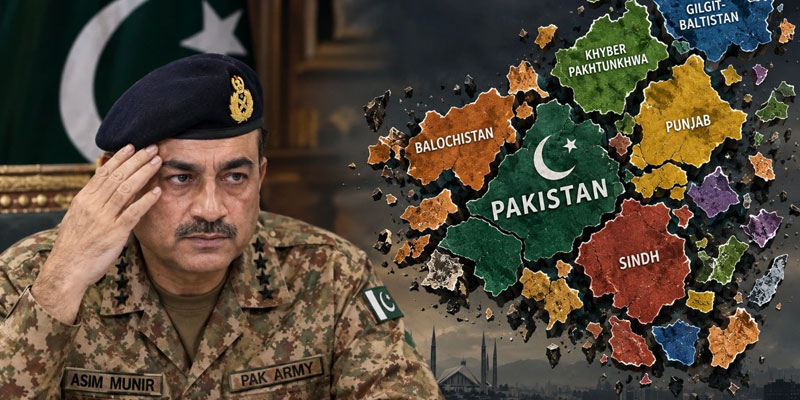
The latest bombing reflects a broader surge in extremist violence across Pakistan’s western provinces, particularly Khyber Pakhtunkhwa and Balochistan. These areas have witnessed repeated attacks targeting police personnel, military convoys, mosques, and government installations.
Security experts believe militant groups are attempting to exploit political instability, economic difficulties, and weak border management to rebuild operational strength in the region.
The frequency of suicide attacks has raised fears that Pakistan may once again be entering a prolonged phase of insurgency similar to the violence that gripped the country during the late 2000s and early 2010s.
Pakistan Faces Renewed Security Crisis
The Lakki Marwat suicide bombing underscores the growing security challenges confronting Pakistan as militant violence resurfaces along its western frontier. Beyond the immediate human tragedy, the attack has intensified geopolitical tensions with Afghanistan and exposed the fragile security situation in border regions. As Islamabad increases pressure on Kabul and launches fresh counterterror operations, the larger challenge will be preventing extremist groups from regaining long-term operational influence. The coming months may prove critical in determining whether Pakistan can contain the escalating insurgency before it evolves into a broader national security crisis.
(With agency inputs)