
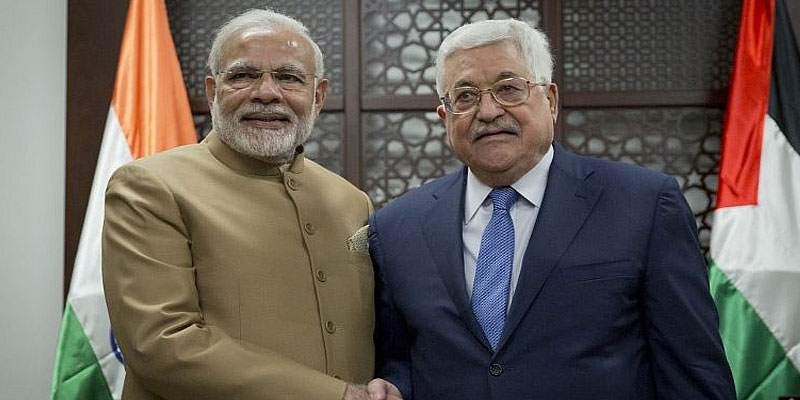
Palestinian Leadership Urges India to Play Mediator in Conflict Resolution
Calling for an end to prolonged violence in West Asia, Palestinian Foreign Minister Varsen Aghabekian Shahin has urged India to take on a mediating role in efforts to resolve the Israeli–Palestinian conflict, emphasizing that Palestinians seek sovereign statehood rather than continued warfare. During her visit to New Delhi, Shahin underscored India’s historic ties with both Israel and Palestine, arguing that this balanced relationship places India in a unique position to facilitate dialogue at a time when ceasefire arrangements remain fragile and reconstruction efforts in Gaza are stalled.
Renewed Diplomatic Push Amid Ongoing Uncertainty
The appeal comes amid persistent instability following the dramatic escalation of violence after the October 2023 Hamas attacks and Israel’s subsequent military operations in Gaza. Although later negotiations led to temporary ceasefire arrangements and prisoner exchanges, tensions continue to simmer, humanitarian conditions remain dire, and political disagreements over Gaza’s future governance persist.
Against this backdrop, Palestinian diplomacy is seeking renewed international engagement, and India’s growing global influence has made it an attractive potential interlocutor. Shahin’s outreach signals Ramallah’s belief that New Delhi’s diplomatic credibility could help restart conversations that have repeatedly stalled under traditional mediation frameworks.
India’s Longstanding Position on the Two-State Solution
India’s approach to the conflict has historically balanced solidarity with Palestinian aspirations and pragmatic engagement with Israel. Since recognizing the Palestinian statehood declaration in 1988, India has consistently advocated a negotiated two-state solution as the only sustainable route to peace.
New Delhi’s official position supports the creation of an independent and viable Palestinian state coexisting peacefully alongside Israel within secure and mutually agreed borders. At the same time, India has strengthened relations with Israel in defense, agriculture, technology, and trade, particularly over the last decade.
Following the 2023 escalation, India condemned attacks on civilians while simultaneously calling for restraint, humanitarian access, and diplomatic resolution. Indian leaders have repeatedly emphasized that violence cannot resolve the conflict and that dialogue, guided by international law, remains essential.
This calibrated stance—maintaining strong ties with Israel while continuing political support and development assistance for Palestine—allows India to maintain credibility with both sides, an increasingly rare diplomatic asset.
Can India Play a Constructive Mediation Role?
Analysts suggest India’s expanding geopolitical profile strengthens its potential role as a bridge-builder. Its partnerships across the Arab world, close security cooperation with Israel, and participation in major global forums such as the G20 and BRICS provide New Delhi with diplomatic access across competing blocs.
However, challenges remain significant. Deep mistrust between Israeli and Palestinian leadership, domestic political pressures, and involvement of regional actors complicates mediation efforts. Moreover, the United States still plays a dominant role in regional diplomacy, limiting space for alternative mediators.
Yet India could contribute through confidence-building initiatives, humanitarian coordination, and support for reconstruction efforts, while encouraging dialogue focused on long-term political solutions.
A Moment for Diplomacy Over Conflict
The Palestinian foreign minister’s call reflects growing recognition that military confrontation alone cannot deliver lasting stability. India’s balanced diplomacy and rising global stature offer an opportunity to support renewed engagement, though expectations must remain realistic given entrenched divisions.
For peace to take root, both sides must move beyond cycles of retaliation toward negotiations centered on coexistence and mutual security. If India chooses to step forward, even modest diplomatic contributions could help rebuild trust in a region where the need for dialogue has never been more urgent.
(With agency inputs)