
Pentagon Restores Pacific Command Name Amid Controversy
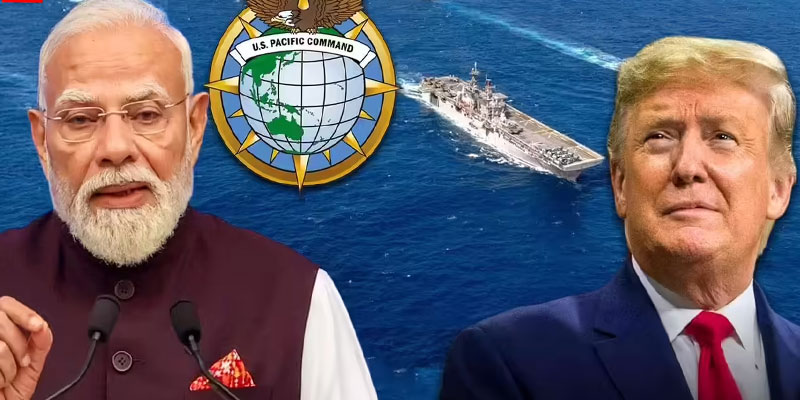
The United States has renamed its military's Indo-Pacific Command back to the United States Pacific Command (USPACOM), restoring the command's historic identity while keeping its mission, operational responsibilities and geographic scope unchanged. The move, however, has attracted attention beyond the name change after an official command map reportedly depicted Pakistan-Occupied Kashmir (PoK) as part of Pakistan, triggering concerns in India over the representation of its territorial boundaries.
While the Pentagon has presented the renaming as an institutional and historical decision, the timing and accompanying map controversy have generated wider discussions about symbolism, regional geopolitics and the evolving nature of U.S. engagement in Asia.
Why the Indo-Pacific Name Was Adopted
In May 2018, then U.S. Defense Secretary James Mattis announced that the U.S. Pacific Command would be renamed the U.S. Indo-Pacific Command. The change reflected Washington's growing focus on India's strategic importance and the increasing interconnectedness of security, trade and maritime routes across the two oceans.
The move also coincided with rising concerns over China's expanding military footprint and influence across the region. By incorporating "Indo" into the command's name, the United States signalled its intention to strengthen partnerships with regional democracies, particularly India, while promoting a broader strategic framework stretching from the western Pacific to the Indian Ocean.
For many observers, the name change was more than administrative—it represented a significant geopolitical shift in American strategic thinking.
Why the Pentagon Has Reversed Course
On June 16, 2026, the U.S. Department of Defense announced that the command would once again be known as the United States Pacific Command.
According to the Pentagon, the decision was intended to honour the command's historical legacy and institutional roots. Established as a unified command in 1947, it remains the oldest and largest of America's unified military commands.
Officials have emphasized that the change is purely nominal. The command's operational mission, force structure, alliances, and strategic objectives remain unchanged. Its area of responsibility still stretches from the western coast of the United States to India's western boundary and encompasses nearly half the globe, covering vast portions of the Pacific and Indian Oceans.
Current Scenario: Map Error Overshadows Name Change
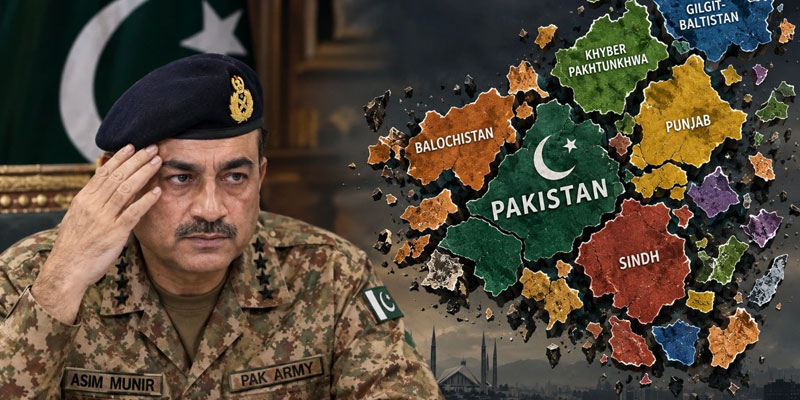
The renaming has been overshadowed by controversy surrounding an official area-of-responsibility map displayed on the command's website. The map reportedly showed Pakistan-Occupied Kashmir as part of Pakistan rather than reflecting India's official territorial claims.
The depiction differs from India's official maps and has drawn scrutiny because earlier U.S. representations often marked the region as disputed through demarcation lines rather than assigning it unequivocally to either side.
The issue is particularly sensitive given the long-standing dispute between India and Pakistan over Jammu and Kashmir. The map error has therefore become a focal point of discussion, especially as the United States continues to deepen strategic cooperation with India across defence, technology and maritime security.
Symbolism Matters Even When Policy Does Not Change
The restoration of the Pacific Command name does not alter America's military posture, strategic priorities or regional commitments. Operationally, the command remains focused on maintaining stability, strengthening alliances and ensuring readiness across one of the world's most consequential regions.
Yet the episode highlights how symbols matter in international relations. The shift from "Indo-Pacific" back to "Pacific" may be intended as a return to institutional tradition, but it inevitably invites geopolitical interpretation. Coupled with the controversy over the Kashmir map, the development underscores the importance of diplomatic sensitivity in a region where strategic partnerships, territorial claims and perceptions carry significant weight. Ultimately, while the command's mission remains unchanged, the messaging surrounding it has become a story in itself.
(With agency inputs)