
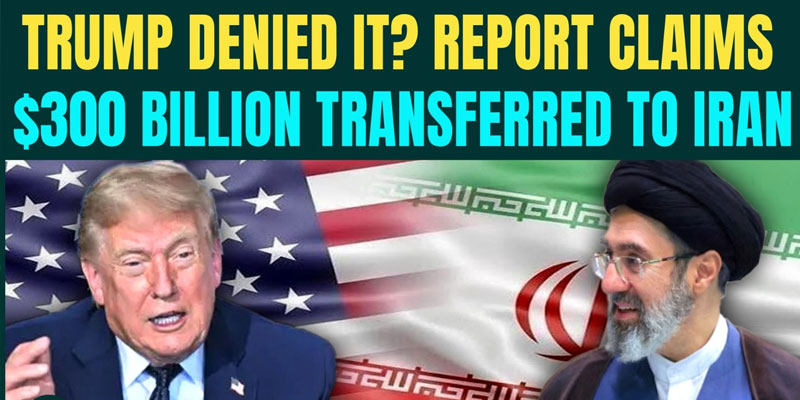
Massive Investment Proposal Linked to U.S.-Iran Framework
A proposed $300 billion private investment fund has emerged as one of the most significant elements of the new U.S.-Iran framework agreement, with more than half of the planned capital already committed by international companies. Designed to support Iran's economic revival after decades of isolation, the fund represents an unprecedented attempt to reconnect the country with global investment flows. However, the initiative remains contingent on the successful conclusion of a final agreement between Washington and Tehran, making it both an economic incentive and a diplomatic bargaining tool.
Four Decades of Economic Isolation
Iran's economy has long been constrained by sanctions, geopolitical tensions, and limited access to international capital. Despite possessing vast energy reserves, a large domestic market, and a strategic location linking Asia, Europe, and the Middle East, the country has attracted relatively little foreign investment over the past four decades.
The current framework follows a period of heightened conflict that began earlier this year and disrupted regional trade and energy markets. The closure of the Strait of Hormuz, one of the world's most critical oil transit routes, further intensified economic uncertainty. Against this backdrop, both sides have sought a framework that combines security commitments with economic incentives aimed at reducing tensions and restoring commercial activity.
Understanding the $300 Billion Investment Fund
Unlike traditional reconstruction packages or government aid programmes, the proposed fund is structured as a private investment vehicle. According to reports, it contains no direct government funding and is expected to draw capital from companies across the United States, Gulf countries, Asia, South America, and Africa. Commitments exceeding $150 billion have reportedly already been secured, highlighting strong international interest in a post-sanctions Iranian market.
The investments are expected to target sectors such as energy, logistics, manufacturing, transportation, and infrastructure—areas viewed as critical for accelerating economic recovery and long-term growth. Importantly, the fund is separate from ongoing discussions over sanctions relief and the release of frozen Iranian assets, which are being negotiated through a parallel track.
Current Scenario: Opportunity Tied to Compliance
At present, the fund remains a proposal embedded within a broader 60-day memorandum of understanding rather than a finalized agreement. The framework reportedly includes commitments related to reopening the Strait of Hormuz, extending ceasefire arrangements, and advancing negotiations over Iran's nuclear programme. Access to the investment fund is expected to depend on Iran meeting these obligations and complying with future verification mechanisms.
The performance-based structure reflects an effort to align economic rewards with diplomatic progress. For investors, it offers access to a potentially lucrative market. For Iran, it provides a pathway toward economic reintegration. For the United States and its partners, it creates leverage to encourage compliance with broader security objectives.
A Potential Turning Point for Iran's Economy
If implemented, the $300 billion investment fund could mark a historic shift in Iran's economic trajectory. More than a financial package, it represents a framework for reintegration into global markets after decades of isolation. Yet its success will depend on political trust, sustained compliance, and the ability of negotiators to convert a fragile framework into a durable agreement. For now, the proposal stands as one of the most ambitious economic incentives ever attached to a modern diplomatic settlement, with implications extending far beyond Iran to regional stability, global energy markets, and international investment flows.
(With agency inputs)