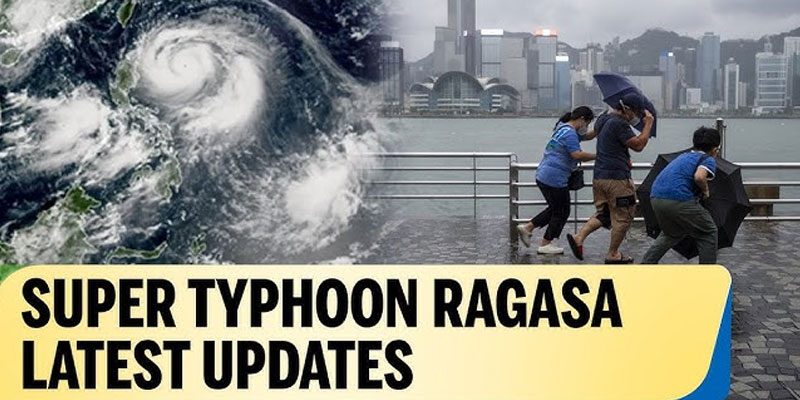
Super Typhoon Ragasa, one of the most powerful cyclones of the year, has made landfall in southern China after causing widespread devastation in Taiwan and the Philippines. The storm, which at its peak packed sustained winds of up to 265 km/h, has been responsible for at least 27 deaths and significant damage across the region.
Ragasa, a Category 5 super typhoon, first struck the northern Philippines on Monday, bringing torrential rain and strong winds. The storm led to at least 10 deaths, including seven fishermen who drowned when their boat was capsized by massive waves off Santa Ana town. Nearly 700,000 people were affected in the northern Luzon region, with 25,000 seeking shelter in government facilities. The storm, known locally as "Nando," caused widespread flooding and power outages, particularly in the provinces of Abra and Cagayan.
After passing the Philippines, Ragasa skirted south of Taiwan, where its torrential rains triggered a fatal disaster. In Hualien county, a barrier lake overflowed on Tuesday, sending a torrent of water into the town of Guangfu. The flash flood killed 17 people and left 17 others missing. Officials have called for an inquiry into the evacuation warnings, as many residents said they did not receive sufficient notice to escape the rising waters.
The typhoon then lashed Hong Kong and Macau with fierce winds and storm surges. The Hong Kong Observatory issued its highest typhoon warning, Signal 10, as the storm passed about 100 kilometers to the south. The financial hub saw huge waves crash over its shorelines, flooding some roads and properties. Videos showed seawater surging through the doors of a hotel. At least 90 people were injured across Hong Kong, and hundreds of trees were toppled. Both cities saw widespread school and flight cancellations.
On Wednesday, Ragasa, now weakened but still dangerous as a Category 3 typhoon, made landfall in the southern Chinese city of Yangjiang in Guangdong province. As a precaution, Chinese authorities had already evacuated nearly 2 million people from flood-prone areas. The storm is now tracking toward Maoming, a major oil refining city, and is expected to continue to bring strong winds, heavy rain, and storm surges.