
Sarvam Unveils Ambitious Plan for Frontier-Scale AI Model
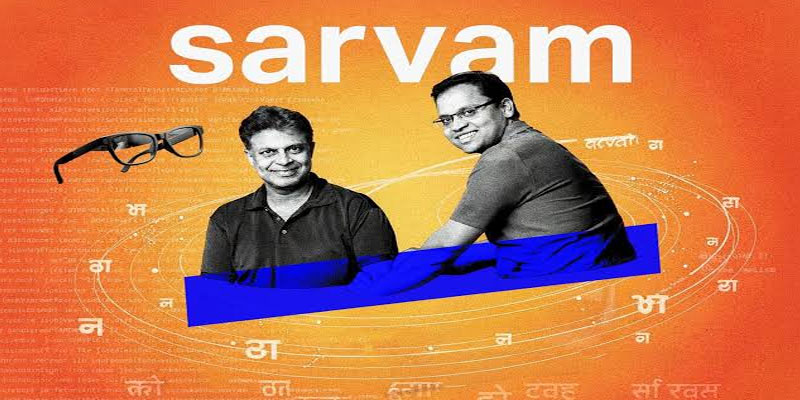
Indian artificial intelligence startup Sarvam AI has announced plans to build a trillion-plus parameter foundational AI model, marking one of the country's boldest attempts to compete with global leaders such as OpenAI and Anthropic. The announcement, made at the company's Epoch conference, signals Sarvam's ambition to move beyond language applications and establish itself as a builder of frontier-scale AI infrastructure. If successful, the initiative could redefine India's position in the global AI race by shifting its focus from AI applications to developing indigenous large-scale foundational models.
Building India's Sovereign AI Ecosystem
Sarvam has positioned itself as a full-stack sovereign AI platform, developing technologies that cater specifically to India's linguistic and enterprise needs. Unlike many global AI providers that primarily focus on English-language consumer applications, Sarvam has concentrated on speech-to-text, text-to-speech, translation, conversational AI and multilingual systems covering a wide range of Indian languages.
Its products are designed to understand code-mixed conversations, regional speech patterns and enterprise workflows, making them particularly relevant for sectors such as government, education, healthcare and customer service.
This India-first strategy addresses a longstanding gap in the country's AI ecosystem. While frontier AI models developed overseas are highly capable, they are not always optimised for India's linguistic diversity, local cultural context or public-sector requirements. Sarvam aims to bridge that gap by creating scalable AI infrastructure tailored to Indian users while remaining commercially competitive on the global stage.
Trillion-Parameter Vision Takes Shape
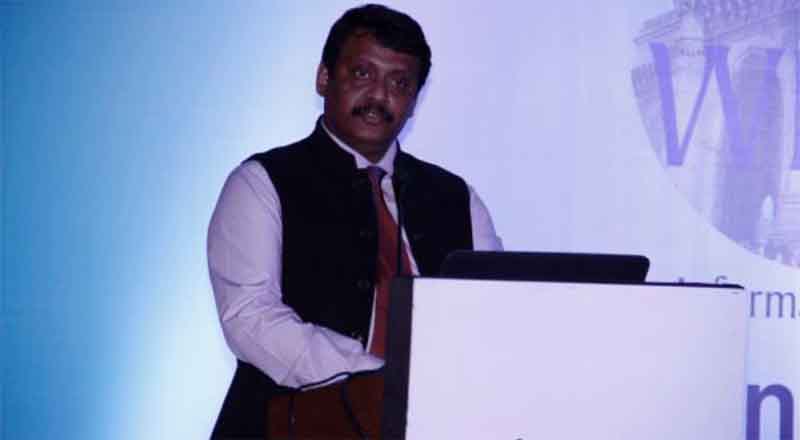
Speaking at the Epoch conference, Sarvam co-founder Pratyush Kumar announced that the company is developing a trillion-plus parameter AI model entirely from scratch in India. The objective is to create a next-generation foundation model capable of competing globally in areas such as coding, cybersecurity, scientific research and complex simulations.
The company said its Sarvam 105B model has been enhanced to improve agentic workflows, voice interactions and instruction-following capabilities. It also claimed that the model performs certain benchmarked tasks at costs 5.5 times lower than some competing AI systems.
Sarvam also unveiled Saras V4, the latest version of its speech recognition model, which reportedly delivers stronger performance across several Indic languages, including Odia, Sanskrit and Manipuri—languages that many international AI systems continue to handle less effectively.
While these performance claims highlight notable progress, they remain company-reported and await independent third-party validation.
Why This Announcement Matters
Sarvam's latest initiative carries significant strategic implications for India's technology landscape.
· Positions India among nations pursuing frontier-scale foundational AI models.
· Strengthens efforts to build a sovereign AI ecosystem using domestic infrastructure.
· Focuses on Indian languages and regional speech patterns underserved by global models.
· Expands AI capabilities beyond chatbots into coding, cybersecurity and scientific computing.
· Promotes lower-cost AI solutions that could improve commercial adoption.
· Supports India's long-term technological self-reliance in critical digital infrastructure.
· Encourages greater domestic innovation in advanced AI research and development.
A Bold Step Towards India's AI Leadership
Sarvam's trillion-parameter ambition represents far more than an engineering milestone—it reflects India's growing aspiration to become a creator of cutting-edge AI rather than merely a consumer of global technologies. Although the project's technical performance and commercial competitiveness will ultimately require independent validation, the announcement signals increasing confidence in India's ability to develop world-class AI infrastructure. If Sarvam succeeds in delivering a globally competitive foundational model with strong Indic-language capabilities and efficient operating costs, it could help establish India as a serious contender in the rapidly evolving global AI ecosystem while advancing the country's vision of technological sovereignty.
(With agency inputs)