
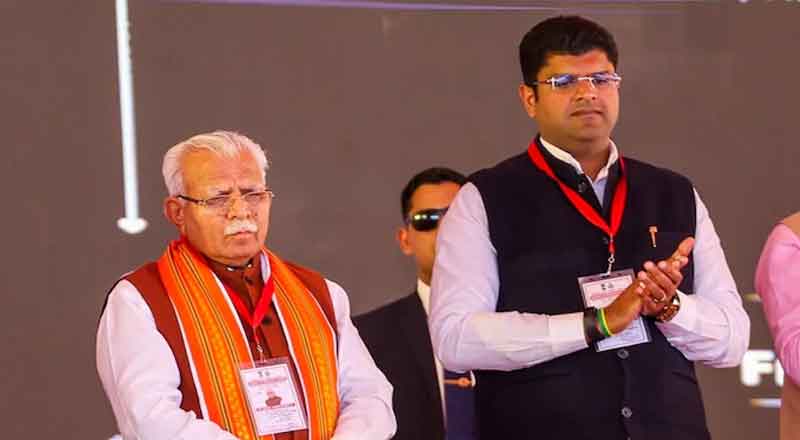
- Haryana CM Manohar Lal Khattar and his cabinet tendered their resignations following strains within the ruling coalition of the BJP and the JJP.
- The cracks within the BJP-JJP alliance became apparent as the parties failed to reconcile seat-sharing arrangements ahead of the Lok Sabha elections.
-
Against the backdrop of Khattar's resignation, political maneuvering and realignment efforts are underway, with both the BJP and the JJP mobilizing their respective supporters.
- The BJP, with 41 MLAs and support from five independent lawmakers, holds a significant share of seats in the 90-member Haryana Assembly.
- However, to form a stable government, the party would need to secure the backing of at least 46 legislators.
- As Haryana grapples with the fallout of Khattar's resignation and the subsequent dissolution of his cabinet, the state finds itself at a critical juncture in its political trajectory.
Against the backdrop of Khattar's resignation, political maneuvering and realignment efforts are underway, with both the BJP and the JJP mobilizing their respective supporters. Independent MLAs, crucial players in the coalition dynamics, have expressed divergent views on the alliance's future, further complicating the situation. While some independents have pledged support to the BJP-led government, others have hinted at potential rifts within the coalition.
The BJP, with 41 MLAs and support from five independent lawmakers, holds a significant share of seats in the 90-member Haryana Assembly. However, to form a stable government, the party would need to secure the backing of at least 46 legislators. With the political landscape in flux and alliances in question, the path to government formation remains uncertain, adding to the prevailing atmosphere of political instability in the state. As Haryana grapples with the fallout of Khattar's resignation and the subsequent dissolution of his cabinet, the state finds itself at a critical juncture in its political trajectory. The evolving power dynamics, leadership transitions, and coalition negotiations will shape the future course of governance in the state. Amidst this backdrop of uncertainty, stakeholders await clarity on the path forward, highlighting the challenges inherent in navigating the complex terrain of coalition politics.(With inputs from agencies)