
Operation Sindoor and a Defining Moment in India’s Security Doctrine
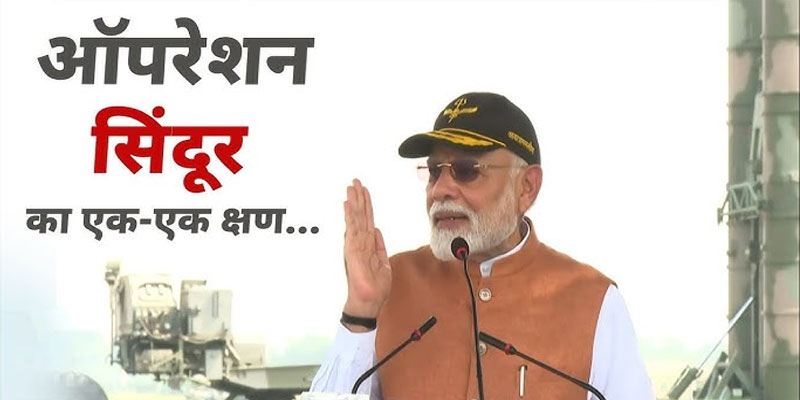
In the wake of Operation Sindoor, a calibrated military action undertaken by India in response to persistent cross-border terrorism, Prime Minister Narendra Modi delivered a landmark address to the nation. The speech came just after a temporary ceasefire agreement was reached with Pakistan. Operation Sindoor, though tactically paused, signaled a strategic shift in India’s security posture, especially toward Pakistan’s long-standing use of terrorism as a state policy. The Prime Minister’s address was not only a message to domestic constituents but also a stern warning to adversaries and the global community: India's patience has limits, and its red lines are now firmly drawn.
India’s Message: No Dialogue Except on Terrorism and PoK
At the core of PM Modi’s message was a categorical declaration—India will no longer engage in dialogue with Pakistan on any subject other than terrorism and Pakistan-occupied Kashmir (PoK). The Prime Minister emphasized that peace talks cannot proceed while terrorism continues to be used as a weapon. He clarified that the current Indian doctrine leaves no room for ambiguity: terrorism and territorial sovereignty are non-negotiable.
Rejecting Nuclear Blackmail and Asserting Sovereignty
A defining moment in the speech was Modi’s unambiguous stance on nuclear threats. He asserted that India will not be deterred by “nuclear blackmail” and reserves the right to retaliate decisively against any form of aggression. This comment was widely interpreted as a response to veiled threats from Pakistani leadership and media after Operation Sindoor. The Prime Minister also underscored the global nature of India’s counterterrorism doctrine, stating that state-sponsored terrorists and their masterminds will be treated with equal force.
A “New Normal” in India’s Security Doctrine
Modi outlined a three-pronged approach forming India’s new anti-terror doctrine:
- Detect and neutralize threats globally—India’s counterterrorism will no longer be limited to its borders.
- Strike proactively when intelligence warrants it—pre-emptive action is now a legitimate tool in India’s arsenal.
- Disregard nuclear threats as deterrents—India’s national interest and citizen safety come first.