

Protests Resume Amid Tight Security in Delhi
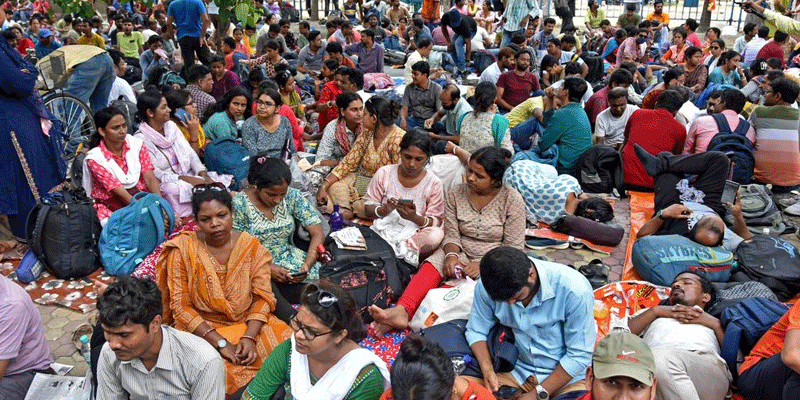
CJP protesters have returned to Jantar Mantar after Monday's violent clashes with Delhi Police, reaffirming that their agitation will continue despite a forceful crackdown. Security has been significantly tightened around Parliament, while Ladakhi activist Sonam Wangchuk has vowed to continue his hunger strike in solidarity with students demanding accountability over alleged irregularities in the NEET examination. The renewed sit-in signals that the movement has shifted from direct confrontation to sustained political pressure, even as the national capital remains under heavy security.
From Exam Irregularities to a National Protest
The Cockroach Janta Party (CJP), initially a satirical political platform, has emerged as a rallying point for students frustrated by repeated controversies surrounding competitive examinations, particularly NEET-UG. The immediate trigger has been allegations of paper leaks, opaque investigations and inadequate accountability, fuelling concerns that the credibility of India's high-stakes examination system is steadily eroding.
For nearly a month, the organisation has spearheaded the "Chalo Sansad" campaign at Jantar Mantar, demanding systemic examination reforms and the resignation of Union Education Minister Dharmendra Pradhan on grounds of alleged moral and administrative responsibility.
Clashes Transform the Political Narrative
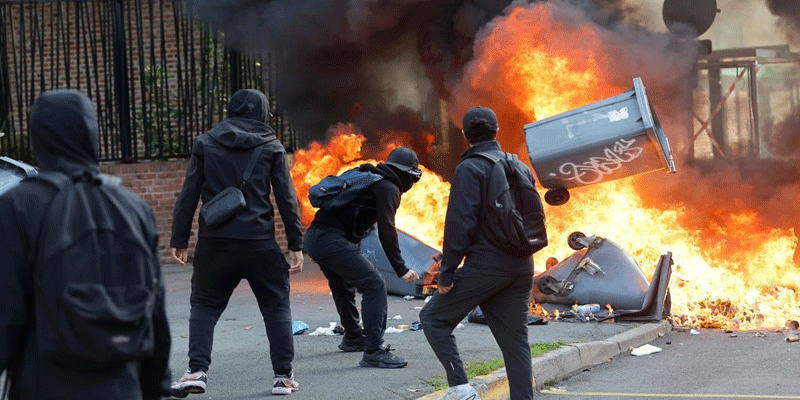
The first day of the Monsoon Session witnessed thousands of protesters marching towards Parliament despite prohibitory orders under Section 163 of the Bharatiya Nagarik Suraksha Sanhita. Delhi Police erected multiple barricades and sealed access routes, triggering confrontations as demonstrators attempted to proceed.
Authorities alleged stone-pelting and attacks on police personnel, while protesters accused the police of excessive force, including baton charges and tear gas against predominantly student crowds. The violence reportedly left dozens of protesters and over a hundred police personnel injured, sharply escalating tensions.
Police later dismantled the protest tents and stage at Jantar Mantar, describing the move as necessary to restore law and order. However, protesters quickly regrouped and erected a fresh camp, reinforcing their resolve to continue the agitation from Delhi's designated protest venue.
Opposition Support Expands the Movement
Congress leader Priyanka Gandhi Vadra has strongly condemned the police action, calling the treatment of protesting students "absolutely disgusting" and arguing that democratic governments should address grievances through dialogue rather than force. Her intervention has widened the agitation beyond student concerns, allowing Opposition parties to portray it as a broader issue involving democratic rights, governance failures and youth aspirations.
Meanwhile, Sonam Wangchuk's continued hunger strike has provided the movement with additional moral legitimacy, linking demands for exam integrity with wider concerns over educational governance.
CJP founder Abhijeet Dipke has indicated that while further marches towards Parliament may be paused to avoid more violence, the sit-in will continue. Simultaneously, party representatives have held discussions with Union Minister JP Nadda, submitting a charter of demands, including Pradhan's resignation, comprehensive examination reforms, compensation for families affected by exam-related tragedies, and protection of peaceful protesters.
A Defining Test for Democratic Accountability
The NEET protest has evolved into a larger contest over institutional credibility, youth confidence and democratic dissent. While the government has relied on tight security alongside limited dialogue, Opposition backing has ensured that the movement remains politically significant. Whether the crisis ends through meaningful reforms, symbolic accountability or continued confrontation will shape not only public trust in India's examination system but also perceptions of how democratic institutions respond to the aspirations and anxieties of an increasingly vocal generation.
(With agency inputs)