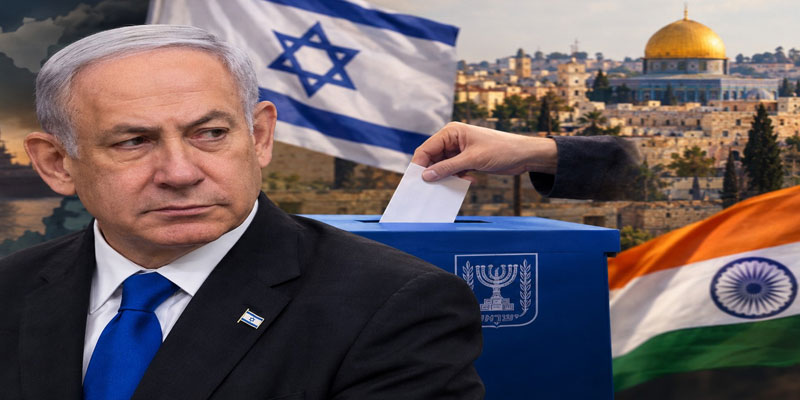

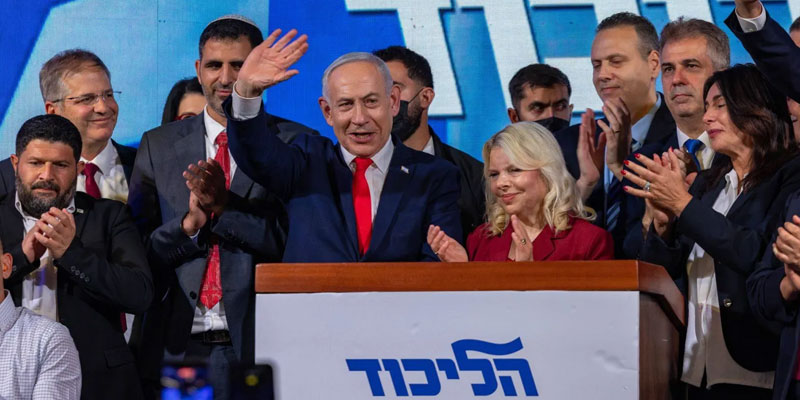
Israel’s election exit polls have pointed to a political deadlock, with Benjamin Netanyahu’s right-wing alliance and Gadi Eisenkot’s opposition bloc separated by just a handful of seats. Neither appears to have secured the 61 seats required for a majority in the 120-member Knesset, raising the prospect of prolonged negotiations, competing coalition claims and continued political uncertainty.
What the Exit Polls Reveal
Major Israeli broadcasters projected Netanyahu’s bloc at approximately 50–52 seats, while Eisenkot’s opposition alliance was estimated to hold 49–53. Some projections placed both camps at 51 seats, although other broadcasters produced sharply different outcomes.
Netanyahu’s Likud party was projected to remain the largest single party, with around 24–27 seats. Eisenkot’s Yashar party was estimated to win 21–23. These figures could strengthen Netanyahu’s negotiating position, but being the largest party does not automatically guarantee the ability to form a government.
Arab parties were projected to secure a combined 17–18 seats, potentially giving them considerable influence over which leader can assemble a parliamentary majority.
Why Israel Needs Coalition Negotiations
Israel follows a proportional representation system, in which parliamentary seats are distributed according to electoral support. Since individual parties rarely win an outright majority, governments depend on alliances among parties with sufficient combined representation.
The divergence between broadcasters’ projections also highlights the uncertainty surrounding the result. While some polls suggested a close contest, Channel 14 projected a considerably stronger position for Netanyahu. Official results, rather than exit polls, will determine the actual parliamentary arithmetic.
Netanyahu’s Strategy: Rebuild the Right-Wing Alliance
Netanyahu’s most direct option is to reunite Likud with ultra-Orthodox and religious-nationalist parties. However, his projected 50–52 seats leave him short of a majority, requiring additional support. Potential partners could demand influential ministerial portfolios and policy commitments, making negotiations difficult.
Netanyahu has called for a strong right-wing national government and rejected dependence on Arab parties. Nevertheless, his party’s projected position as the largest single political force could strengthen his claim to attempt coalition formation.
Eisenkot’s Challenge: Assemble a Broader Opposition
Eisenkot, a former military chief, is seeking to replace Netanyahu by uniting centrist, liberal and other opposition parties. His challenge is to convert their combined parliamentary strength into a workable government.
Arab parties could become decisive, with exit polls suggesting a historic combined showing of approximately 17–18 seats. External parliamentary support or confidence-and-supply arrangements could help Eisenkot, but disagreements over security, national identity and government policy may complicate such an arrangement.
What Happens Next?
The Central Elections Committee must establish the official results before Israel’s president, Isaac Herzog, consults political parties and selects a lawmaker to receive the mandate to form a government. The process can take weeks, and the largest party’s leader is not automatically entitled to the first opportunity.
If successive attempts fail, another election could become necessary. Until then, Netanyahu can remain caretaker prime minister.
The Real Battle Begins After Voting
Israel’s election has exposed deep political divisions rather than delivered a decisive mandate. Netanyahu retains a potential path through his traditional allies, while Eisenkot may benefit from a broader anti-Netanyahu alignment. The decisive question is not who wins the most seats, but who can secure 61 votes. Coalition compromises, Arab-party support and smaller factions’ decisions will determine whether Israel gets a new government or faces another election.
(With agency inputs)