

India, US to Hold Fresh Round of BTA Talks
India and the United States are set to resume negotiations on their proposed Bilateral Trade Agreement (BTA) with a fresh round of discussions beginning in New Delhi on June 1, 2026. A US delegation led by its Chief Negotiator will spend four days in India engaging with officials to advance both an interim trade arrangement and the broader BTA framework. The talks are being closely watched by businesses, exporters, investors and policymakers, as they could shape the future of economic relations between two of the world's largest economies.
Understanding the Importance of the BTA
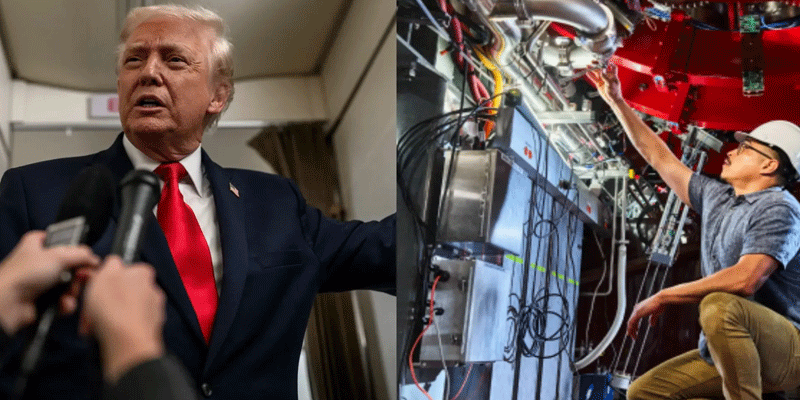
The Bilateral Trade Agreement is envisioned as a comprehensive framework aimed at expanding trade, reducing barriers, increasing investment flows and strengthening economic cooperation between India and the United States. The negotiations were formally launched on February 13, 2025, following discussions between President Donald Trump and Prime Minister Narendra Modi.
Since then, both sides have held multiple rounds of virtual and in-person consultations. A key milestone came during talks in Washington in April 2026, where negotiators made progress on an interim agreement intended to serve as a bridge toward the final BTA.
The Interim Agreement: A Stepping Stone
Before a full-fledged trade pact is concluded, both countries are working on an interim arrangement designed to ease trade tensions and build momentum for broader reforms.
Under the proposed framework, the United States would remove the 25% punitive tariff imposed on Indian goods and reduce reciprocal tariffs from 25% to 18%. In return, India is expected to lower or eliminate tariffs on a wide range of US industrial products and agricultural goods. Another significant element under discussion is India's reported commitment to purchase US goods worth $500 billion over five years.
While these proposals remain subject to negotiation, they indicate the scale of ambition driving the talks.
What Is Expected from the June Negotiations?
The June 1–4 discussions are expected to focus on six major areas that could determine the shape of the eventual agreement.
· Market Access
Both sides will seek greater access to each other's markets through tariff reductions and the removal of trade barriers affecting goods and services.
· Non-Tariff Barriers
Negotiators will examine regulatory restrictions, technical standards and other measures that can impede trade even in the absence of tariffs.
· Customs and Trade Facilitation
Efforts are expected to focus on simplifying customs procedures, reducing delays and lowering transaction costs for businesses.
· Investment Promotion
The talks aim to create a more predictable environment for cross-border investments and strengthen business confidence.
· Economic Security and Supply Chains
Given global geopolitical uncertainties, both countries are keen to build resilient supply chains and deepen strategic economic cooperation.
· Digital Trade
Rules governing data flows, digital commerce and technology-related trade practices are likely to be among the most closely negotiated issues.
Critical Points to Keep in Mind
Despite the optimism, several sensitive issues remain unresolved. Agriculture, dairy, pharmaceuticals and metals continue to be areas of disagreement. Indian stakeholders have expressed concerns that greater access for subsidized US agricultural products could affect millions of farmers and raise food security concerns. Similarly, digital trade regulations and tariff reductions on sensitive sectors remain contentious.
At the same time, the agreement could create new opportunities for Indian pharmaceuticals, IT services and textile exports while providing American businesses broader access to India's growing market.
The Broader Strategic Picture
The India-US BTA is about far more than tariffs and trade volumes. It reflects a wider strategic effort to deepen economic ties between the world's two largest democracies at a time when global trade is becoming increasingly fragmented and protectionist. The upcoming negotiations may not resolve every issue, but they will be critical in determining whether both countries can convert shared economic ambitions into a landmark trade partnership.
(With agency inputs)