Six Killed as Violence Returns to Gaza
Fresh Israeli attacks in Gaza have killed at least six people, including a nine-year-old girl, underscoring the fragile nature of the ceasefire that has held only intermittently since late 2025. According to Palestinian medics, Israeli gunfire struck a tent encampment in the Al-Bureij refugee camp, killing Tala Abu Matar, while a separate airstrike on a metal foundry in Gaza City's Sabra neighbourhood claimed four more lives. Israel said it was unaware of the reported shooting involving the child and maintained that the Sabra strike targeted a Hamas weapons-production facility after what it described as a ceasefire violation. The latest violence comes as mediators continue negotiations in Cairo aimed at advancing the next phase of a U.S.-backed peace plan.
A Ceasefire Under Constant Strain
The incidents reflect the increasingly precarious state of the October 2025 ceasefire, which halted large-scale military operations but failed to end sporadic violence. Since the truce took effect, Gaza health authorities say more than 1,000 Palestinians have been killed in Israeli attacks, while Palestinian militant groups have continued attacks that have resulted in the deaths of several Israeli soldiers.
The contrasting narratives remain a defining feature of the conflict. Israeli authorities argue that military operations target Hamas fighters and infrastructure, including facilities allegedly used to manufacture weapons. Palestinian officials and witnesses, however, highlight the heavy civilian toll, particularly in densely populated areas where displaced families live alongside workshops, schools, and damaged residential buildings. This divergence complicates efforts to establish an uncontested account of events and fuels international debate over proportionality and accountability.
The Humanitarian and Diplomatic Challenge
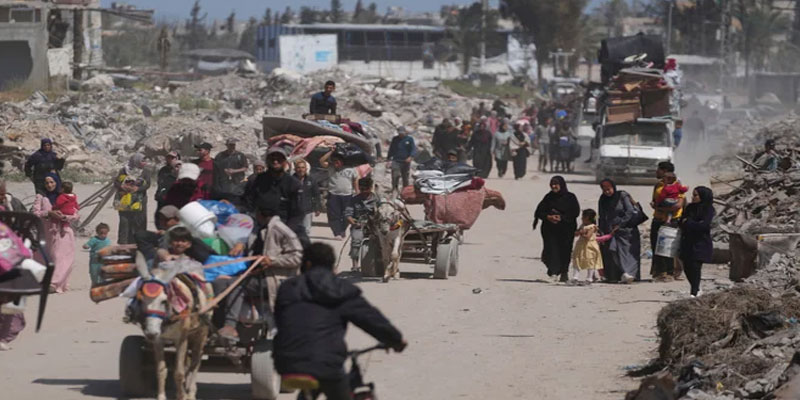
Nearly all of Gaza's approximately two million residents remain concentrated in overcrowded coastal areas after repeated waves of displacement. Makeshift tents, damaged buildings, and limited access to essential services have intensified humanitarian suffering, making civilians especially vulnerable whenever hostilities resume.
At the diplomatic level, mediators in Cairo are attempting to bridge deep divisions between Israel and Hamas over the implementation of the second phase of the U.S.-backed peace initiative. Negotiations reportedly focus on Hamas' disarmament, phased Israeli troop withdrawals, humanitarian access, and long-term security arrangements.
However, progress remains elusive. Hamas has insisted that any discussion on disarmament must be accompanied by credible guarantees of Israeli military withdrawal and lasting humanitarian relief. Israel, on the other hand, maintains that meaningful demilitarisation must precede any comprehensive withdrawal. This fundamental disagreement continues to stall negotiations despite sustained mediation efforts.
What Comes Next?
The immediate future will largely depend on whether Cairo's negotiations can produce practical confidence-building measures. Independent monitoring of ceasefire violations, expanded humanitarian corridors, prisoner exchanges, and phased implementation of security commitments could help rebuild trust between the parties.
Without stronger verification mechanisms and mutual adherence to agreed commitments, isolated military operations and retaliatory attacks are likely to continue. Each new incident risks undermining diplomatic momentum, hardening political positions, and making a comprehensive settlement increasingly difficult to achieve.
International mediators are therefore expected to intensify efforts to secure limited agreements that reduce violence while keeping broader peace negotiations alive. Even incremental progress could create conditions for more substantive political dialogue.
Diplomacy Remains the Only Sustainable Path
The latest deaths in Gaza highlight how quickly a fragile ceasefire can unravel in one of the world's most volatile conflict zones. While military actions continue to dominate developments on the ground, lasting stability will ultimately depend on sustained diplomacy, credible enforcement of ceasefire commitments, and meaningful humanitarian relief. Without these foundations, both the peace process and the civilian population will remain trapped in a cycle of violence and uncertainty.
(With agency inputs)