Premium Hotels, Serious Food-Safety Questions
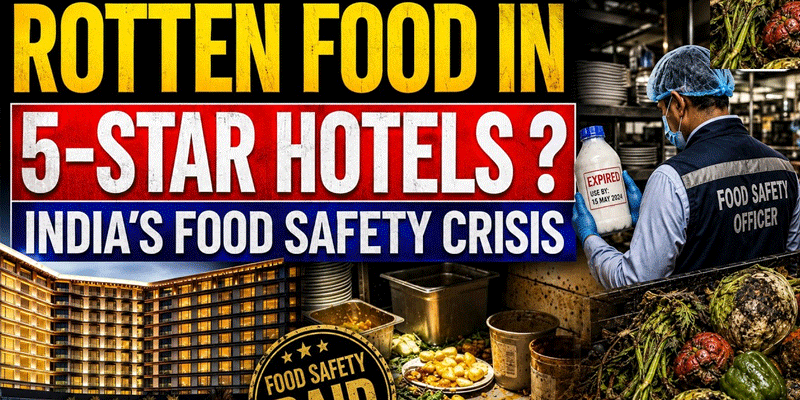
The Food Safety and Standards Authority of India (FSSAI) has issued notices to two prominent Delhi five-star hotels after inspections reportedly uncovered expired food, cockroaches, poor sanitation and other compliance deficiencies. The findings at Andaz Delhi and JW Marriott New Delhi have assumed greater significance because Delhi is preparing to host the BRICS summit, exposing a troubling question: can India's premium hospitality sector guarantee food safety when international scrutiny is at its highest?
What the Inspections Reportedly Found
At Andaz Delhi in Aerocity, inspectors reportedly discovered around 87 kg of expired sweets, which were destroyed at the premises, besides expired bread packets and a cake base. The inspection also reportedly found cockroaches near freezers, flies and mosquitoes around food-preparation areas, spider webs, inadequate food-handler hygiene and poor sanitation.
More concerning were the reported process failures. Inspectors flagged inadequate temperature monitoring, questionable storage, insufficient supplier verification and improper segregation of vegetarian and non-vegetarian food. Such deficiencies are significant because food safety depends not merely on cleanliness but on traceability, storage discipline, temperature control and preventing contamination throughout the supply chain.
At JW Marriott New Delhi, inspections conducted on August 24 and 25 reportedly identified 59 deficiencies. These included cockroaches and fruit flies, rotten produce, uncovered food, unsuitable waste disposal, refrigeration problems, unclean utensils and employee-hygiene shortcomings. Officials also reportedly raised concerns about labelling, relabelling and licensing documentation.
Why BRICS Makes the Findings More Serious
The timing makes the episode particularly sensitive. India is scheduled to host the BRICS summit in New Delhi on September 12–13, with hotels in and around Aerocity expected to accommodate international delegations.
That means food safety becomes more than a hospitality issue. It intersects with public health, diplomatic reputation and India's ability to manage a major international gathering. Five-star classification and association with global hotel brands may create an expectation of superior standards, but branding cannot substitute for everyday operational discipline.
Large hotels operate complicated kitchens, bakeries, banquet facilities, storage areas and room-service operations. A failure in any one link can potentially compromise food safety across the establishment.
Notices Are Not Yet Final Penalties
The inspections must nevertheless be viewed within the proper regulatory context. An inspection report or notice is not itself a final determination of legal liability. FSSAI has collected food and water samples, and further action will depend on laboratory findings, responses from the hotels and verification of corrective measures. Both establishments have indicated that they are cooperating with authorities and strengthening hygiene and compliance procedures. The regulatory process should therefore be allowed to establish the final facts rather than treating inspection observations as concluded violations.
From Summit Readiness to Everyday Enforcement
The immediate priority should be corrective action, but the response must not become a temporary pre-summit exercise. Authorities should demand time-bound compliance plans, conduct follow-up and surprise inspections, independently verify pest-control measures and strengthen digital records covering temperature, expiry dates and food traceability.
The episode also highlights the need for stronger coordination between FSSAI, Delhi authorities and hotel management, particularly at establishments serving international visitors.
Food Safety Cannot Be a Summit-Only Priority
The most important lesson is that five-star status cannot mean five-star expectations only when foreign dignitaries arrive. Food safety is a continuous public-health obligation, whether the customer is a visiting head of government, a business traveller or an ordinary Indian family.
The BRICS summit provides an immediate test of preparedness, but the larger test is whether the regulatory system remains equally rigorous after the delegates leave. Diplomatic hospitality may attract global attention, but credible food-safety enforcement is what ultimately protects public trust.
(With agency inputs)