
Attack Near Suez Canal Triggers Maritime Security Alarm
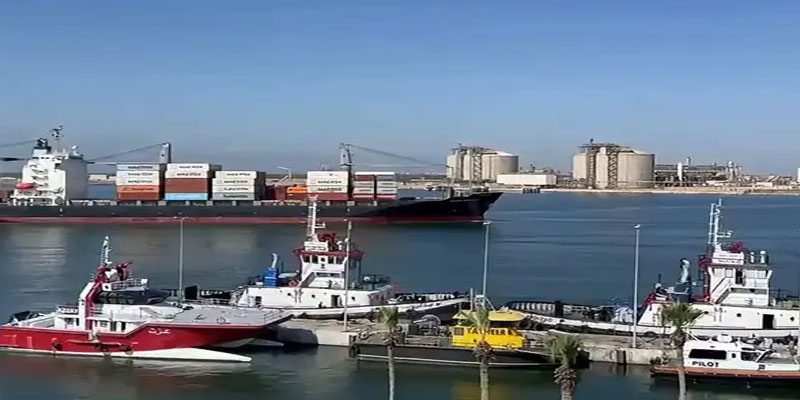
A drone strike on two gas vessels at Egypt's Mediterranean port of Damietta has heightened concerns over the security of one of the world's busiest maritime trade corridors. The attack, which set ablaze a US-owned floating gas storage tanker before the fire spread to another vessel, marks the first known drone strike targeting ships in Egyptian waters near the Suez Canal. Although canal operations remain unaffected, the incident has intensified fears that the ongoing regional conflict involving Iran-backed groups is expanding into new strategic locations, posing fresh risks to global energy supplies, shipping routes and international trade.
Why Damietta and the Suez Corridor Matter
Damietta occupies a strategically significant position on Egypt's Nile Delta coast near the Mediterranean entrance to the Suez Canal. The port is closely connected to the SUMED (Suez-Mediterranean) Pipeline, a vital energy corridor that transports Saudi Arabian and Gulf crude oil from the Red Sea to the Mediterranean, bypassing the congested and increasingly volatile Bab el-Mandeb Strait.
Since the escalation of tensions involving Iran, the United States and Yemen's Houthi movement, the Suez Canal and SUMED pipeline have become even more important as safer alternatives for Gulf energy exports. Any threat to this corridor has immediate implications for global oil and gas markets.
The Drone Attack and Immediate Response
The latest incident occurred when an unidentified drone struck the US-owned floating storage vessel Energos Winter while it was docked at Damietta. The resulting blaze spread to a nearby gas carrier before emergency teams managed to contain the fire.
Egypt's Cabinet later confirmed that preliminary investigations indicated a drone strike as the likely cause. However, authorities stressed that both Damietta Port and the Suez Canal remain fully operational, with shipping traffic continuing uninterrupted.
No organisation has claimed responsibility for the attack, leaving investigators searching for answers amid rising regional tensions.
Iran and Houthis Reject Allegations
Given the recent pattern of attacks on energy infrastructure across the Middle East, initial speculation centred on Iran and its regional allies. However, both Tehran and Yemen's Houthi movement have categorically denied any involvement.
Iranian Foreign Ministry officials dismissed reports linking Tehran to the incident, while Houthi representatives also rejected allegations that they had targeted ships inside Egyptian waters. Analysts believe both sides may be seeking to avoid direct confrontation with Egypt, even as hostilities continue elsewhere in the region.
The absence of confirmed attribution has added uncertainty to an already fragile security environment.
Shipping Industry Faces Rising Costs and Risks
Even without identifying those responsible, the Damietta strike has rattled insurers, shipping companies and energy markets. Marine insurers in London have reportedly expanded high-risk zones covering the Red Sea and adjoining waters, leading to increased war-risk premiums for commercial vessels operating through the region.
Although experts do not believe the attack signals an imminent threat to the Suez Canal itself, it demonstrates that maritime infrastructure previously considered relatively secure can no longer be taken for granted.
The incident also narrows Saudi Arabia's options for safely exporting crude oil and liquefied gas, increasing the likelihood of shipping delays, rerouting and higher transportation costs.
Regional Conflict Expands Beyond Traditional Battlefields
The Damietta attack comes as Saudi Arabia reports a growing number of Houthi drone and missile attacks launched from Iraqi territory with alleged support from Iran-backed militias operating under the supervision of the Islamic Revolutionary Guard Corps (IRGC). These strikes have targeted oil installations and other critical infrastructure, exploiting the porous Saudi-Iraq border.
Together, these developments suggest that the regional conflict is spreading across multiple theatres—from the Strait of Hormuz and Bab el-Mandeb to the Red Sea, Suez approaches and the Iraqi-Saudi frontier.
A Wake-Up Call for Global Maritime Security
The drone strike near Damietta serves as a stark reminder that modern conflicts increasingly rely on low-cost drones and proxy networks capable of threatening critical global infrastructure far beyond conventional battlefields. While Egypt has successfully kept the Suez Canal operational, the attack underscores the growing vulnerability of international shipping routes. Strengthening regional cooperation, enhancing air and maritime defences, and improving intelligence sharing will be essential to safeguarding global trade as geopolitical tensions continue to reshape the security landscape of the Middle East.
(With agency inputs)