

Diplomatic decorum broke down dramatically at the United Nations General Assembly after Israel’s Ambassador to the UN, Danny Danon, publicly confronted Vanessa Frazier, the UN Special Representative for Children and Armed Conflict. The heated exchange occurred during a discussion on violations against children in conflict zones and quickly became one of the most striking diplomatic confrontations witnessed at the UN in recent years. The incident not only highlighted growing tensions between Israel and the United Nations but also underscored broader disagreements over accountability, human rights reporting and the conduct of modern warfare.
The Report at the Centre of the Dispute
The confrontation was rooted in a recent UN report on children affected by armed conflict. The report documented alarming levels of violence against children in 2025, recording more than 38,000 verified grave violations affecting over 24,000 children worldwide. According to the findings, the year witnessed the highest number of such violations since the UN began monitoring the issue three decades ago.
Among the most significant conclusions was the finding that government forces, rather than non-state armed groups, were responsible for a large share of killings and injuries involving children. The report identified several conflict zones, including the Occupied Palestinian Territories and Israel, among areas where violations were particularly severe.
The controversy intensified after allegations of conflict-related sexual violence involving Israeli soldiers and settlers contributed to Israel’s inclusion on a UN blacklist of parties accused of committing serious violations in conflict situations. Israeli authorities strongly rejected the allegations and questioned the impartiality of the UN process.
How Diplomatic Decorum Shattered
The clash unfolded when Ambassador Danon accused UN Secretary-General António Guterres and UN agencies of unfairly targeting Israel. As he criticized the findings and motivations behind the report, Vanessa Frazier intervened, urging him to avoid personal attacks and asserting that her office’s conclusions were based on verified evidence.
The exchange escalated rapidly. Danon responded by telling the UN official to “be quiet” and denounced the report as “shameful.” Such language is highly unusual in formal UN proceedings, where diplomatic norms typically emphasize restraint, mutual respect and procedural courtesy even during intense disagreements.
The public nature of the confrontation transformed a policy dispute into a symbolic clash between a member state and a UN accountability mechanism, drawing global attention to the deteriorating relationship between Israel and parts of the UN system.
Have Similar Incidents Happened Before?
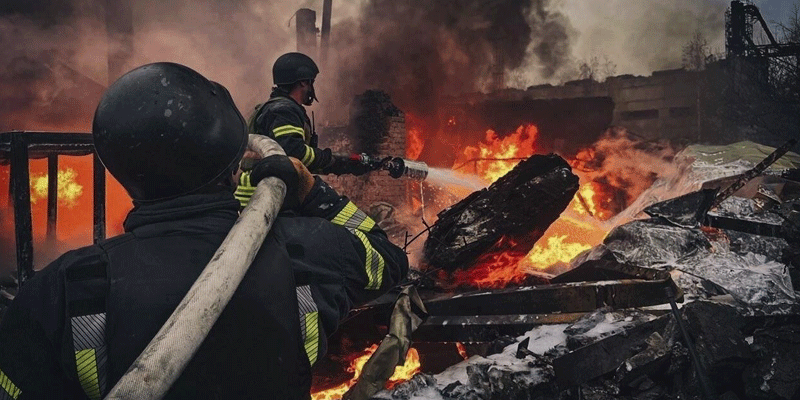
While sharp exchanges at the UN are not uncommon, direct personal confrontations of this nature remain relatively rare. Over the years, diplomatic tensions have surfaced during debates involving conflicts in the Middle East, Russia-Ukraine, Syria and other geopolitical crises.
Notable examples include confrontational speeches during emergency Security Council meetings, walkouts by delegations and public accusations between ambassadors. However, openly instructing a senior UN official to remain silent during a formal session is considered an extraordinary breach of diplomatic etiquette and stands out even within the often-contentious atmosphere of multilateral diplomacy.
A Reflection of Wider Geopolitical Friction
The Danon-Frazier confrontation was about far more than a single report. It reflected a deeper struggle between national governments seeking to defend their policies and international institutions tasked with monitoring accountability and human rights. As conflicts become increasingly scrutinized through global mechanisms, tensions between sovereignty and international oversight are likely to intensify. The episode serves as a reminder that diplomatic institutions remain vital forums for debate, but their effectiveness depends on preserving the principles of dialogue, respect and constructive engagement, even amid profound disagreement.
(With agency inputs)