
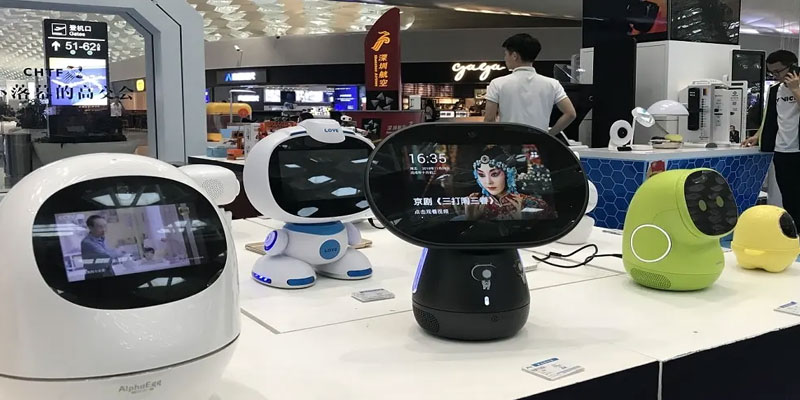
China describes its new approach as using “new demand to guide new supply, and new supply to create new demand.” Through a massive consumer trade-in programme, Beijing is encouraging households to purchase artificial intelligence-enabled gadgets and energy-efficient appliances. Yet, despite billions of dollars in incentives, the wider recovery in consumer spending remains elusive, exposing a deeper problem in the world’s second-largest economy.
A $37 Billion Push to Revive Consumption
China has expanded its 250 billion yuan, approximately $37 billion, consumer trade-in programme to stimulate household purchases while strengthening domestic technology manufacturing. The initiative offers a 15% subsidy, capped at 500 yuan per item, on eligible smartphones, tablets, smartwatches and smart glasses priced at 6,000 yuan or less.
Six categories of household appliances are also covered, provided products meet the highest energy- or water-efficiency standards.
According to China’s National Development and Reform Commission, the programme had supported 1.55 trillion yuan in eligible sales by August, subsidising 108 million digital and smart products. The scale demonstrates the government's willingness to use public spending to influence consumer behaviour.
Gadget Sales Rise, But Spending Stays Sluggish
The incentives have generated visible gains in targeted categories. Communications equipment sales at major retailers rose 27.3% year-on-year in August, while smart-glass sales on major online platforms surged 120% during the first eight months of 2026.
However, overall retail sales grew just 0.4% in August and 1.1% in September. This contrast suggests that discounts are stimulating purchases of selected products without generating a comparable recovery across the wider consumer economy.
Exports Thrive While Households Hold Back
China's economy grew 4.5% year-on-year in July-September, accelerating from 4.3% in the previous quarter. Strong exports of chips, electronics and AI-related hardware helped drive the improvement.
Yet household consumption, private investment and the property sector remain weak. This two-speed economy highlights the gap between China's manufacturing strength and domestic demand. The International Monetary Fund has forecast growth of 4.5% in 2026 and 4% in 2027, citing sluggish consumption and weak investment.
Industrial Strategy Meets Household Caution
Vice Commerce Minister Sheng Qiuping's approach reflects Beijing's ambition to create a cycle in which consumer demand encourages production, manufacturing scale lowers costs, and technological innovation generates further demand.
The strategy also supports China's 15th Five-Year Plan and its goal of connecting consumption, investment and technological upgrading.
However, subsidies cannot guarantee additional spending. Households may simply bring forward purchases planned for later or redirect money from travel, restaurants and other services towards discounted electronics.
Why Discounts Cannot Replace Consumer Confidence
For lasting recovery, China needs stronger household incomes, greater employment security and progress in resolving property-sector pressures. Without these improvements, families may remain reluctant to spend beyond essential or heavily discounted purchases.
China can subsidise products, but it cannot manufacture confidence overnight. The programme may accelerate AI adoption and greener consumption, but a sustainable economic revival will depend on whether households feel secure enough to spend more across the economy—not merely on the gadgets the government wants them to buy.
(With agency inputs)