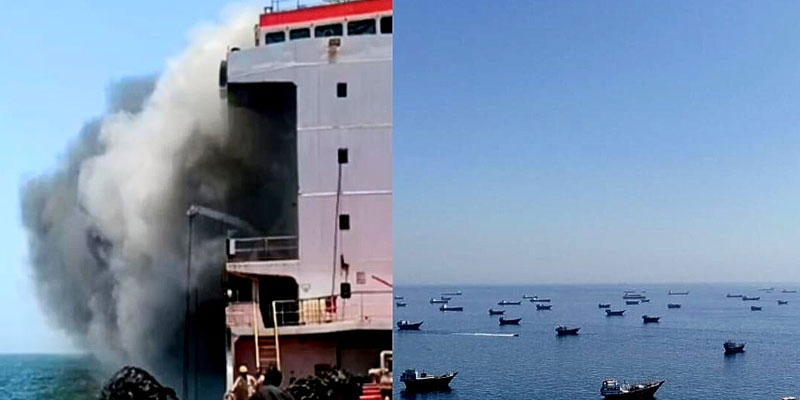
India Responds After Vessel Attack Near Oman
India has strongly condemned an attack on the Cyprus-flagged commercial vessel GFS Galaxy off the coast of Oman that left 10 of its 11 Indian crew members rescued while one Indian seafarer remains missing. The incident has prompted urgent diplomatic engagement between New Delhi and Muscat, with the Indian Embassy in Oman coordinating search-and-rescue efforts alongside local authorities. Reaffirming its commitment to the safety of Indian nationals, the Ministry of External Affairs (MEA) also renewed calls for de-escalation and the protection of commercial shipping in one of the world's busiest maritime corridors.
A Strategic Waterway Under Pressure
The attack occurred in waters near the Strait of Hormuz, a critical global shipping route through which a substantial share of the world's oil and gas supplies passes. According to reports citing U.S. Central Command and local sources, the GFS Galaxy suffered damage to its engine room after being attacked, triggering a fire that endangered everyone on board.
While U.S. Central Command attributed the strike to Iranian forces in some accounts, the broader regional narrative remains contested, with competing claims and no universally accepted determination of responsibility. Such uncertainty has become a recurring feature of maritime incidents in the Gulf, where geopolitical rivalries frequently complicate efforts to establish accountability.
How the Incident Unfolded
The attack forced an immediate emergency response as regional search-and-rescue agencies moved swiftly to assist the damaged vessel. Ten Indian crew members were successfully rescued, highlighting effective coordination between maritime authorities and India's diplomatic mission in Muscat. However, one Indian sailor remains unaccounted for, with rescue operations continuing in close cooperation with Omani authorities.
India's response combined humanitarian assistance with diplomatic action. The MEA condemned the attack, reiterated India's long-standing support for free and secure navigation in international waters, and emphasized the need for peaceful dialogue to prevent further escalation. Simultaneously, Indian officials maintained close contact with Oman to monitor rescue efforts and provide assistance to the rescued crew.
The incident is part of a broader pattern of attacks targeting merchant vessels, tankers, and commercial shipping across the Gulf region. Analysts note that these attacks have involved a mix of state and non-state actors employing missiles, drones, and other asymmetric methods, creating a volatile security environment for civilian shipping. The uncertainty surrounding responsibility often delays international responses and complicates diplomatic efforts.
For India, the implications extend beyond the immediate humanitarian crisis. Thousands of Indian seafarers serve aboard international merchant vessels, while India's economy depends heavily on uninterrupted maritime trade and energy imports passing through the Gulf. Any disruption in these waters directly affects supply chains, freight costs, energy security, and the welfare of Indian nationals working at sea.
The episode is also expected to intensify discussions on strengthening maritime surveillance, expanding intelligence-sharing, enhancing search-and-rescue coordination, and promoting multilateral mechanisms to safeguard commercial shipping without escalating regional tensions.
Protecting Lives and Securing Sea Lanes
The attack on the GFS Galaxy once again highlights the growing vulnerability of commercial shipping in strategically vital waters. While the successful rescue of most of the Indian crew reflects effective diplomatic and operational coordination, the missing seafarer underscores the human cost of rising maritime insecurity. Going forward, India is likely to continue balancing firm diplomatic engagement with regional partners while advocating greater international cooperation to protect merchant shipping, ensure the safety of seafarers, and preserve stability along one of the world's most critical maritime trade routes.
(With agency inputs)