
Emerging Agreement Reshapes Regional Power Dynamics
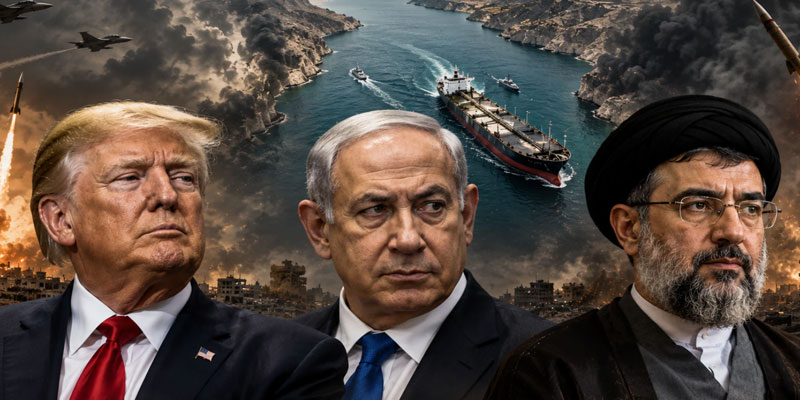
The biggest casualty of the emerging U.S.-Iran agreement may not be Israel’s long-standing strategy toward Tehran, but rather the political image that Israeli Prime Minister Benjamin Netanyahu spent decades cultivating. For years, Netanyahu projected himself as the Israeli leader uniquely capable of influencing Washington’s Iran policy and mobilizing American support against Tehran. However, analysts, former U.S. officials and diplomats increasingly argue that the latest diplomatic developments threaten that carefully built reputation.
As Washington and Tehran move toward an interim understanding aimed at reducing tensions, Netanyahu finds himself confronting a strategic and political reality that appears very different from the one he had advocated.
A Strategy Built on Pressure and Deterrence
For much of his political career, Netanyahu has positioned Iran as Israel’s most significant security threat. His approach has consistently centered on applying maximum diplomatic, economic and military pressure to constrain Tehran’s regional influence and nuclear ambitions.
This strategy gained momentum under U.S. President Donald Trump, whose administration adopted a hardline stance toward Iran through sanctions and diplomatic isolation. Netanyahu viewed close alignment with Washington as a critical pillar of Israel’s security framework and believed sustained pressure could significantly weaken Tehran’s capabilities.
Recent negotiations between the United States and Iran, however, suggest a shift toward de-escalation and diplomatic engagement rather than continued confrontation.
Why the Deal Represents a Political Setback
The emerging agreement presents several challenges for Netanyahu.
· First, reports indicate that Israel has had limited influence over the negotiations despite being one of the region’s most directly affected stakeholders. This has fueled criticism that Netanyahu failed to shape an outcome central to Israel’s security concerns.
· Second, any arrangement that reduces hostilities could limit Israel’s freedom of action against Iran-backed groups, including Hezbollah. Such constraints may conflict with Netanyahu’s long-standing argument that sustained pressure is essential for regional security.
· Third, if the agreement results in sanctions relief or broader economic engagement, Iran could gain opportunities to strengthen its economy and diplomatic position. For Netanyahu’s critics, this would represent a reversal of the pressure campaign he championed.
Recent Developments and Growing Political Pressure
Although details remain fluid, reports suggest that the emerging arrangement is more of an interim framework or ceasefire than a comprehensive peace agreement. Nevertheless, even a temporary understanding has altered political calculations across the region.
Observers note that voices from different sections of Israel’s political spectrum have expressed concern that Iran could emerge with greater strategic flexibility while Israel’s influence over U.S. policy appears diminished. Critics argue that Netanyahu may have overestimated Washington’s willingness to pursue prolonged confrontation and underestimated its desire for regional stability.
This has intensified domestic scrutiny of his leadership and foreign policy judgment.
Iran’s Potential Gains and Netanyahu’s Dilemma
For Iran, the agreement carries both symbolic and practical advantages. It allows Tehran to portray itself as resilient in the face of pressure while potentially gaining economic relief and diplomatic space.
Netanyahu, meanwhile, faces a difficult choice. Aligning with Washington’s diplomatic approach could expose him to criticism at home for appearing ineffective. Opposing the U.S. position, however, risks straining one of Israel’s most important strategic relationships.
A Defining Test of Netanyahu’s Legacy
If the emerging U.S.-Iran arrangement endures, its significance may extend far beyond regional diplomacy. The agreement could challenge one of the central pillars of Netanyahu’s political identity—the belief that he could shape American policy on Iran through forceful advocacy and strategic alignment. While the long-term implications remain uncertain, the current trajectory suggests that diplomacy, rather than confrontation, is driving events. In that scenario, Netanyahu may find himself confronting not only a shifting regional landscape but also one of the most consequential political tests of his career.
(With agency inputs)