
India’s New Precision Strike Capability Takes Flight
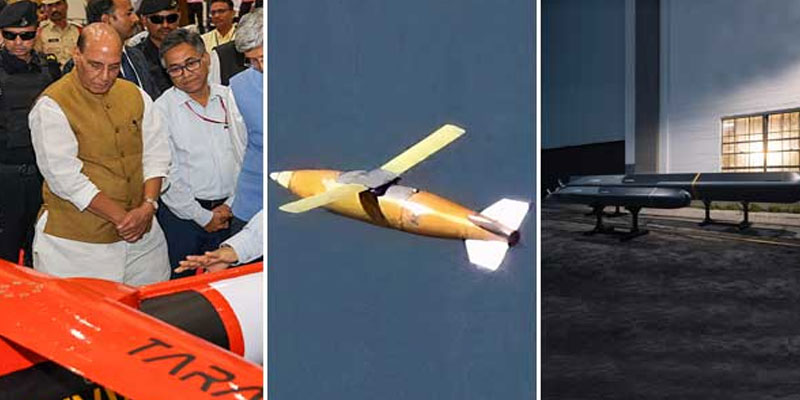
India has achieved a major milestone in indigenous defence technology with the successful maiden flight-trial of the Tactical Advanced Range Augmentation (TARA) glide weapon, jointly tested by the Defence Research and Development Organisation and the Indian Air Force. The successful test marks a significant advancement in India’s effort to build affordable, precision-guided strike systems while reducing dependence on imported military technologies.
The trial, conducted off the coast of Odisha on 7 May 2026, demonstrated the ability of the indigenous glide weapon to accurately strike a designated ground target after being launched from an IAF fighter aircraft. More importantly, the test validated India’s strategy of converting conventional unguided bombs into high-precision stand-off weapons through modular upgrade kits.
What Exactly Is TARA?
TARA is not a standalone missile but a modular glide kit designed to transform existing “dumb” bombs into precision-guided munitions. The system attaches to conventional warheads and equips them with aerodynamic surfaces, navigation, guidance and control mechanisms, enabling them to glide over long distances with improved accuracy.
The concept mirrors a growing global military trend where air forces seek to maximise existing stockpiles rather than rely solely on expensive next-generation missiles. By extending range and enhancing targeting precision, TARA enables fighter aircraft to strike ground targets while remaining farther away from enemy air-defence systems.
According to DRDO, the weapon successfully followed its intended glide path during the test and struck the target area with the desired precision. The trial validated key parameters including release dynamics, aerodynamic stability and guidance performance under operational conditions.
Why TARA Matters for India’s Airpower
The significance of TARA lies not only in technology but also in military economics and operational flexibility. Precision-guided missiles are highly effective but extremely expensive. TARA offers a far cheaper alternative by upgrading existing inventories into smart munitions.
For the IAF, this could prove invaluable during prolonged military operations where large numbers of targets may need to be engaged quickly. Instead of exhausting costly missile inventories, commanders could deploy TARA-equipped bombs for a wide range of battlefield missions.
Another major advantage is survivability. Modern warfare increasingly revolves around stand-off capability — the ability to strike without entering heavily defended airspace. Against adversaries such as China or Pakistan, glide weapons like TARA allow Indian aircraft to release munitions from safer distances while still maintaining strike effectiveness. This complicates enemy radar tracking and air-defence planning.
A Key Step in India’s Indigenous Strike Ecosystem
Defence Minister Rajnath Singh described the successful test as a major boost to India’s defence self-reliance initiative. The achievement also reflects DRDO’s broader strategy of building a layered indigenous strike ecosystem ranging from smart glide bombs to advanced hypersonic and long-range missile systems.
Analytically, TARA fills a crucial middle layer within that ecosystem. At one end are expensive strategic missiles; at the other are conventional unguided bombs with limited precision. TARA bridges this gap by offering an affordable yet highly effective precision-strike solution.
Equally important is the growing role of Indian industry in defence manufacturing. DRDO’s collaboration with Development-cum-Production Partners indicates that production scalability is already being planned alongside technological development.
TARA and the Future of India’s Combat Doctrine
The successful maiden trial of TARA signals more than just the testing of another weapon system. It reflects India’s evolving military doctrine — one that prioritises affordability, survivability, precision and indigenous capability simultaneously.
If future trials across multiple aircraft platforms and operational scenarios prove equally successful, TARA could become a standard feature of India’s airpower architecture. In doing so, it would strengthen deterrence, enhance operational flexibility and further India’s ambition of becoming self-reliant in advanced defence technology.
(With agency inputs)